Table of Contents
Introduction
In today’s digital world, technology plays a crucial role in the success of every business. Small businesses, in particular, rely heavily on reliable technology solutions to compete with larger organizations. From managing data to improving communication and enhancing customer experience, technology has become essential for business growth.
This is where IT Services for Small Businesses become extremely valuable. Professional IT services help small companies manage their technology infrastructure, improve security, automate processes, and increase productivity.
Small businesses often face challenges such as limited budgets, lack of technical expertise, and rapidly changing technology trends. Partnering with an experienced IT service provider like Forthicon Pvt Ltd can help businesses overcome these challenges and adopt modern technology solutions.
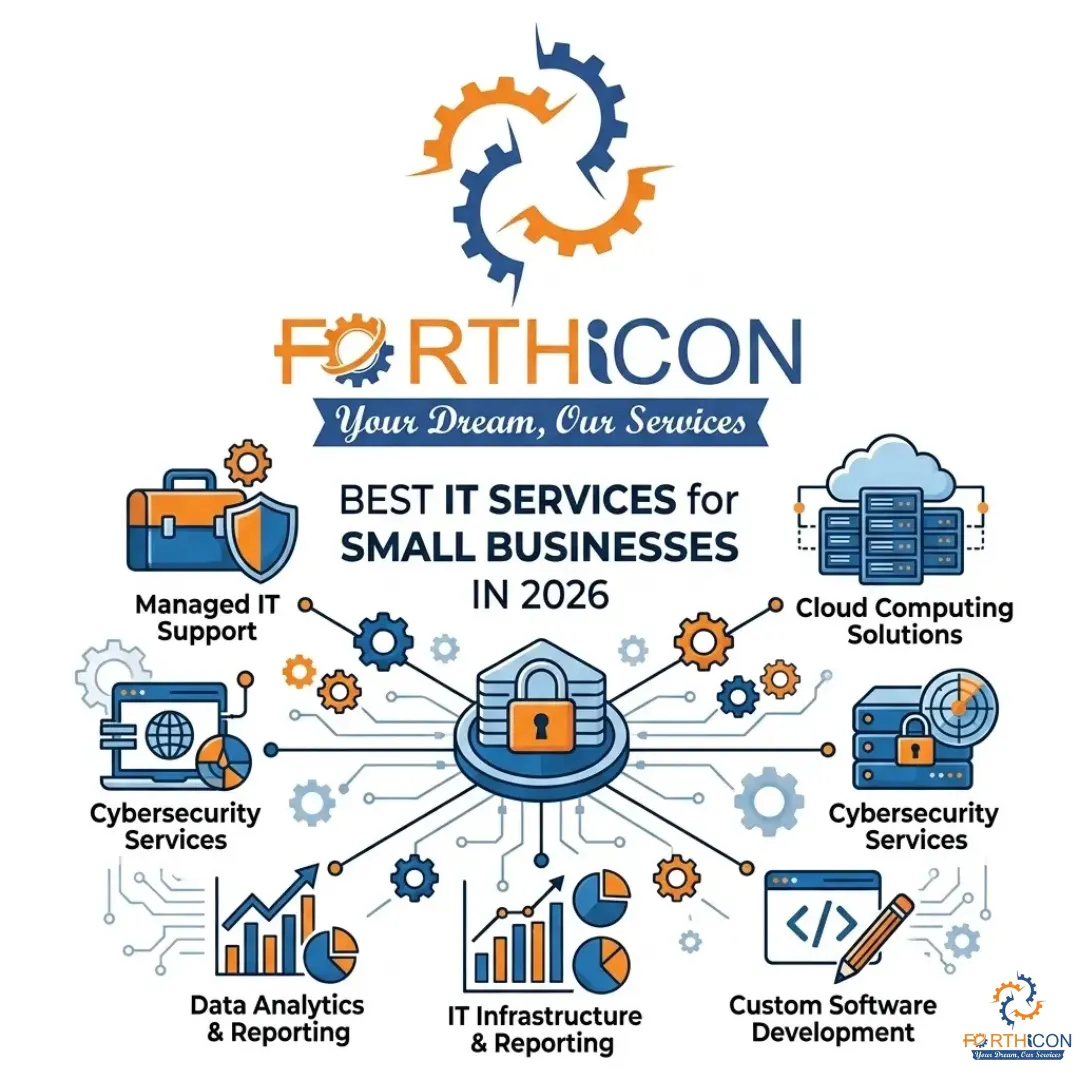
In this article, we will explore the best IT Services for Small Businesses in 2026, how they benefit organizations, and why investing in professional IT solutions is crucial for long-term success.
Why IT Services Are Important for Small Businesses
Small businesses must operate efficiently while managing limited resources. Without proper IT support, companies may face issues such as system downtime, data loss, cybersecurity threats, and inefficient operations.
Professional IT Services for Small Businesses provide reliable solutions that help organizations maintain smooth operations and focus on their core business activities.
Some key benefits include:
- Improved operational efficiency
- Better cybersecurity protection
- Cost-effective technology management
- Increased productivity
- Reliable technical support
With the right IT services, small businesses can scale operations and stay competitive in today’s digital marketplace.
1.Managed IT Services
Managed IT services are one of the most essential IT Services for Small Businesses. Instead of maintaining an in-house IT team, businesses outsource their technology management to professional service providers.
Managed IT services include:
- Network monitoring
- System maintenance
- Software updates
- Technical support
- Security monitoring
These services ensure that business systems operate smoothly and reduce the risk of unexpected technical problems.
Managed IT services also allow businesses to focus on growth while experts handle the technology infrastructure.
2.Cloud Computing Services
Cloud computing has revolutionized the way businesses store and access data. Small businesses can now access powerful computing resources without investing in expensive hardware.
Cloud platforms such as Amazon Web Services, Microsoft Azure, and Google Cloud provide scalable infrastructure for businesses.
Cloud services offer several advantages:
- Remote access to business applications
- Secure data storage
- Scalability for growing businesses
- Reduced infrastructure costs
Cloud computing enables small businesses to operate more efficiently while maintaining flexibility and security.
3.Cybersecurity Services
Cybersecurity is one of the most critical IT Services for Small Businesses in 2026. Small companies are increasingly becoming targets for cyberattacks because they often lack advanced security systems.
Cybersecurity services protect businesses from threats such as:
- Malware attacks
- Data breaches
- Phishing scams
- Ransomware attacks
Professional IT providers implement security solutions such as firewalls, antivirus software, and data encryption to protect business information.
Businesses must prioritize cybersecurity to protect customer data and maintain trust.
4.Website Development and Maintenance
A professional website is essential for attracting customers and building a strong online presence.
Website development services include:
- Responsive web design
- E-commerce website development
- Content management systems
- Website performance optimization
Small businesses can reach a wider audience through well-designed websites optimized for search engines like Google.
Regular website maintenance also ensures security updates, faster performance, and improved user experience.
5. Software Development Services
Custom software solutions help small businesses automate tasks and improve efficiency.
Software development services include:
- Custom business applications
- Customer relationship management systems
- Inventory management software
- Workflow automation tools
Instead of relying on generic software, businesses can use customized solutions tailored to their specific needs.
These solutions streamline operations and increase productivity.
6.IT Infrastructure Management
Reliable IT infrastructure is the backbone of every successful business.
Infrastructure services include:
- Network setup and maintenance
- Server management
- Data storage solutions
- Hardware management
Professional IT infrastructure management ensures systems operate efficiently and reduces downtime.
This service is particularly valuable for businesses that rely heavily on digital operations.
7.Data Backup and Disaster Recovery
Data loss can be devastating for small businesses. Hardware failures, cyberattacks, or natural disasters can cause significant disruptions.
Data backup and disaster recovery services ensure that critical business data is protected and recoverable.
Key benefits include:
- Secure data backups
- Quick recovery after system failures
- Business continuity planning
Having a reliable disaster recovery plan ensures that businesses can resume operations quickly after unexpected events.
8. IT Consulting Services
IT consulting helps businesses make better technology decisions.
Professional consultants analyze business needs and recommend appropriate technology solutions.
IT consulting services help businesses:
- Choose the right software and hardware
- Implement digital transformation strategies
- Improve IT security and compliance
- Optimize technology investments
Working with experienced consultants ensures that businesses adopt technologies that support their growth.
9.Email and Communication Solutions
Effective communication tools are essential for business productivity.
Professional IT services help businesses implement secure communication platforms such as:
- Business email systems
- Video conferencing tools
- Collaboration platforms
Tools like Microsoft Teams and Slack allow employees to collaborate efficiently, especially in remote work environments.
These tools improve teamwork and streamline communication within organizations.
10.Technical Support and Help Desk Services
Small businesses often require immediate assistance when technical issues occur.
Help desk services provide:
- Remote technical support
- Troubleshooting assistance
- Software issue resolution
- Hardware maintenance
Reliable technical support ensures minimal downtime and helps employees stay productive.
Businesses that invest in professional help desk services experience faster problem resolution and improved system reliability.
How Small Businesses Should Choose an IT Service Provider
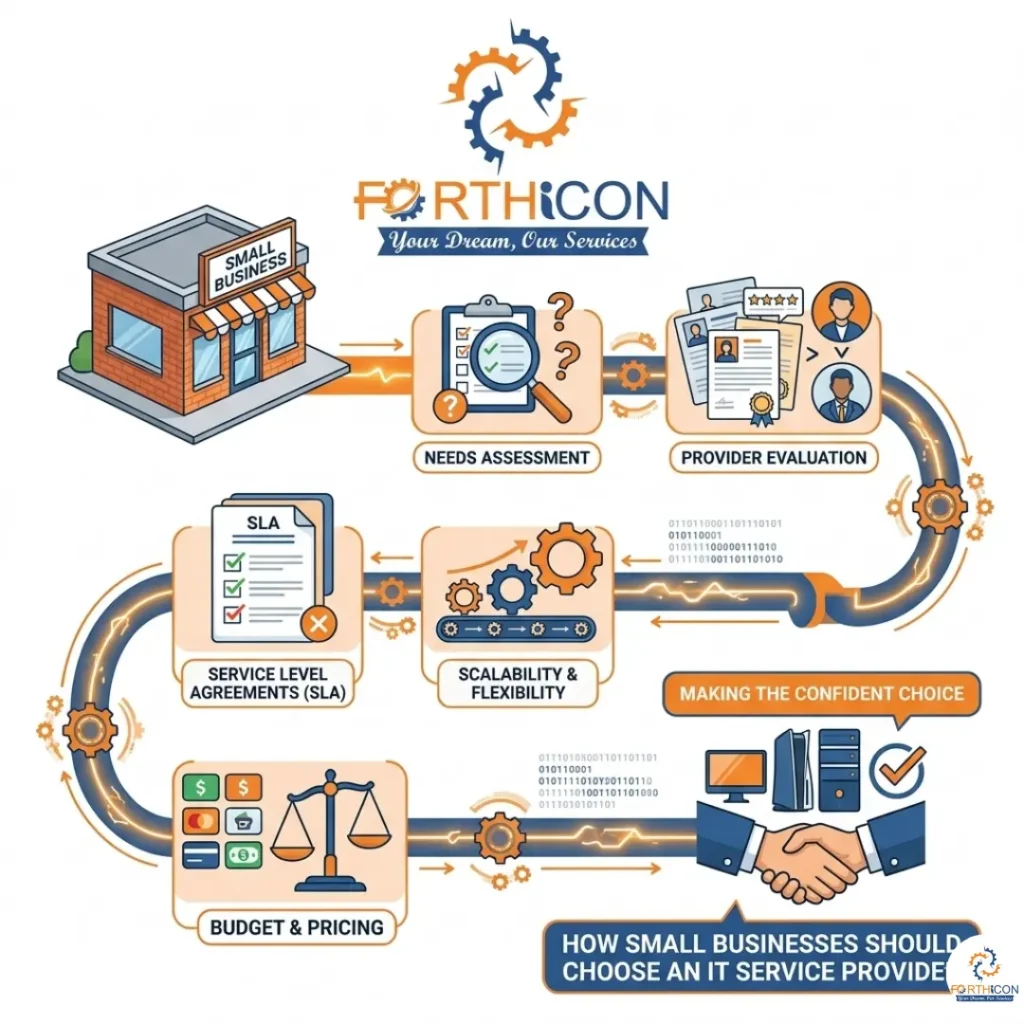
Selecting the right IT partner is crucial for long-term success.
When evaluating IT Services for Small Businesses, consider the following factors:
Experience and Expertise
Choose providers with proven experience in delivering IT solutions to businesses in your industry.
Range of Services
Ensure the provider offers comprehensive services such as cloud solutions, cybersecurity, and infrastructure management.
Scalability
Your IT partner should provide solutions that can grow with your business.
Customer Support
Reliable support services ensure quick resolution of technical issues.
By choosing the right provider, businesses can build a strong technology foundation for future growth.
Future Trends in IT Services for Small Businesses
Technology continues to evolve rapidly, and several trends will shape IT Services for Small Businesses in 2026.
Artificial Intelligence Integration
AI-powered tools help businesses automate processes and improve decision-making.
Remote Work Infrastructure
More businesses are adopting hybrid and remote work models.
Cloud-First Strategies
Companies are increasingly moving their operations to cloud platforms.
Advanced Cybersecurity Solutions
With rising cyber threats, businesses will invest more in advanced security technologies.
Adopting these trends will help small businesses remain competitive and innovative.
Businesses rely on modern cloud infrastructure to manage data and applications efficiently. Platforms such as Amazon Web Services and Microsoft Azure allow companies to scale their operations while maintaining strong security and reliability. These cloud solutions have become essential components of modern IT strategies.
Conclusion
Technology is no longer optional for businesses—it is essential for survival and growth. Professional IT Services for Small Businesses help organizations improve efficiency, protect data, and scale operations.
From cloud computing and cybersecurity to software development and infrastructure management, IT services provide the tools needed for success in the digital economy.
Small businesses that invest in reliable IT solutions will be better equipped to compete in the marketplace, serve customers effectively, and achieve sustainable growth.
Partnering with experienced technology providers allows businesses to focus on their goals while experts manage the complex world of IT.
As we move into 2026, companies that embrace modern IT Services for Small Businesses will gain a significant competitive advantage in the evolving digital landscape.
Frequently Asked Questions (FAQ) – IT Services for Small Businesses
1.What are IT Services for Small Businesses?
IT Services for Small Businesses refer to technology solutions designed to help small companies manage their IT infrastructure, data security, communication systems, and digital operations efficiently. These services include managed IT support, cloud computing, cybersecurity, software development, and technical support.
Small businesses often lack dedicated IT teams, which makes professional IT services extremely valuable. With expert support, companies can focus on business growth while technology professionals manage systems, networks, and software.
Many organizations also work with professional service providers like Forthicon Pvt Ltd to implement scalable and cost-effective technology solutions.
2.Why are IT services important for small businesses?
Technology is the backbone of modern business operations. Without proper IT support, companies may face challenges such as data loss, security threats, system downtime, and inefficient workflows.
Professional IT Services for Small Businesses help organizations maintain stable and secure technology environments. These services improve productivity, ensure data protection, and allow businesses to adopt modern tools that enhance operations.
Additionally, IT services provide proactive monitoring and maintenance, preventing problems before they disrupt business operations.
3.What types of IT services do small businesses need?
Small businesses require several types of IT services depending on their size and industry. Some of the most important services include:
- Managed IT support
- Cloud computing solutions
- Cybersecurity services
- Website and software development
- Data backup and disaster recovery
- IT infrastructure management
- Network security solutions
These services ensure that businesses operate smoothly and securely while maintaining strong digital capabilities.
4.How do managed IT services benefit small businesses?
Managed IT services allow businesses to outsource their IT operations to professional experts. Instead of hiring a full-time IT team, companies can rely on specialized providers to monitor systems, maintain networks, and resolve technical issues.
Benefits of managed IT services include:
- Reduced operational costs
- Improved system reliability
- 24/7 monitoring and support
- Faster issue resolution
- Access to advanced technology expertise
Managed services help businesses stay productive without worrying about complex technical challenges.
5.How does cloud computing help small businesses?
Cloud computing allows businesses to store data, run applications, and manage operations through remote servers rather than local hardware.
Platforms such as Amazon Web Services and Microsoft Azure offer scalable infrastructure that businesses can access from anywhere.
Benefits of cloud computing include:
- Remote access to data and applications
- Lower infrastructure costs
- Improved collaboration among teams
- Enhanced data security and backups
- Easy scalability as businesses grow
Cloud technology is becoming one of the most important IT Services for Small Businesses in 2026.
6.What cybersecurity solutions should small businesses implement?
Cybersecurity is essential for protecting business data and preventing cyberattacks. Small businesses are increasingly targeted by hackers because they often lack advanced security systems.
Important cybersecurity measures include:
- Firewall protection
- Antivirus and anti-malware software
- Data encryption
- Secure authentication systems
- Employee cybersecurity training
Search engines like Google also emphasize website security as an important ranking factor, making cybersecurity essential for both operations and online visibility.
7.How much do IT services cost for small businesses?
The cost of IT Services for Small Businesses depends on several factors such as the number of employees, infrastructure requirements, and service complexity.
Many providers offer flexible pricing models, including:
- Monthly managed service plans
- Pay-as-you-go IT support
- Project-based pricing for development services
Although IT services require investment, they often reduce long-term costs by preventing system failures, security breaches, and productivity losses.
8.How can IT services improve business productivity?
IT services improve productivity by automating processes, improving communication systems, and ensuring reliable technology infrastructure.
For example:
- Automated software reduces manual tasks
- Collaboration tools improve teamwork
- Cloud solutions allow remote access to systems
- Technical support resolves problems quickly
These improvements allow employees to focus on their core responsibilities without being interrupted by technical issues.
9.Do small businesses need professional website development services?
Yes, a professional website is essential for attracting customers and building credibility in today’s digital marketplace.
Website development services help businesses create:
- Responsive websites
- E-commerce platforms
- Mobile-friendly user experiences
- Search engine optimized pages
A well-designed website improves customer engagement and increases visibility on search engines.
Website development is therefore an important part of IT Services for Small Businesses.
10.What is data backup and disaster recovery?
Data backup and disaster recovery services protect businesses from losing important information due to hardware failures, cyberattacks, or natural disasters.
These services create secure copies of business data and ensure it can be restored quickly when needed.
Key benefits include:
- Protection against data loss
- Fast system recovery
- Business continuity during emergencies
Without proper backup solutions, businesses risk losing critical operational and customer data.
11.How can IT consulting help small businesses grow?
IT consulting provides expert guidance on choosing the right technologies for business operations.
Consultants analyze business goals and recommend solutions that improve efficiency and reduce costs.
IT consulting helps businesses:
- Adopt new technologies
- Implement digital transformation strategies
- Improve IT security and compliance
- Optimize technology investments
With proper consulting, businesses can make informed technology decisions that support long-term growth.
12.What future trends will impact IT services for small businesses?
Several technology trends will influence IT Services for Small Businesses in the coming years.
Some of the most important trends include:
Artificial Intelligence integration
AI tools help automate business processes and analyze large amounts of data for better decision-making.
Remote and hybrid work environments
Companies increasingly use digital collaboration platforms to support distributed teams.
Cloud-based business operations
More organizations are adopting cloud-first strategies to improve scalability and flexibility.
Advanced cybersecurity technologies
As cyber threats increase, businesses are investing more in advanced security solutions.
Small businesses that adapt to these trends will gain a competitive advantage in the evolving digital economy.