
Table of Contents
IT Infrastructure Solutions for Scalable Business Operations
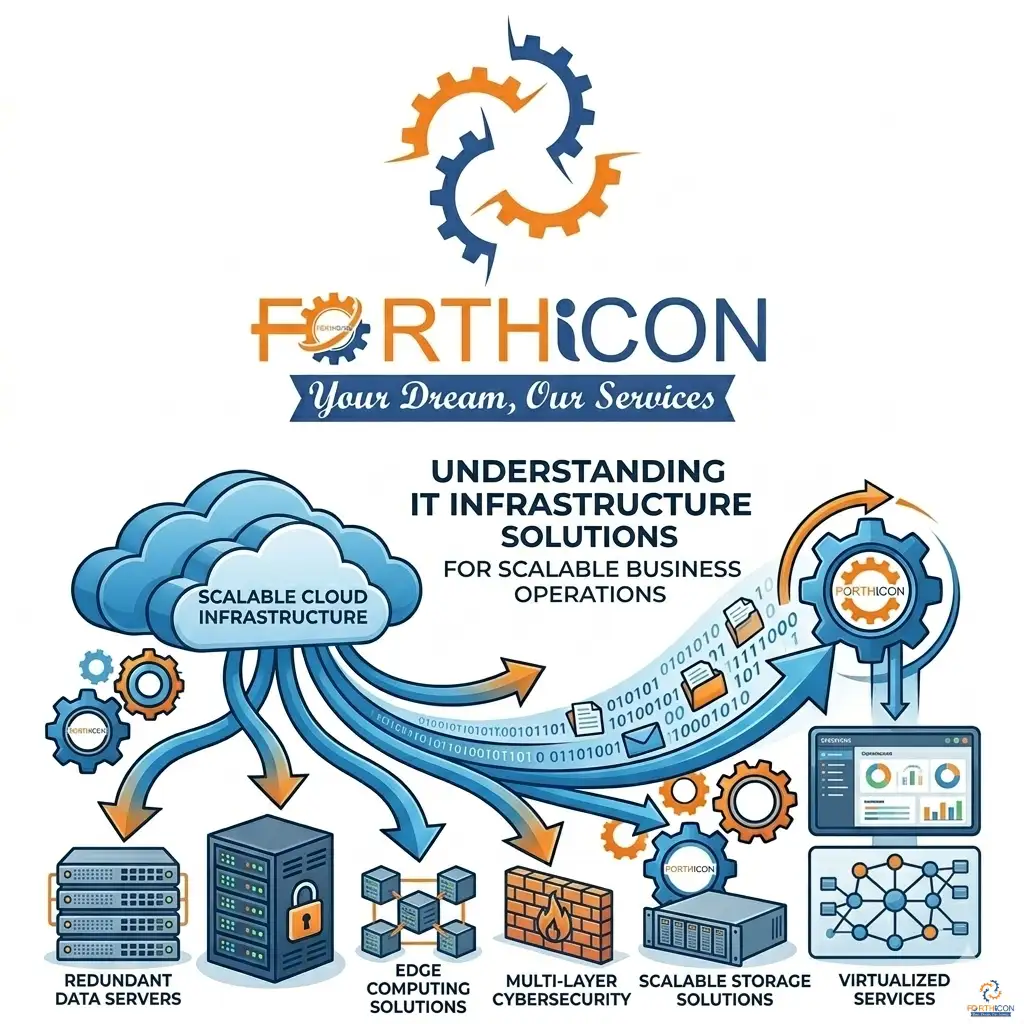
In the modern digital economy, businesses rely heavily on technology to operate efficiently, serve customers, and stay competitive. From communication systems to data management platforms, every organization depends on a reliable technology foundation. This foundation is built through effective IT infrastructure solutions that support business operations and enable growth.
IT infrastructure includes the hardware, software, networks, servers, storage systems, and security frameworks that allow businesses to run their applications and manage data efficiently. Companies investing in robust IT infrastructure gain a competitive advantage by improving productivity, security, and scalability.
With rapid advancements in cloud computing, cybersecurity, and automation, organizations must adopt modern IT infrastructure solutions to remain agile and prepared for future technological challenges.
This guide explains the importance of IT infrastructure, key components, benefits, implementation strategies, and how businesses can use these solutions to achieve scalable and efficient operations.
What Are IT Infrastructure Solutions?
IT infrastructure solutions refer to the technologies and services used to build, manage, and maintain an organization’s IT environment. These solutions include hardware systems, software applications, networking equipment, storage devices, and security systems.
An effective IT infrastructure allows businesses to:
- Store and process large amounts of data
- Run critical business applications
- Maintain secure communication networks
- Support remote work and collaboration
- Ensure system reliability and uptime
Modern businesses often combine traditional infrastructure with cloud-based platforms such as Amazon Web Services, Microsoft Azure, and Google Cloud to create scalable and flexible IT environments.
Key Components of IT Infrastructure Solutions
A strong IT infrastructure consists of several essential components working together to support business operations.
Hardware Infrastructure
Hardware includes physical devices such as servers, computers, routers, switches, and storage systems. These components form the backbone of IT operations and support application processing and data management.
Network Infrastructure
Network infrastructure connects devices and systems across an organization. It includes routers, firewalls, switches, and wireless networks that enable communication and data transfer between systems.
Data Storage Systems
Businesses generate vast amounts of data every day. Reliable storage systems ensure that this data is securely stored and easily accessible when needed.
Cloud Infrastructure
Cloud platforms allow businesses to host applications and data remotely, reducing the need for expensive physical hardware.
Cybersecurity Systems
Security solutions protect business systems from cyber threats, unauthorized access, and data breaches.
Modern cybersecurity practices often involve technologies such as encryption, firewalls, and identity management tools.
Why Businesses Need IT Infrastructure Solutions
Technology infrastructure plays a vital role in ensuring that business operations run smoothly and efficiently.
Improved Operational Efficiency
Reliable IT infrastructure allows employees to access systems quickly and perform tasks without interruptions.
Better Data Management
Businesses can store, analyze, and manage data effectively through centralized infrastructure systems.
Enhanced Security
Modern IT infrastructure includes advanced security solutions to protect sensitive data and prevent cyber attacks.
Business Continuity
Backup and disaster recovery systems ensure that businesses can recover quickly in case of unexpected disruptions.
Scalability for Growth
As organizations grow, IT infrastructure solutions can scale to support increasing workloads and new technologies.
Types of IT Infrastructure Solutions
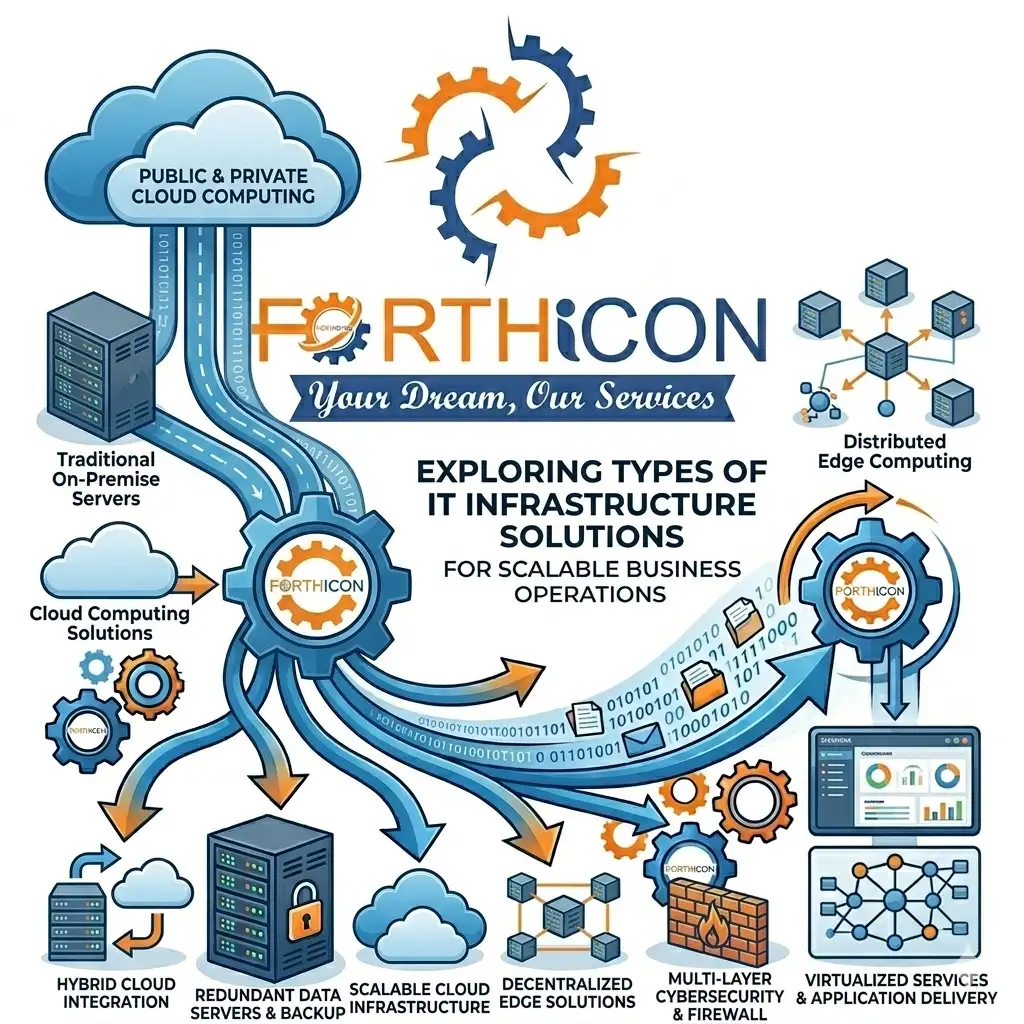
Different businesses require different infrastructure strategies based on their needs.
Traditional Infrastructure
Traditional infrastructure relies on on-premise hardware such as servers and storage devices located within the organization’s physical facilities.
Cloud Infrastructure
Cloud infrastructure provides computing resources through remote data centers. Businesses can access these resources via the internet.
Cloud computing platforms such as Amazon Web Services and Microsoft Azure allow organizations to scale their infrastructure without purchasing hardware.
Hybrid Infrastructure
Hybrid infrastructure combines on-premise systems with cloud platforms. This approach offers flexibility and enables organizations to store sensitive data locally while using cloud services for scalability.
Hyperconverged Infrastructure
Hyperconverged infrastructure integrates computing, storage, and networking into a single system that simplifies management and improves performance.
Benefits of Modern IT Infrastructure Solutions
Implementing modern IT infrastructure provides numerous benefits for organizations.
Increased Productivity
Employees can work more efficiently when systems run smoothly and applications load quickly.
Reduced Downtime
Advanced monitoring tools detect potential issues early, reducing system downtime and preventing disruptions.
Cost Optimization
Cloud infrastructure reduces capital expenditure on hardware and lowers maintenance costs.
Enhanced Collaboration
Modern infrastructure supports collaboration tools that allow teams to work together from different locations.
Data Security and Compliance
Security frameworks protect sensitive data and ensure compliance with industry regulations.
IT Infrastructure Design and Implementation Process
Successful infrastructure deployment requires careful planning and execution.
1. Infrastructure Assessment
The process begins by analyzing the existing IT environment to identify gaps and improvement opportunities.
2. Planning and Architecture Design
IT specialists design an infrastructure architecture that aligns with the organization’s business goals and technical requirements.
3. Implementation
Hardware, software, and network systems are installed and configured based on the design plan.
4. Testing and Optimization
After implementation, systems are tested to ensure performance, security, and reliability.
5. Monitoring and Maintenance
Continuous monitoring ensures that systems remain secure and operate efficiently.
Network Security in IT Infrastructure
Security is a critical component of any infrastructure solution. Businesses must protect their systems from cyber threats, data breaches, and unauthorized access.
Key security practices include:
- Firewall implementation
- Data encryption
- Multi-factor authentication
- Network monitoring
- Security audits
Security tools and technologies help organizations safeguard their digital assets and maintain customer trust.
Role of Cloud Computing in IT Infrastructure
Cloud computing has transformed how businesses design and manage IT infrastructure.
Platforms such as Google Cloud enable businesses to deploy applications quickly and scale resources based on demand.
Cloud infrastructure also supports modern technologies such as artificial intelligence, machine learning, and big data analytics.
Industries That Benefit from IT Infrastructure Solutions
Almost every industry relies on IT infrastructure to support operations.
Healthcare
Hospitals use secure IT infrastructure to store patient data and manage healthcare systems.
Banking and Finance
Financial institutions rely on high-performance infrastructure for secure transactions and financial data processing.
Retail and E-Commerce
Retail companies use IT infrastructure to manage online stores, inventory systems, and payment gateways.
Education
Educational institutions use infrastructure systems to support online learning platforms and digital classrooms.
Logistics and Supply Chain
Logistics companies depend on IT systems for shipment tracking, route optimization, and warehouse management.
Future Trends in IT Infrastructure
Technology continues to evolve rapidly, and several trends are shaping the future of IT infrastructure.
Artificial Intelligence Integration
AI-powered systems help automate IT operations and improve system monitoring.
Edge Computing
Edge computing processes data closer to the source, reducing latency and improving application performance.
Automation and DevOps
Automation tools streamline infrastructure management and reduce manual work.
Zero Trust Security
Zero Trust architecture strengthens security by verifying every user and device accessing the network.
Choosing the Right IT Infrastructure Solution Provider
Selecting the right provider is essential for building reliable IT infrastructure.
Businesses should evaluate:
- Technical expertise and certifications
- Experience in infrastructure management
- Security capabilities
- Scalability options
- Ongoing support and maintenance services
Working with experienced IT professionals ensures that infrastructure solutions align with business objectives and industry best practices.
Conclusion
Reliable IT infrastructure solutions form the backbone of modern business operations. From managing data and applications to supporting communication and security, infrastructure systems play a crucial role in organizational success.
Businesses that invest in modern IT infrastructure gain the flexibility, scalability, and security needed to adapt to rapidly changing technology environments.
By adopting advanced infrastructure strategies—including cloud integration, automation, and strong cybersecurity—organizations can build a resilient technology foundation that supports long-term growth and innovation.
If your business wants to improve performance, enhance security, and scale operations effectively, implementing professional IT infrastructure solutions is an essential step toward digital transformation.
Frequently Asked Questions (FAQs)
1. What are IT infrastructure solutions?
IT infrastructure solutions refer to the hardware, software, networks, servers, storage systems, and security technologies that support an organization’s IT environment. These solutions help businesses run applications, manage data, and maintain reliable digital operations.
2. Why are IT infrastructure solutions important for businesses?
IT infrastructure solutions provide the technological foundation that supports daily business activities. They help improve productivity, ensure data security, support communication systems, and enable businesses to scale their operations efficiently.
3. What are the key components of IT infrastructure?
The main components of IT infrastructure include:
- Servers and data centers
- Networking equipment (routers, switches, firewalls)
- Storage systems and databases
- Cloud platforms
- Cybersecurity tools
- Software applications
These components work together to ensure stable and secure IT operations.
4. What types of IT infrastructure solutions are available?
Businesses can choose from several types of IT infrastructure solutions:
- Traditional infrastructure (on-premise systems)
- Cloud infrastructure hosted on platforms like Amazon Web Services or Microsoft Azure
- Hybrid infrastructure combining on-premise and cloud systems
- Hyperconverged infrastructure that integrates storage, networking, and computing in one system.
5. How do IT infrastructure solutions improve business performance?
IT infrastructure solutions improve performance by providing faster systems, reliable network connectivity, better data management, and improved security. They also allow organizations to automate processes and support remote work environments.
6. What role does cloud computing play in IT infrastructure?
Cloud computing enables businesses to store data, run applications, and manage systems through remote servers instead of physical hardware. Platforms such as Google Cloud provide scalable infrastructure that reduces costs and improves flexibility.
7. How do businesses ensure security in IT infrastructure?
Businesses protect their IT infrastructure using multiple security measures such as firewalls, encryption, access controls, intrusion detection systems, and regular security audits. These measures help prevent cyber threats and protect sensitive data.
8. What industries benefit from IT infrastructure solutions?
Almost every industry benefits from IT infrastructure solutions, including healthcare, banking and finance, retail, education, logistics, and manufacturing. These industries rely on secure and reliable IT systems to manage data and support digital operations.
9. What challenges can occur when implementing IT infrastructure?
Some common challenges include high initial setup costs, integration issues with legacy systems, cybersecurity risks, and the need for skilled IT professionals to manage infrastructure systems effectively.
10. How can businesses choose the right IT infrastructure provider?
Businesses should evaluate factors such as technical expertise, industry experience, scalability of solutions, security standards, and ongoing support services when selecting an IT infrastructure solutions provider.