
Table of Contents
Cloud Migration Services: Move Your Business to the Cloud
In today’s rapidly evolving digital landscape, businesses are constantly looking for ways to improve efficiency, reduce operational costs, and scale their technology infrastructure. One of the most powerful solutions enabling this transformation is cloud migration services. By moving applications, data, and IT resources to the cloud, organizations can unlock new levels of flexibility, performance, and innovation.
Cloud computing has revolutionized how businesses operate. Instead of relying on traditional on-premise servers and infrastructure, companies can now access powerful computing resources through cloud platforms such as Amazon Web Services, Microsoft Azure, and Google Cloud. These platforms provide scalable and secure environments that support modern business applications.
In this comprehensive guide, we will explore everything you need to know about cloud migration services, including benefits, migration strategies, processes, technologies, and best practices for successful cloud adoption.
What Are Cloud Migration Services?
Cloud migration services refer to the process of transferring digital assets such as applications, databases, IT infrastructure, and workloads from traditional on-premise systems to cloud environments.
This migration allows businesses to store and manage their data remotely while accessing it through secure internet connections.
Cloud migration services typically include:
- Infrastructure migration
- Application migration
- Database migration
- Cloud architecture design
- Security and compliance implementation
- Performance optimization
- Monitoring and maintenance
Organizations use these services to modernize their IT environments and support digital transformation initiatives.
Why Businesses Are Moving to the Cloud
The adoption of cloud technology has grown significantly over the past decade. Businesses of all sizes—from startups to large enterprises—are migrating to cloud platforms to stay competitive in a digital economy.
Here are some key reasons why companies invest in cloud migration services.
Scalability
Cloud environments allow businesses to scale resources up or down based on demand. This flexibility ensures that companies only pay for the computing resources they use.
Cost Efficiency
Traditional IT infrastructure requires significant investments in hardware, maintenance, and upgrades. Cloud migration reduces these costs by shifting to a subscription-based model.
Improved Performance
Cloud platforms provide high-performance infrastructure that improves application speed, reliability, and availability.
Enhanced Security
Leading cloud providers implement advanced security measures such as encryption, identity management, and continuous monitoring to protect sensitive business data.
Remote Accessibility
Cloud systems allow employees to access applications and data from anywhere in the world, enabling remote work and collaboration
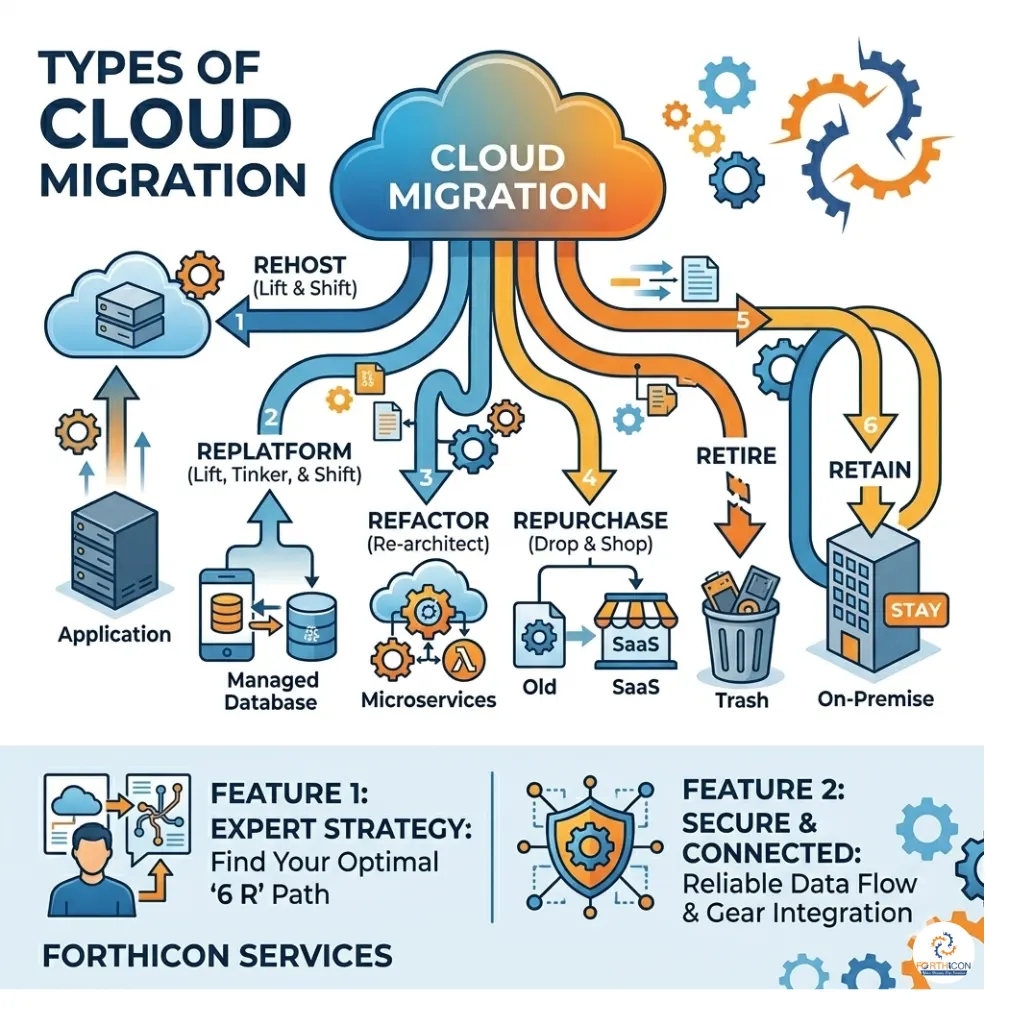
Types of Cloud Migration
Cloud migration strategies vary depending on business needs, technical requirements, and existing infrastructure.
Rehosting (Lift and Shift)
Rehosting involves moving applications and workloads to the cloud without making significant changes to the architecture. This is often the fastest way to migrate to the cloud.
Replatforming
Replatforming involves making small adjustments to applications so they can take advantage of cloud capabilities without redesigning the entire system.
Refactoring
Refactoring involves redesigning applications to fully utilize cloud-native features such as microservices, serverless computing, and automation.
Repurchasing
Some organizations replace legacy applications with cloud-based software solutions such as SaaS platforms.
Retiring
In some cases, outdated applications are eliminated during the migration process.
Key Benefits of Cloud Migration Services
Migrating to the cloud offers numerous benefits that support long-term business growth and innovation.
Business Agility
Cloud infrastructure allows businesses to deploy applications faster and respond quickly to changing market demands.
Data Security and Compliance
Cloud providers offer robust security frameworks and compliance certifications to protect sensitive data.
Disaster Recovery
Cloud environments provide automated backups and disaster recovery systems to prevent data loss during unexpected events.
Reduced IT Maintenance
With cloud infrastructure, businesses no longer need to manage physical servers, which reduces maintenance workload and operational costs.
Global Reach
Cloud platforms operate data centers worldwide, enabling businesses to deliver services faster to customers across different regions.
Cloud Migration Process
Successful cloud migration requires careful planning and execution. Professional cloud migration services follow a structured approach to ensure minimal disruption and optimal performance.
1. Assessment and Planning
The migration process begins with analyzing existing IT infrastructure, applications, and workloads. This helps determine the most suitable migration strategy.
2. Cloud Architecture Design
Experts design a cloud environment tailored to the organization’s needs, including network configuration, storage systems, and security frameworks.
3. Migration Strategy Development
A detailed migration roadmap is created to outline timelines, priorities, and technical requirements.
4. Data and Application Migration
During this phase, applications and databases are transferred to the cloud environment while maintaining data integrity.
5. Testing and Optimization
After migration, systems are tested for performance, security, and compatibility. Adjustments are made to optimize efficiency.
6. Monitoring and Support
Ongoing monitoring ensures the cloud infrastructure remains secure, reliable, and scalable.
Technologies Used in Cloud Migration
Cloud migration services rely on modern technologies and tools to ensure seamless transitions from on-premise systems to cloud environments.
Cloud Platforms
Organizations typically migrate to cloud platforms such as:
- Amazon Web Services
- Microsoft Azure
- Google Cloud
These platforms provide powerful computing resources, storage solutions, and AI capabilities.
Containerization
Container technologies like Docker allow applications to run consistently across different environments.
Orchestration Tools
Platforms such as Kubernetes help manage containerized applications efficiently.
Cloud Databases
Cloud databases such as managed SQL and NoSQL solutions enable scalable data storage and management.
Common Challenges in Cloud Migration
While cloud migration offers many advantages, organizations may face certain challenges during the transition.
Data Security Concerns
Ensuring secure data transfer and storage is critical during migration.
Downtime Risks
Poor planning can result in service disruptions during the migration process.
Compatibility Issues
Some legacy applications may require modifications to function properly in cloud environments.
Skill Gaps
Organizations may need specialized expertise to manage cloud infrastructure effectively.
Working with experienced cloud migration professionals helps minimize these risks.
Industries That Benefit from Cloud Migration
Cloud migration services are used across multiple industries to improve efficiency and digital capabilities.
Healthcare
Healthcare providers use cloud platforms to store patient data securely and enable telemedicine services.
Finance
Financial institutions rely on cloud computing for secure transactions, data analytics, and fraud detection.
Retail and E-Commerce
Retail businesses use cloud infrastructure to manage online stores, inventory systems, and customer analytics.
Education
Educational institutions leverage cloud platforms for online learning systems and digital collaboration.
Logistics
Logistics companies use cloud systems for shipment tracking, route optimization, and supply chain management.
Future Trends in Cloud Migration
Cloud technology continues to evolve, and several emerging trends are shaping the future of cloud migration services.
Multi-Cloud Strategies
Many organizations use multiple cloud providers to increase flexibility and reduce dependency on a single vendor.
Artificial Intelligence Integration
Cloud platforms increasingly integrate AI and machine learning tools for advanced data analysis.
Serverless Computing
Serverless architectures allow developers to build applications without managing infrastructure.
Edge Computing
Edge computing processes data closer to users, improving speed and reducing latency.
How to Choose the Right Cloud Migration Service Provider
Selecting the right cloud migration partner is crucial for a successful transformation.
Businesses should evaluate:
- Technical expertise and certifications
- Experience with cloud platforms
- Security and compliance capabilities
- Proven track record of successful migrations
- Post-migration support and monitoring
Working with a reliable cloud migration provider ensures a smooth and secure transition to the cloud.
Conclusion
Cloud computing has become a cornerstone of modern business technology. By adopting cloud migration services, organizations can modernize their IT infrastructure, improve performance, and scale their operations efficiently.
Migrating to the cloud provides numerous advantages, including cost savings, enhanced security, remote accessibility, and improved disaster recovery capabilities.
As businesses continue to embrace digital transformation, cloud migration will remain a critical strategy for achieving long-term growth and innovation. Partnering with experienced cloud professionals ensures a seamless transition and helps organizations unlock the full potential of cloud technology.
Frequently Asked Questions (FAQs)
1. What are cloud migration services?
Cloud migration services involve moving data, applications, and IT infrastructure from on-premise servers to cloud platforms. This process helps businesses improve scalability, security, and operational efficiency while reducing infrastructure costs.
2. Why should businesses use cloud migration services?
Businesses use cloud migration services to improve performance, reduce IT maintenance costs, increase scalability, and enable remote access to systems. Cloud environments also provide better security and disaster recovery compared to traditional infrastructure.
3. What are the main types of cloud migration?
There are several cloud migration strategies commonly used by organizations:
- Rehosting (Lift and Shift) – moving applications to the cloud without major changes
- Replatforming – optimizing applications for cloud environments
- Refactoring – redesigning applications to use cloud-native features
- Repurchasing – replacing legacy software with cloud-based SaaS solutions
Each approach depends on the business’s technical requirements and goals.
4. Which cloud platforms are commonly used for migration?
Most businesses migrate their systems to major cloud providers such as:
- Amazon Web Services
- Microsoft Azure
- Google Cloud
These platforms provide scalable infrastructure, advanced security features, and global data centers.
5. How long does cloud migration take?
The timeline for cloud migration depends on the size and complexity of the IT infrastructure. Small projects may take a few weeks, while large enterprise migrations involving multiple systems and databases may take several months.
6. Is cloud migration secure?
Yes, cloud migration can be highly secure when implemented properly. Leading cloud providers offer advanced security features such as encryption, identity management, access controls, and continuous monitoring to protect sensitive business data.
7. What are the benefits of cloud migration services?
Cloud migration services provide several advantages, including:
- Reduced infrastructure costs
- Improved scalability and flexibility
- Better disaster recovery solutions
- Faster application deployment
- Remote accessibility for teams
These benefits help businesses operate more efficiently and adapt to changing market demands.
8. What challenges can occur during cloud migration?
Some common challenges include data security concerns, application compatibility issues, downtime risks, and lack of cloud expertise. Working with experienced cloud migration professionals helps minimize these risks.
9. What industries benefit from cloud migration services?
Many industries benefit from cloud migration, including:
- Healthcare
- Banking and finance
- E-commerce and retail
- Education
- Logistics and transportation
These industries use cloud platforms to improve operational efficiency and manage large amounts of data.
10. How do businesses choose the right cloud migration service provider?
When selecting a provider, businesses should consider experience, technical expertise, security standards, client reviews, and the ability to provide ongoing support after migration.