
Table of Contents
In today’s rapidly evolving business environment, technology is no longer just a support function—it has become the driving force behind innovation, growth, and competitive advantage. Companies across industries are embracing digital transformation services to modernize their operations, improve efficiency, and deliver better experiences to customers.
Digital transformation involves integrating advanced technologies into every aspect of a business. This transformation changes how organizations operate, communicate, and deliver value to their customers. From automation and cloud computing to artificial intelligence and data analytics, digital transformation enables businesses to become more agile, data-driven, and customer-focused.
Organizations that successfully implement digital transformation strategies can respond faster to market changes, improve operational efficiency, and unlock new opportunities for innovation.
What Are Digital Transformation Services?
Digital transformation services refer to the strategic implementation of digital technologies to improve business processes, customer experiences, and organizational performance.
These services typically include:
- Technology consulting and strategy planning
- Cloud migration and infrastructure modernization
- Business process automation
- Data analytics and business intelligence
- Cybersecurity solutions
- Software and application modernization
By adopting digital transformation services, businesses can replace outdated systems with modern technology platforms that improve productivity and scalability.
Many organizations leverage cloud platforms such as Amazon Web Services, Microsoft Azure, and Google Cloud to support their digital transformation initiatives.
Why Digital Transformation Is Important for Businesses
Digital transformation is no longer optional. It has become a necessity for businesses that want to remain competitive in the modern marketplace.
Improved Operational Efficiency
Digital technologies help automate repetitive tasks and streamline business processes. This reduces manual work and allows employees to focus on higher-value activities.
Enhanced Customer Experience
Modern customers expect fast, convenient, and personalized services. Digital transformation enables businesses to deliver seamless digital experiences across multiple channels.
Data-Driven Decision Making
Businesses generate large amounts of data every day. Digital transformation solutions enable organizations to analyze this data and make informed decisions.
Increased Agility
Organizations that adopt digital technologies can respond quickly to market changes, customer demands, and emerging opportunities.
Competitive Advantage
Companies that embrace digital transformation often outperform competitors that rely on outdated systems.
Key Technologies Driving Digital Transformation
Digital transformation services rely on several advanced technologies that enable businesses to innovate and scale.
Cloud Computing
Cloud platforms provide scalable computing resources that allow businesses to store data, run applications, and deploy services without maintaining physical infrastructure.
Companies commonly use platforms such as Amazon Web Services and Microsoft Azure for cloud infrastructure.
Artificial Intelligence and Machine Learning
AI and machine learning enable businesses to automate decision-making processes, analyze large datasets, and improve customer experiences through intelligent systems.
Internet of Things (IoT)
IoT connects physical devices to the internet, enabling real-time data collection and monitoring. Industries such as manufacturing and logistics use IoT to optimize operations.
Data Analytics and Business Intelligence
Advanced analytics tools help organizations transform raw data into actionable insights that support strategic planning.
Automation Technologies
Automation platforms streamline business processes and reduce human errors by automating repetitive tasks.
Benefits of Digital Transformation Services
Implementing digital transformation services offers numerous benefits for businesses.
Increased Productivity
Automation and digital tools help employees complete tasks faster and more efficiently.
Cost Reduction
Modern digital solutions reduce operational costs by optimizing processes and eliminating inefficiencies.
Better Collaboration
Digital platforms allow teams to collaborate effectively, regardless of their location.
Enhanced Security
Digital transformation includes modern cybersecurity measures that protect business systems and data.
Innovation and Growth
By adopting new technologies, businesses can develop innovative products and services that meet changing customer needs.
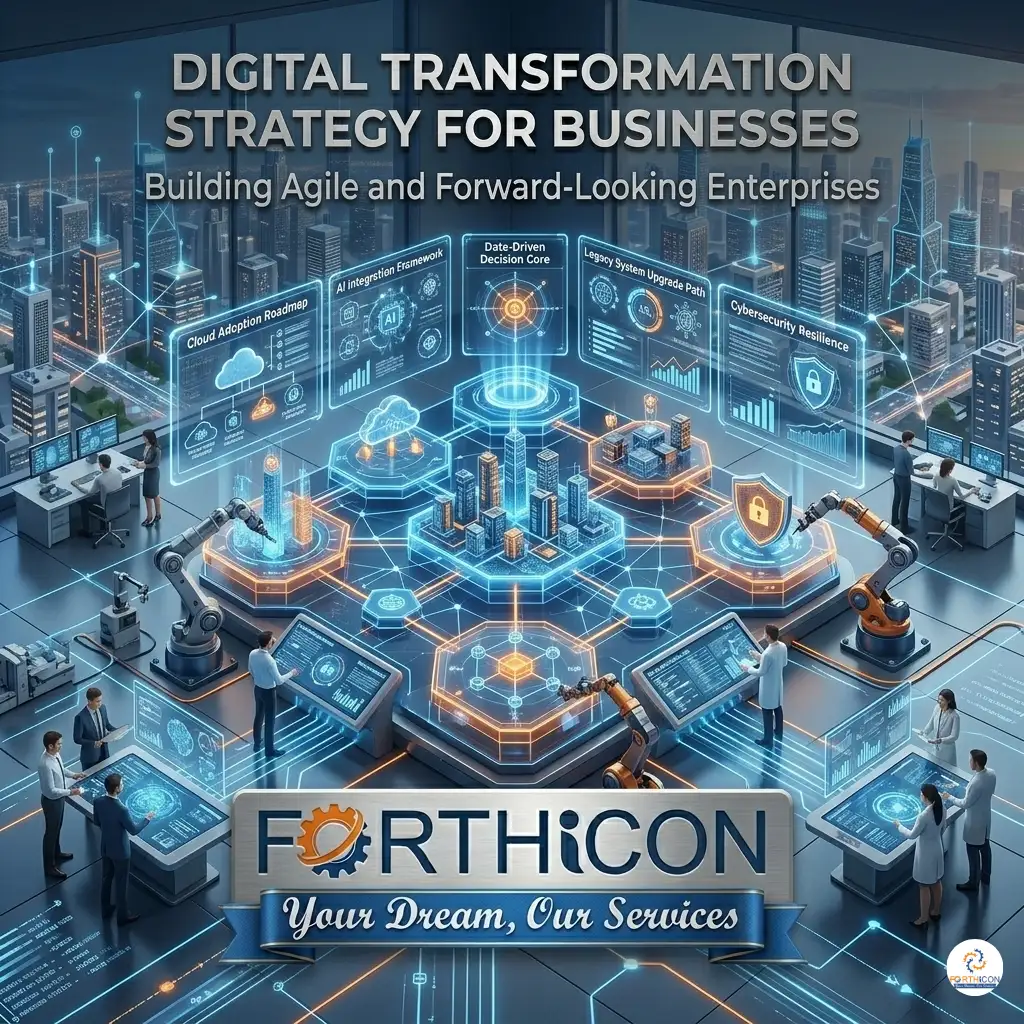
Digital Transformation Strategy for Businesses
Successful digital transformation requires a well-defined strategy.
1. Assess Current Technology Infrastructure
Organizations should evaluate their existing IT systems to identify gaps and opportunities for improvement.
2. Define Business Goals
Digital transformation initiatives should align with the organization’s strategic objectives.
3. Develop a Technology Roadmap
A clear roadmap helps businesses plan the implementation of digital solutions and prioritize projects.
4. Implement Modern Technologies
Businesses should adopt technologies that improve efficiency, customer experience, and scalability.
5. Train Employees
Employee training ensures that teams can effectively use new digital tools and systems.
6. Monitor and Optimize
Continuous monitoring allows businesses to refine their digital transformation strategies and maximize results.
Industries Benefiting from Digital Transformation
Digital transformation services are transforming industries worldwide.
Healthcare
Healthcare organizations use digital systems to manage patient data, enable telemedicine, and improve healthcare delivery.
Banking and Finance
Financial institutions rely on digital platforms for secure transactions, fraud detection, and customer analytics.
Retail and E-Commerce
Retail businesses use digital technologies to manage inventory, personalize marketing campaigns, and enhance online shopping experiences.
Manufacturing
Manufacturers use smart technologies and IoT systems to optimize production processes and reduce downtime.
Education
Educational institutions adopt digital platforms for online learning, collaboration, and student management systems.
Challenges in Digital Transformation
Despite its benefits, digital transformation can present challenges.
Resistance to Change
Employees may resist adopting new technologies and workflows.
Legacy Systems
Older systems may not integrate easily with modern digital platforms
Cybersecurity Risks
Digital environments require strong security measures to prevent cyber threats.
Budget Constraints
Implementing new technologies may require significant investment.
Working with experienced digital transformation specialists helps businesses overcome these challenges.
Role of Cloud Computing in Digital Transformation
Cloud computing plays a crucial role in enabling digital transformation.
Cloud platforms such as Google Cloud provide scalable infrastructure, advanced analytics tools, and secure environments for deploying applications.
Cloud-based systems allow businesses to:
- Reduce infrastructure costs
- Scale resources quickly
- Improve system performance
- Enable remote work environments
Cloud adoption is one of the most important steps in any digital transformation journey.
Future Trends in Digital Transformation
Technology continues to evolve, and several emerging trends will shape the future of digital transformation.
Artificial Intelligence Integration
AI-powered tools will become increasingly important for automation and predictive analytics.
Hyperautomation
Organizations will automate complex business processes using advanced automation platforms.
Edge Computing
Edge computing processes data closer to the source, reducing latency and improving performance.
Digital Customer Experiences
Businesses will focus on delivering seamless digital experiences across mobile, web, and physical channels.
Cybersecurity Innovation
As digital systems grow more complex, cybersecurity solutions will become more advanced.
Choosing the Right Digital Transformation Partner
Selecting the right partner is essential for successful digital transformation.
Businesses should consider:
- Industry experience and expertise
- Technology capabilities
- Proven track record of successful projects
- Security and compliance standards
- Ongoing support and maintenance services
A reliable digital transformation partner helps organizations implement technologies effectively and achieve long-term success.
How Digital Transformation Services Drive Business Growth
Digital transformation services enable businesses to operate more efficiently, innovate faster, and deliver better value to customers.
Organizations that invest in digital technologies gain the flexibility and scalability needed to compete in a rapidly changing market.
By adopting cloud computing, automation, and data-driven decision-making, businesses can unlock new opportunities and achieve sustainable growth.
Conclusion
Digital transformation is reshaping how businesses operate in the modern world. Companies that embrace digital transformation services can improve efficiency, enhance customer experiences, and stay ahead of technological advancements.
From cloud computing and automation to artificial intelligence and data analytics, digital transformation enables organizations to build agile and resilient business models.
As technology continues to evolve, businesses must invest in digital transformation strategies that support innovation and long-term growth. By partnering with experienced technology providers, organizations can successfully navigate their digital journey and unlock the full potential of modern technologies.
Frequently Asked Questions (FAQs)
1. What are Digital Transformation Services?
Digital Transformation Services help businesses integrate modern digital technologies into their operations. These services improve business processes, customer experiences, and overall efficiency by using tools such as cloud computing, automation, and data analytics.
2. Why are Digital Transformation Services important for modern businesses?
Digital Transformation Services are important because they help companies stay competitive in a rapidly evolving digital marketplace. They enable businesses to improve productivity, enhance customer experiences, and adapt quickly to changing market demands.
3. What technologies are used in Digital Transformation Services?
Digital Transformation Services often use technologies such as:
- Cloud computing
- Artificial intelligence (AI)
- Machine learning
- Data analytics
- Internet of Things (IoT)
- Automation tools
Businesses frequently rely on platforms like Amazon Web Services, Microsoft Azure, and Google Cloud for their digital infrastructure.
4. How do Digital Transformation Services improve customer experience?
Digital transformation enables businesses to deliver personalized services, faster responses, and seamless digital interactions through websites, mobile apps, and online platforms. This results in improved customer satisfaction and loyalty.
5. What industries benefit from Digital Transformation Services?
Almost every industry benefits from digital transformation, including:
- Healthcare
- Banking and finance
- Retail and e-commerce
- Manufacturing
- Education
- Logistics
These industries use digital technologies to optimize operations and enhance service delivery.
7. What are the biggest challenges in digital transformation?
Common challenges include resistance to change, integration with legacy systems, cybersecurity concerns, and lack of technical expertise. Working with experienced digital transformation consultants can help overcome these challenges.
8. How do Digital Transformation Services support business growth?
Digital Transformation Services help businesses scale operations, reduce costs, improve decision-making, and introduce innovative products and services. These improvements lead to increased revenue and long-term business growth.
9. What role does cloud computing play in digital transformation?
Cloud computing enables businesses to store data, run applications, and manage systems without relying on physical infrastructure. Platforms such as Amazon Web Services provide flexible and scalable environments that support digital transformation initiatives.
10. How can businesses start their digital transformation journey?
Businesses should begin by assessing their current technology infrastructure, defining clear digital goals, creating a strategic roadmap, and partnering with experienced IT service providers to implement digital solutions effectively.