
Table of Contents
Introduction
In today’s technology-driven business environment, organizations rely on a wide range of software applications, cloud platforms, mobile apps, and enterprise systems to manage operations, serve customers, and drive growth. While these technologies offer powerful capabilities, their true value is realized only when they can communicate and share information seamlessly. This is where API Development plays a critical role.
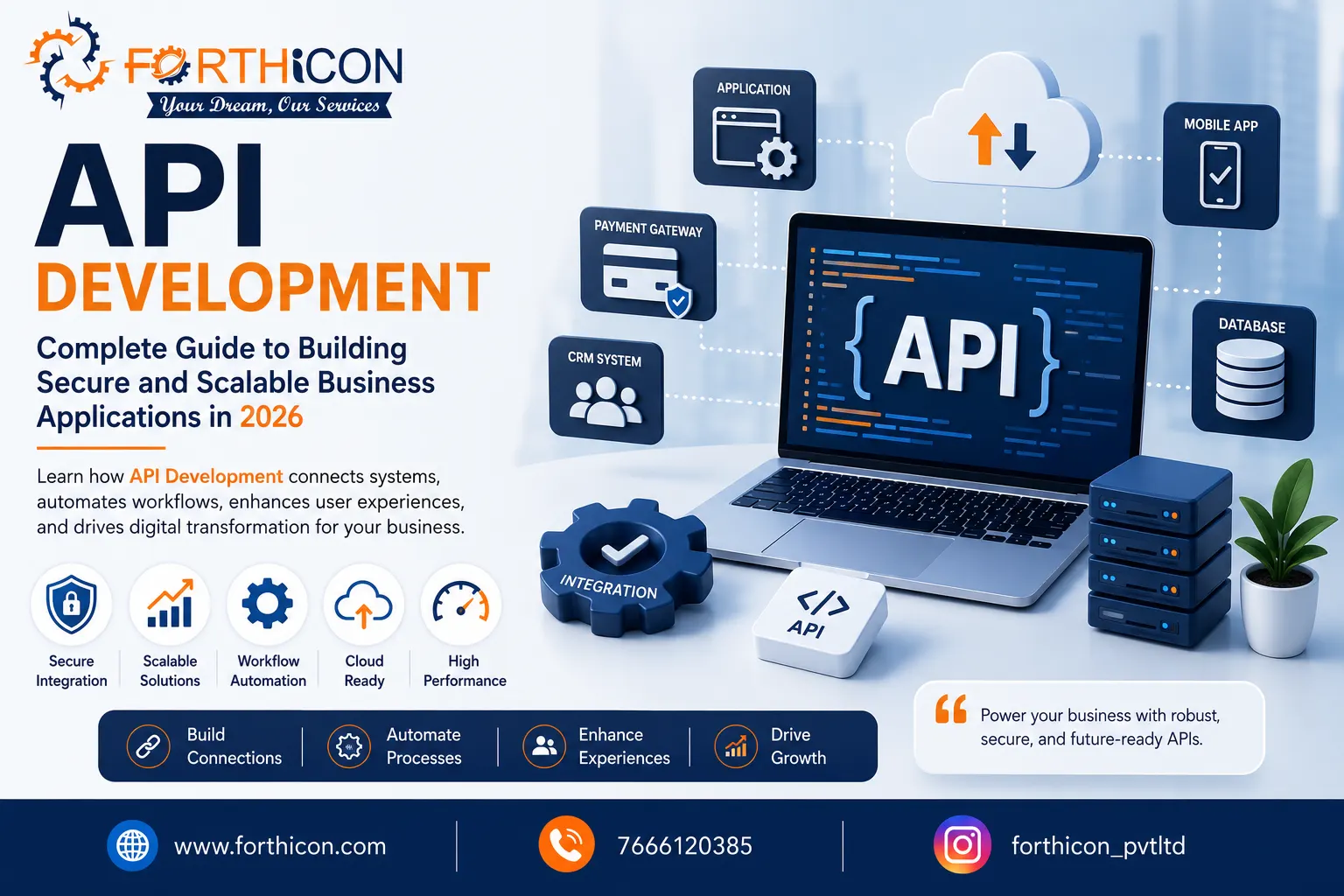
API Development enables different applications, platforms, and services to connect and exchange data securely, efficiently, and in real time. APIs act as digital bridges that allow systems to work together without requiring manual intervention. Whether a business is integrating payment gateways, synchronizing customer information across CRM platforms, connecting cloud applications, automating workflows, or enabling mobile app functionality, APIs are the foundation that makes these interactions possible.
As businesses continue to embrace digital transformation, the importance of connected systems has increased significantly. Organizations are adopting cloud technologies, automation tools, artificial intelligence solutions, and data-driven applications at an unprecedented pace. To ensure these technologies operate as a unified ecosystem, companies require reliable and scalable APIs that facilitate smooth communication between systems.
A well-designed API infrastructure helps businesses improve operational efficiency, reduce manual processes, enhance customer experiences, accelerate innovation, and support future scalability. It also enables organizations to integrate new technologies faster, respond to changing market demands, and create more flexible digital environments.
Today, API Development is no longer just a technical requirement for software projects. It has become a strategic business investment that supports growth, improves productivity, and strengthens competitive advantage. From startups building innovative digital products to large enterprises managing complex technology ecosystems, APIs have become essential components of modern business operations.
This comprehensive guide explores everything you need to know about API Development, including its benefits, types, architecture, development process, security practices, industry applications, emerging technologies, and future trends shaping the digital landscape in 2026 and beyond.
What is API Development?
API Development is the process of designing, building, testing, and maintaining Application Programming Interfaces (APIs) that enable different software applications, systems, and platforms to communicate and exchange data seamlessly. In today’s digital world, businesses use multiple technologies to manage operations, customer interactions, sales, marketing, and financial processes. APIs serve as the communication bridge that allows these systems to work together efficiently.
An API defines a set of rules and protocols that determine how requests are sent, processed, and responded to between applications. Instead of operating in isolation, software systems can share information securely and automatically through APIs. This improves connectivity, reduces manual work, and enhances overall business productivity.
For example:
- Mobile applications communicate with backend servers through APIs to retrieve user information and process requests.
- E-commerce websites integrate with payment gateways using APIs to enable secure online transactions.
- CRM platforms use APIs to exchange customer data with marketing and sales tools.
- Cloud applications connect with business software through APIs to automate workflows and synchronize information.
- Logistics platforms utilize APIs to provide real-time shipment tracking and delivery updates.
Modern businesses rely heavily on connected digital ecosystems, making API integration essential for operational efficiency. Without APIs, organizations would struggle to share data between systems, automate business processes, and deliver seamless user experiences. As digital transformation continues to accelerate, API Development remains a fundamental technology that supports innovation, scalability, and long-term business growth.
Why API Development Matters
Businesses today use multiple platforms and software solutions.
These include:
- CRM software
- ERP systems
- Accounting software
- Mobile applications
- Cloud platforms
- Payment systems
- Marketing tools
Without proper integration, these systems operate independently, creating inefficiencies and data silos.
API Development helps organizations:
- Improve connectivity
- Enable automation
- Increase productivity
- Reduce manual work
- Improve customer experiences
- Enhance scalability
- Accelerate innovation
As technology ecosystems continue expanding, APIs have become critical for business success.
How API Development Works
The API communication process generally follows these steps:
Step 1: Request Initiation
An application sends a request to the API.
Step 2: API Processing
The API receives and processes the request.
Step 3: Data Retrieval
The API interacts with databases or services.
Step 4: Response Generation
The API prepares a response.
Step 5: Data Delivery
The response is sent back to the requesting application.
This process occurs within milliseconds, enabling seamless user experiences.
Types of APIs
Open APIs
Open APIs are publicly available and can be accessed by external developers.
Examples include:
- Google Maps API
- OpenWeather API
- Social media APIs
These APIs encourage innovation and third-party integrations.
Internal APIs
Internal APIs are designed for use within an organization.
Benefits include:
- Improved internal workflows
- Better system integration
- Enhanced security
Many enterprises rely on internal APIs for operational efficiency.
Partner APIs
Partner APIs are shared with authorized business partners.
Common uses include:
- Supply chain integration
- Vendor management
- Financial partnerships
These APIs support secure business collaborations.
Composite APIs
Composite APIs combine multiple services into a single request.
Advantages include:
- Faster processing
- Reduced network traffic
- Improved performance
They are commonly used in complex enterprise environments.
Key Benefits of API Development
Improved Business Efficiency
One of the biggest advantages of API Development is operational efficiency.
APIs automate data exchange between systems, eliminating repetitive manual tasks.
Benefits include:
- Faster workflows
- Reduced errors
- Improved productivity
- Better resource utilization
Automation allows employees to focus on higher-value activities.
Enhanced Customer Experience
Customers expect fast and seamless digital experiences.
API-powered systems support:
- Real-time updates
- Personalized experiences
- Faster transactions
- Improved application performance
These capabilities contribute to higher customer satisfaction.
Increased Scalability
Business requirements change continuously.
Proper API Development enables:
- Easy expansion
- New integrations
- Cloud adoption
- Future growth
Organizations can scale systems without major infrastructure changes.
Better Data Management
APIs improve how organizations collect, process, and distribute information.
Benefits include:
- Centralized data access
- Improved reporting
- Better analytics
- Enhanced decision-making
Reliable data exchange supports business intelligence initiatives.
Reduced Development Time
Developers can reuse APIs rather than building functionality from scratch.
Advantages include:
- Faster project delivery
- Lower development costs
- Improved consistency
- Simplified maintenance
This accelerates digital transformation initiatives.
Popular API Architectures
REST API Development
REST (Representational State Transfer) is the most widely used API architecture.
Features include:
- Lightweight design
- Scalability
- Simplicity
- Platform independence
REST APIs use standard HTTP methods such as:
- GET
- POST
- PUT
- DELETE
Most modern applications rely on REST-based API Development.
SOAP API Development
SOAP (Simple Object Access Protocol) is a protocol-based architecture.
Benefits include:
- High security
- Reliability
- Standardized communication
SOAP APIs are commonly used in:
- Banking
- Healthcare
- Government systems
Where compliance and security are critical.
GraphQL APIs
GraphQL allows applications to request only the required data.
Advantages include:
- Reduced bandwidth usage
- Faster performance
- Improved flexibility
GraphQL is becoming increasingly popular among modern application developers.
API Development Process
Requirement Analysis
The process begins with understanding business objectives.
Key considerations include:
- System requirements
- Integration needs
- User expectations
- Security requirements
Proper planning improves project success.
API Design
Developers define:
- Endpoints
- Data structures
- Authentication methods
- Request formats
- Response formats
Good design ensures scalability and maintainability.
Development
During development, developers:
- Build endpoints
- Create logic
- Implement integrations
- Configure databases
This stage transforms design into functionality.
Testing
Testing ensures reliability and performance.
Common testing methods include:
- Functional testing
- Security testing
- Performance testing
- Load testing
Thorough testing reduces deployment risks.
Deployment
After testing, APIs are deployed to production environments.
Deployment may involve:
- Cloud platforms
- Enterprise servers
- Container environments
Proper deployment ensures stability.
Monitoring and Maintenance
Continuous monitoring is critical.
Monitoring activities include:
- Performance tracking
- Error detection
- Security monitoring
- Usage analytics
Ongoing maintenance keeps APIs secure and efficient.
API Security Best Practices
Security is a crucial aspect of API Development.
Organizations must protect APIs from cyber threats and unauthorized access.
Best practices include:
Authentication
Verify user identities before granting access.
Methods include:
- OAuth
- JWT Tokens
- API Keys
Encryption
Protect sensitive information using encryption.
Common protocols include:
- HTTPS
- SSL
- TLS
Rate Limiting
Prevent abuse by limiting API requests.
Benefits include:
- Better performance
- Improved security
- Resource protection
Access Control
Define user permissions carefully.
Access controls ensure only authorized users access critical data.
Continuous Monitoring
Monitor API traffic and suspicious activities.
Early detection reduces security risks.
Industries Using API Development
Banking and Finance
Financial institutions use APIs for:
- Online banking
- Payment processing
- Fraud detection
- Financial reporting
Healthcare
Healthcare organizations rely on APIs for:
- Electronic health records
- Telemedicine platforms
- Patient management systems
Retail and E-Commerce
Retail businesses use APIs for:
- Inventory management
- Payment gateways
- Order processing
- Customer engagement
Logistics
Logistics providers utilize APIs for:
- Fleet management
- Shipment tracking
- Route optimization
Education
Educational institutions use APIs for:
- Learning management systems
- Online classes
- Student portals
Common API Development Challenges
Organizations often face several challenges.
Security Risks
Poorly designed APIs can expose sensitive information.
Scalability Issues
Growing usage can impact performance.
Integration Complexity
Legacy systems may be difficult to connect.
Version Management
Updating APIs without disrupting users requires careful planning.
Performance Bottlenecks
Heavy traffic can reduce responsiveness.
Professional API Development addresses these challenges effectively.
Future Trends in API Development
Technology continues evolving rapidly.
Several trends are shaping the future of API Development.
AI-Powered APIs
Artificial Intelligence is enhancing API capabilities through:
- Intelligent automation
- Predictive analytics
- Smart integrations
API-First Development
Organizations increasingly design APIs before applications.
Benefits include:
- Faster development
- Better scalability
- Improved consistency
Microservices Architecture
Microservices rely heavily on APIs.
Advantages include:
- Flexibility
- Faster deployment
- Easier maintenance
Serverless APIs
Serverless computing simplifies infrastructure management.
Benefits include:
- Reduced costs
- Automatic scaling
- Faster deployment
Enhanced Security Models
Future APIs will incorporate:
- Zero Trust Security
- Advanced authentication
- AI-based threat detection
Why Businesses Invest in API Development
In today’s fast-paced digital environment, organizations rely on multiple software applications, cloud platforms, and business systems to manage daily operations. API Development has become a critical investment because it enables these technologies to communicate efficiently, creating a connected and streamlined digital ecosystem.
Businesses invest in API Development to support digital transformation initiatives and eliminate data silos that often slow down productivity. By connecting various applications and platforms, APIs allow information to flow seamlessly across departments, improving collaboration and decision-making.
One of the primary benefits of API Development is better system integration. Organizations can connect CRM platforms, ERP systems, payment gateways, customer support tools, marketing software, and mobile applications without requiring extensive manual intervention. This integration improves workflow efficiency and ensures data consistency throughout the business.
APIs also contribute to improved customer experiences by enabling faster services, real-time updates, personalized interactions, and smooth digital transactions. Customers increasingly expect instant access to information and services, making seamless connectivity essential for business success.
Additional advantages include:
- Support for digital transformation initiatives
- Better integration between business systems
- Enhanced customer experiences
- Increased operational efficiency
- Reduced manual processes and costs
- Faster innovation and product development
- Improved scalability for future growth
As technology continues to evolve, API Development has become more than a technical requirement. It is now a strategic business asset that helps organizations innovate, improve efficiency, and remain competitive in an increasingly connected digital economy.
Conclusion
API Development plays a critical role in modern business technology. As organizations adopt cloud platforms, mobile applications, automation tools, and digital services, APIs provide the connectivity required to keep systems working together seamlessly.
From improving operational efficiency and customer experiences to enabling automation and supporting digital transformation, API Development offers significant business advantages. Companies that invest in secure, scalable, and well-designed APIs are better positioned to innovate, compete, and grow in today’s technology-driven marketplace.
As API technologies continue evolving, businesses that embrace modern API Development strategies will gain greater flexibility, improved integration capabilities, and stronger foundations for future growth. For organizations seeking efficiency, scalability, and digital success in 2026 and beyond, API Development remains a critical investment.
Frequently Asked Questions (FAQs) About API Development
1. What is API Development and why is it important?
API Development is the process of creating Application Programming Interfaces that allow different software applications, systems, and platforms to communicate with each other. APIs play a vital role in modern business operations by enabling seamless data exchange and automation. They help organizations connect websites, mobile apps, cloud platforms, CRM systems, payment gateways, and other business tools. By improving connectivity and reducing manual processes, API Development supports efficiency, scalability, and digital transformation initiatives.
2. How does API Development benefit businesses?
API Development provides numerous benefits for businesses of all sizes. It improves system integration, enables workflow automation, reduces operational costs, enhances customer experiences, and accelerates innovation. APIs allow organizations to connect multiple software applications, ensuring that data flows smoothly across departments and platforms. This improves productivity, minimizes errors, and supports faster decision-making. Businesses also gain greater flexibility when adopting new technologies and expanding their digital infrastructure.
3. What are the different types of APIs?
There are several types of APIs used in modern software development:
- Open APIs: Publicly available for developers and third-party integrations.
- Internal APIs: Used within an organization to improve internal system communication.
- Partner APIs: Shared with authorized business partners for secure collaboration.
- Composite APIs: Combine multiple services into a single API request.
Each type serves different business requirements and helps organizations achieve specific integration goals efficiently.
4. What industries use API Development?
Almost every industry benefits from API Development. Common sectors include:
- Healthcare
- Banking and Finance
- Retail and E-Commerce
- Manufacturing
- Education
- Logistics
- Travel and Hospitality
- Telecommunications
Organizations use APIs to connect systems, automate operations, improve customer experiences, and enhance data management across their digital ecosystems.
5. What is the difference between REST and SOAP APIs?
REST and SOAP are two common API architectures.
REST APIs are lightweight, flexible, and widely used for web and mobile applications. They use standard HTTP methods and are easy to implement.
SOAP APIs follow a strict protocol and provide enhanced security and reliability. They are commonly used in industries such as banking, healthcare, and government sectors where compliance and data protection are critical.
Most modern applications prefer REST due to its simplicity and scalability.
6. How secure are APIs?
APIs can be highly secure when proper security measures are implemented. Common API security practices include:
- Authentication and authorization
- Data encryption
- HTTPS communication
- Access controls
- Rate limiting
- Security monitoring
- Vulnerability testing
Businesses should regularly update and monitor APIs to protect sensitive information and prevent unauthorized access. A secure API strategy helps maintain customer trust and regulatory compliance.
7. How long does API Development take?
The timeline for API Development depends on project complexity, integration requirements, security needs, and business objectives.
Simple APIs may take a few days or weeks to develop, while enterprise-level integrations can require several months. The development process generally includes planning, design, coding, testing, deployment, and ongoing maintenance. Proper planning and clear requirements can significantly reduce development time and improve project outcomes.
8. Can APIs support business automation?
Yes. One of the primary advantages of API Development is business automation. APIs enable different systems to exchange data automatically without manual intervention.
Examples include:
- Automated lead management
- Customer data synchronization
- Payment processing
- Inventory updates
- Marketing automation
- Customer support workflows
Automation improves efficiency, reduces human error, and helps businesses scale operations more effectively.
9. What are common challenges in API Development?
Some common challenges include:
- Security vulnerabilities
- Integration with legacy systems
- Scalability issues
- Performance bottlenecks
- Version management
- Data consistency concerns
Professional planning, testing, monitoring, and maintenance help overcome these challenges. Businesses should work with experienced developers to ensure APIs remain secure, reliable, and future-ready.
10. What is the future of API Development?
The future of API Development is driven by digital transformation, cloud computing, artificial intelligence, and automation technologies. Emerging trends include:
- AI-powered APIs
- API-first development strategies
- Microservices architecture
- Serverless computing
- Advanced security frameworks
- Real-time integrations
- Intelligent automation
As organizations continue adopting connected technologies, APIs will become even more important for enabling seamless communication, supporting innovation, and driving business growth. Businesses that invest in modern API strategies today will be better positioned for future success in an increasingly digital world.