
Table of Contents
Introduction
In today’s competitive business environment, communication is one of the most powerful tools a sales professional can possess. Whether you are pitching a product, negotiating a contract, or building long-term relationships with customers, the ability to communicate effectively can determine your success in sales.
This is where Sales Communication Skills become essential. These skills enable sales professionals to understand customer needs, present solutions clearly, handle objections confidently, and build trust with potential clients.
Successful sales professionals do more than just talk about products—they listen carefully, ask the right questions, and communicate value in a way that resonates with their audience. Strong communication skills can transform an average salesperson into a high-performing revenue generator.
Organizations such as Forthicon Pvt Ltd provide specialized sales training programs designed to help professionals improve communication techniques, increase confidence, and boost sales performance.
In this guide, we will explore the importance of Sales Communication Skills, key techniques to master, and practical strategies that help professionals build stronger customer relationships and close more deals.
What Are Sales Communication Skills?
Sales Communication Skills refer to the ability to effectively convey ideas, information, and value to potential customers while understanding their needs and concerns.
These skills include both verbal and non-verbal communication techniques that help sales professionals engage prospects and guide them through the buying process.
Key elements of sales communication include:
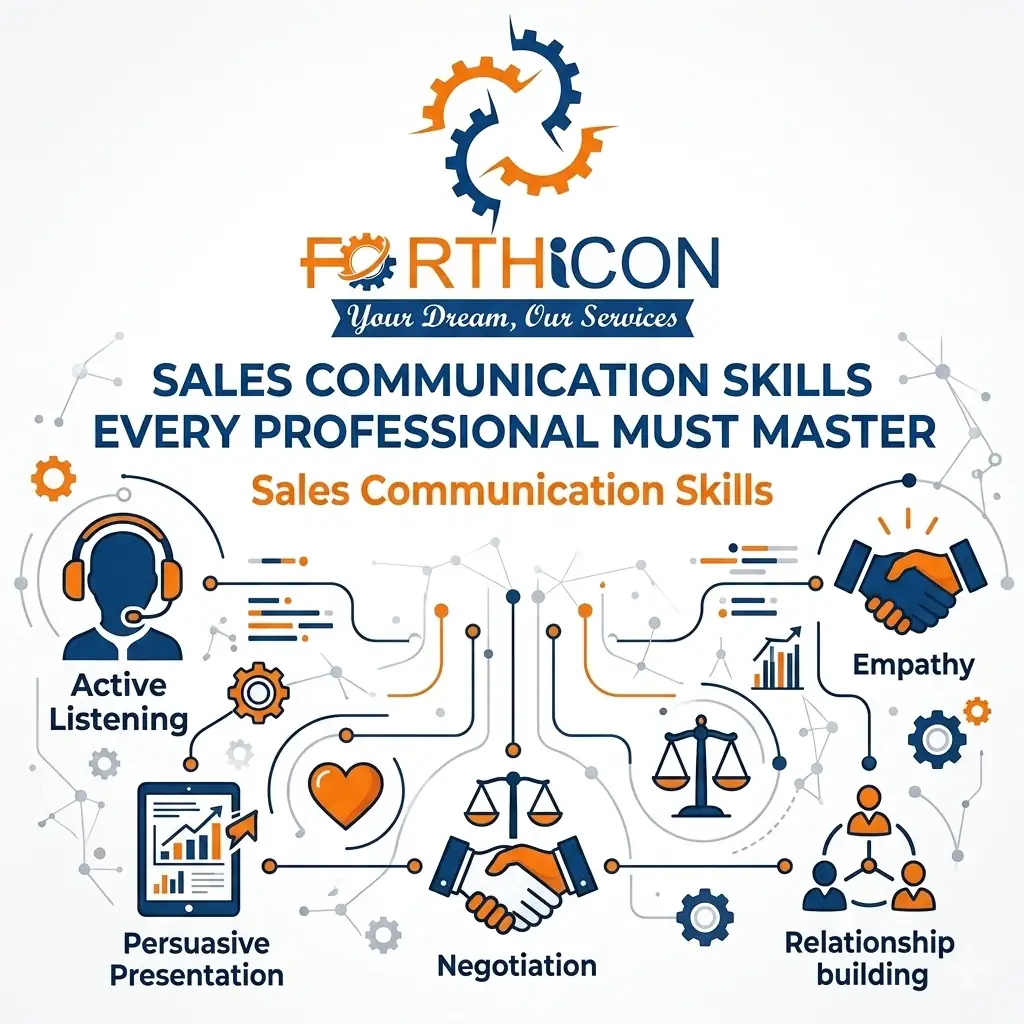
- Active listening
- Clear and persuasive messaging
- Questioning techniques
- Confidence in presentation
- Empathy and relationship building
Sales professionals who master these skills can connect with customers more effectively and increase their chances of converting prospects into loyal clients.
Why Sales Communication Skills Are Important
Strong Sales Communication Skills play a critical role in building trust and driving successful sales outcomes.
Building Customer Trust
Customers are more likely to buy from someone they trust. Clear and honest communication helps establish credibility and confidence.
Understanding Customer Needs
Effective communication involves asking questions and listening carefully to identify customer problems and expectations.
Presenting Value Clearly
Sales professionals must communicate how their product or service solves the customer’s problem and provides value.
Handling Objections
Good communication skills allow salespeople to address concerns and objections without creating tension or conflict.
Improving Closing Rates
When communication is clear and persuasive, customers feel more comfortable making purchasing decisions.
Businesses often focus on developing these skills because strong communication can significantly increase sales performance.
Key Components of Effective Sales Communication
To master Sales Communication Skills, professionals must focus on several key components.
Active Listening
Listening is one of the most important skills in sales. Active listening involves paying close attention to what the customer is saying and responding thoughtfully.
Sales professionals should avoid interrupting and instead focus on understanding the customer’s concerns and priorities.
Clear and Concise Messaging
Customers appreciate clear explanations rather than complicated technical jargon. Salespeople should communicate product benefits in simple and understandable language.
Emotional Intelligence
Understanding customer emotions helps sales professionals adapt their communication style and respond appropriately during conversations.
Non-Verbal Communication
Body language, eye contact, and tone of voice all influence how messages are perceived.
Positive body language can build confidence and trust during sales interactions.
Types of Sales Communication
Sales communication can occur through different channels depending on the situation and customer preferences.
Face-to-Face Communication
Personal meetings allow sales professionals to build stronger relationships through direct interaction and body language.
Phone Communication
Telephone conversations require strong verbal communication and active listening skills.
Email Communication
Professional emails should be concise, clear, and personalized to maintain customer engagement.
Digital Communication
Social media and messaging platforms have become important tools for communicating with modern customers.
Sales professionals must adapt their communication style to suit each channel effectively.
Techniques to Improve Sales Communication Skills
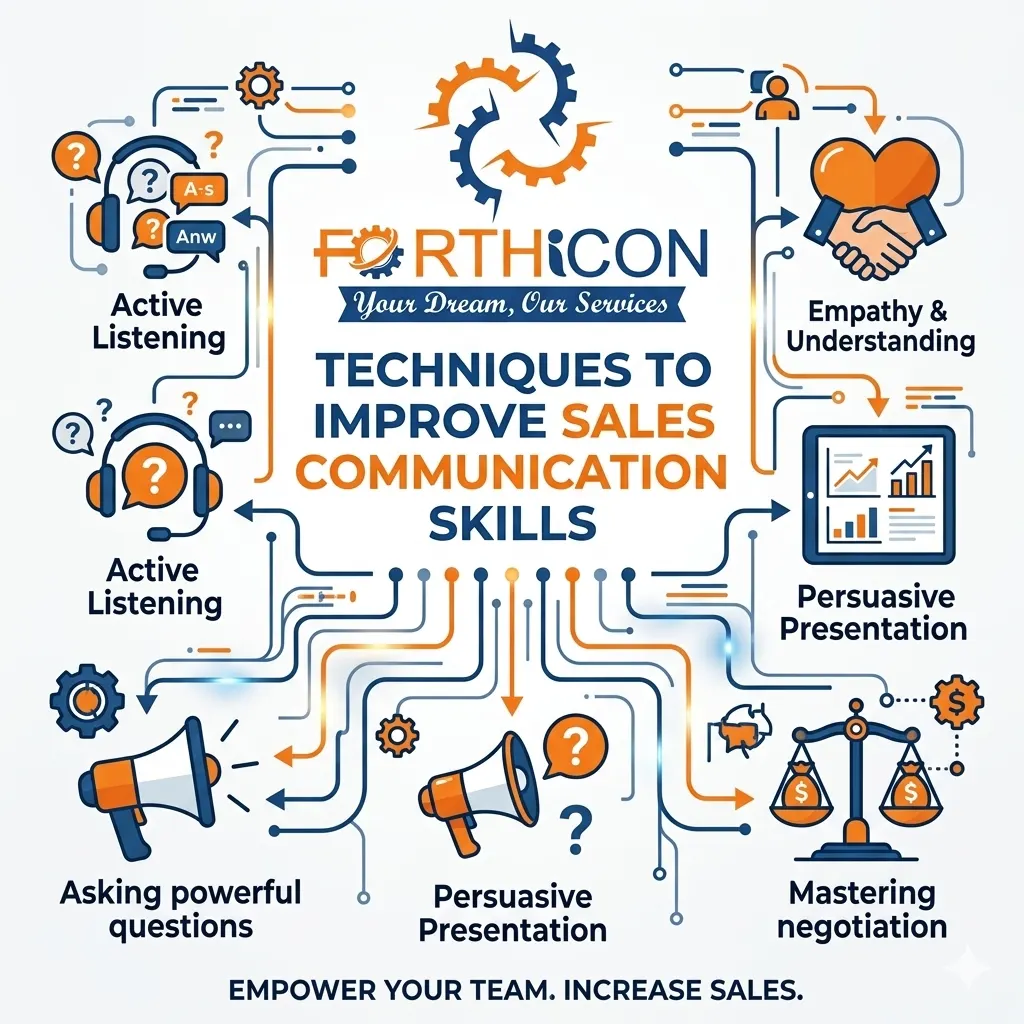
Improving Sales Communication Skills requires continuous practice and learning. Here are some techniques that professionals can use to enhance their communication abilities.
Ask Open-Ended Questions
Open-ended questions encourage customers to share more information about their needs and expectations.
Practice Empathy
Understanding the customer’s perspective helps sales professionals communicate solutions that truly address their problems.
Use Storytelling
Stories and real-life examples make product explanations more engaging and relatable.
Simplify Complex Information
Salespeople should focus on explaining benefits rather than overwhelming customers with technical details.
Maintain Confidence
Confidence in communication builds credibility and reassures customers about the product or service being offered.
Common Communication Mistakes in Sales
Even experienced professionals sometimes make communication mistakes that reduce sales effectiveness.
Talking Too Much
Sales professionals who dominate conversations may fail to understand the customer’s actual needs.
Ignoring Customer Concerns
Dismissing objections or concerns can damage trust and harm the sales relationship.
Using Complex Language
Overly technical explanations can confuse customers and reduce engagement.
Lack of Preparation
Salespeople should prepare before meetings to ensure they can answer questions confidently.
Avoiding these mistakes is an important step toward mastering Sales Communication Skills.
The Role of Technology in Sales Communication
Technology has transformed the way sales professionals communicate with customers.
Digital tools help sales teams track customer interactions, manage leads, and improve communication efficiency.
Customer relationship management systems allow businesses to store important customer information and personalize communication strategies.
Sales professionals also use analytics and data insights to understand customer behavior and tailor their messaging accordingly.
Sales Communication in Modern Businesses
Modern businesses require sales teams to communicate across multiple platforms and customer segments.
Professionals must adapt their communication style depending on whether they are dealing with individual customers, corporate clients, or international markets.
Online research and digital tools have also changed how customers evaluate products and services. This means sales professionals must be well-prepared and knowledgeable during conversations.
Strong Sales Communication Skills allow professionals to build meaningful relationships and differentiate themselves from competitors
Benefits of Strong Sales Communication Skills
Mastering Sales Communication Skills provides several benefits for both individuals and organizations.
Increased Sales Performance
Clear communication improves customer understanding and increases conversion rates.
Stronger Customer Relationships
Effective communication builds trust and long-term customer loyalty.
Improved Team Collaboration
Sales teams communicate better internally, leading to improved productivity.
Higher Customer Satisfaction
Customers appreciate professionals who listen carefully and provide helpful solutions.
Future Trends in Sales Communication
Sales communication continues to evolve as technology and customer expectations change.
Some emerging trends include:
AI-Powered Communication Tools
Artificial intelligence tools help analyze customer conversations and improve messaging strategies.
Video-Based Communication
Video calls and presentations have become popular for remote sales interactions.
Personalized Communication
Data analytics allows sales professionals to tailor messages according to individual customer preferences.
Digital Sales Platforms
Online communication platforms enable businesses to reach customers across different locations efficiently.
Professionals who adapt to these trends can maintain a competitive advantage in modern sales environments.
Conclusion
In the world of sales, communication is not just a skill—it is a strategic advantage. Professionals who master Sales Communication Skills can build trust, understand customer needs, and present solutions effectively.
From active listening and empathy to clear messaging and persuasive presentations, strong communication abilities help sales professionals achieve better results and build long-lasting customer relationships.
Businesses that invest in sales training programs and communication development create high-performing sales teams capable of driving consistent growth.
By continuously improving communication techniques and adapting to evolving technologies, sales professionals can remain successful in an increasingly competitive marketplace.
Frequently Asked Questions (FAQ) – Sales Communication Skills
1. What are Sales Communication Skills?
Sales Communication Skills refer to the ability of sales professionals to effectively convey ideas, present products or services, and build strong relationships with customers. These skills involve both verbal and non-verbal communication techniques that help salespeople engage with prospects and guide them through the buying process.
Good communication in sales goes beyond simply explaining product features. It involves listening carefully to customer concerns, asking the right questions, and presenting solutions that address specific needs. Sales professionals who master these skills can build trust with potential clients and improve their chances of closing deals.
Strong Sales Communication Skills are essential for understanding customer behavior, handling objections, and maintaining long-term business relationships.
2. Why are Sales Communication Skills important for sales professionals?
In the sales industry, communication is the foundation of successful customer interactions. Without strong Sales Communication Skills, even the best products or services may fail to attract customers.
Effective communication helps sales professionals clearly explain the value of their offerings and demonstrate how those solutions can solve customer problems. It also allows them to establish trust and credibility during sales conversations.
Customers prefer working with professionals who listen attentively, communicate clearly, and show genuine interest in their needs. As a result, salespeople with strong communication abilities often achieve higher conversion rates and better customer satisfaction.
3. What are the key components of effective sales communication?
Effective Sales Communication Skills consist of several important components that work together to create successful interactions with customers.
One of the most important components is active listening, which involves paying close attention to customer responses and understanding their concerns. Another component is clear messaging, where sales professionals present information in a simple and understandable manner.
Non-verbal communication such as body language, tone of voice, and eye contact also plays a crucial role in conveying confidence and professionalism. Additionally, emotional intelligence helps sales professionals respond appropriately to customer emotions and build stronger relationships.
Together, these components create a powerful communication strategy that improves the overall sales process.
4. How can sales professionals improve their communication skills?
Improving Sales Communication Skills requires continuous learning, practice, and feedback. Sales professionals should focus on developing habits that strengthen their communication abilities.
One effective method is practicing active listening during customer conversations. This means allowing customers to speak freely and asking thoughtful follow-up questions. Sales professionals should also work on simplifying complex information so that customers can easily understand the benefits of a product or service.
Participating in professional sales training programs, attending workshops, and studying successful communication techniques can also help individuals enhance their skills. Regular practice and self-evaluation allow sales professionals to identify areas for improvement and refine their communication style.
5. What role does listening play in sales communication?
Listening is one of the most critical aspects of Sales Communication Skills. Many sales professionals focus primarily on talking about their products, but successful selling requires understanding the customer’s needs first.
Active listening involves carefully paying attention to what the customer says, observing non-verbal cues, and responding thoughtfully. By listening effectively, sales professionals can identify specific challenges that customers are facing and tailor their solutions accordingly.
When customers feel heard and understood, they are more likely to trust the salesperson and consider the proposed solution. Listening also helps sales professionals handle objections more effectively and provide personalized recommendations.
6. How does communication help in handling sales objections?
Handling objections is an inevitable part of the sales process. Customers may have concerns about price, product features, or the overall value of the offering.
Strong Sales Communication Skills allow professionals to address these concerns calmly and confidently. Instead of arguing with customers, skilled salespeople listen carefully to objections and respond with clear explanations and evidence.
Effective communication helps sales professionals reassure customers, clarify misunderstandings, and highlight the benefits of the product or service. When objections are handled professionally, they can actually strengthen the relationship between the salesperson and the customer.
7. What are common communication mistakes in sales?
Even experienced sales professionals sometimes make communication mistakes that can negatively impact their performance. One common mistake is talking too much without allowing customers to express their opinions or concerns.
Another mistake is using overly technical language that customers may not understand. Sales conversations should focus on benefits rather than complicated product details.
Failing to prepare before sales meetings can also reduce communication effectiveness. Sales professionals should research customer needs and tailor their presentations accordingly.
Avoiding these mistakes helps professionals improve their Sales Communication Skills and create more productive sales conversations.
8. How do digital tools improve sales communication?
Technology has significantly transformed how sales professionals communicate with customers. Digital tools allow sales teams to manage customer interactions more efficiently and personalize communication strategies.
Customer relationship management platforms help sales teams track customer conversations, monitor leads, and maintain organized records. Video conferencing tools enable remote sales presentations and meetings with clients from different locations.
Data analytics tools also provide insights into customer preferences and behavior, allowing sales professionals to tailor their communication approach. When used effectively, these technologies enhance Sales Communication Skills and improve overall sales performance.
9. What is the role of emotional intelligence in sales communication?
Emotional intelligence is an important element of effective Sales Communication Skills. It refers to the ability to recognize and understand both one’s own emotions and the emotions of others.
Sales professionals with strong emotional intelligence can adapt their communication style based on the customer’s mood and reactions. For example, they can respond with empathy when customers express concerns or frustration.
This ability to connect emotionally helps build trust and strengthen relationships. Customers often prefer working with sales professionals who demonstrate genuine understanding and care.
10. Can communication skills directly impact sales performance?
Yes, communication skills have a direct impact on sales performance. Professionals who possess strong Sales Communication Skills are better equipped to present their products, persuade customers, and close deals.
Clear communication helps customers understand how a product or service solves their problems. It also reduces confusion and builds confidence in purchasing decisions.
Sales teams that focus on developing communication skills often experience improved conversion rates, higher customer satisfaction, and stronger long-term business relationships.
11. How can organizations improve sales communication within teams?
Organizations play a vital role in developing the Sales Communication Skills of their employees. Companies can provide training programs that focus on communication techniques, customer engagement strategies, and negotiation skills.
Regular coaching sessions and role-playing exercises allow sales teams to practice real-world scenarios and receive constructive feedback. Encouraging collaboration among team members also helps professionals share successful communication strategies.
By investing in training and professional development, organizations can build highly skilled sales teams capable of delivering consistent results.
12. What are the long-term benefits of mastering Sales Communication Skills?
Mastering Sales Communication Skills provides long-term benefits for both individuals and businesses. Sales professionals who communicate effectively can build stronger customer relationships, increase their credibility, and achieve higher levels of success in their careers.
For businesses, strong communication within sales teams leads to improved customer satisfaction, higher retention rates, and increased revenue. Customers are more likely to remain loyal to companies that understand their needs and communicate clearly.
Over time, professionals who continuously develop their communication skills gain a competitive advantage and become valuable assets to their organizations.