Table of Contents
Introduction
In today’s highly competitive digital marketplace, businesses need smarter ways to manage customer relationships, improve communication, and increase sales efficiency. This is where CRM Software Development plays a vital role. Customer Relationship Management systems help businesses organize customer data, automate workflows, track sales activities, and improve customer engagement from a single centralized platform.
Whether you operate a startup, small business, enterprise, e-commerce platform, healthcare organization, or financial institution, having a powerful CRM solution can significantly improve operational performance and customer satisfaction. Modern CRM systems are no longer limited to storing contact information. They now integrate automation, artificial intelligence, analytics, cloud technology, and advanced reporting features to help businesses make better decisions.
As customer expectations continue to rise, businesses require customized CRM platforms tailored to their specific industry and workflow requirements. Professional CRM software solutions help companies streamline communication, reduce manual tasks, improve team collaboration, and generate more qualified leads.
In this comprehensive guide, we will explore the importance of CRM systems, the benefits of CRM software development, key features, development processes, industry applications, future trends, and how businesses can choose the right CRM development partner.
What is CRM Software Development?
CRM Software Development refers to the process of designing, building, customizing, and maintaining customer relationship management systems for businesses. These systems help organizations manage customer interactions, sales pipelines, customer support, marketing campaigns, and business analytics in a centralized environment.
A CRM platform acts as a digital hub where businesses can store customer information, track interactions, monitor sales performance, and automate repetitive tasks. Instead of using spreadsheets and disconnected systems, businesses can manage everything from one secure platform.
Custom CRM solutions are designed according to the specific needs of businesses. Unlike ready-made CRM tools, custom systems offer better flexibility, scalability, integration capabilities, and advanced customization options.
Why Businesses Need CRM Software Development
Businesses today manage thousands of customer interactions daily. Without an organized system, customer data can become difficult to track, leading to missed opportunities and poor customer experiences.
Here are some major reasons why businesses invest in CRM Software Development:
Improved Customer Management
CRM systems allow businesses to maintain complete customer profiles, including contact details, communication history, purchase behavior, and service requests.
Better Sales Tracking
Sales teams can monitor leads, manage pipelines, track conversions, and analyze performance efficiently using CRM software.
Automation of Business Processes
Automation features reduce repetitive tasks such as follow-up emails, reminders, reporting, and lead assignments.
Enhanced Customer Support
CRM systems improve customer service by helping support teams respond faster and track customer issues effectively.
Data-Driven Decision Making
Advanced analytics and reporting tools help businesses understand customer behavior and improve marketing and sales strategies.
Key Features of CRM Software Development
Modern CRM systems come with powerful features that improve business efficiency and customer management.
Contact Management
CRM platforms store and organize customer information in a centralized database for easy access.
Benefits:
- Faster communication
- Better customer tracking
- Organized customer records
Lead Management
Businesses can track leads from acquisition to conversion using automated sales pipelines.
Features Include:
- Lead scoring
- Lead tracking
- Sales forecasting
- Conversion monitoring
Sales Automation
Sales automation reduces manual work and improves sales productivity.
Common Automation Features:
- Automated follow-ups
- Email scheduling
- Task reminders
- Deal tracking
Customer Support Management
CRM systems help businesses provide faster and more efficient customer support.
Support Features:
- 1.Ticket management
- Live chat integration
- Complaint tracking
- Multi-channel support
Reporting and Analytics
CRM platforms generate detailed business insights and performance reports.
Analytics Benefits:
- Sales analysis
- Customer behavior tracking
- Revenue forecasting
- Marketing performance measurement
Types of CRM Software
Different businesses require different types of CRM systems depending on their operational needs.
Operational CRM
Operational CRM focuses on automating sales, marketing, and customer service processes.
Best For:
- Sales teams
- Customer support centers
- Marketing departments
Analytical CRM
Analytical CRM helps businesses analyze customer data and generate business insights.
Main Advantages:
- Customer segmentation
- Predictive analytics
- Performance tracking
- Strategic planning
Collaborative CRM
Collaborative CRM improves communication between teams and departments.
Features:
- Shared customer data
- Internal communication tools
- Workflow collaboration
Industries That Use CRM Software Development
CRM systems are widely used across multiple industries for improving customer relationships and operational efficiency.
Healthcare Industry
Hospitals and clinics use CRM systems for patient management, appointment scheduling, and communication.
Benefits:
- Better patient engagement
- Faster appointment tracking
- Improved healthcare services
Banking and Financial Services
Banks and financial institutions use CRM software for customer onboarding, loan management, and relationship tracking.
Key Uses:
- Customer support
- KYC management
- Loan processing
- Financial advisory services
E-Commerce Businesses
Online stores use CRM systems for customer tracking, order management, and personalized marketing.
Advantages:
- Improved customer retention
- Better product recommendations
- Automated marketing campaigns
Real Estate Industry
Real estate companies use CRM platforms to manage property inquiries, leads, and customer interactions.
CRM Benefits:
- Lead management
- Property tracking
- Automated follow-ups
Benefits of CRM Software Development
Improved Customer Relationships
CRM software helps businesses build stronger customer relationships through personalized communication and better support.
Increased Productivity
Automation features save time and reduce manual workloads for employees.
Better Team Collaboration
CRM systems allow departments to share customer information and work more efficiently together.
Higher Sales Conversion Rates
Businesses can nurture leads effectively and close deals faster using CRM workflows.
Better Customer Retention
CRM platforms help businesses maintain long-term customer relationships through continuous engagement.
Custom CRM vs Ready-Made CRM Software
Businesses often choose between custom CRM development and ready-made CRM tools.
Custom CRM Software
Advantages:
- Fully customizable
- Better scalability
- Advanced integrations
- Industry-specific features
Disadvantages:
- Higher development cost
- Longer development time
Ready-Made CRM Software
Advantages:
- Faster implementation
- Lower initial cost
- Easy setup
Disadvantages:
- Limited customization
- Subscription costs
- Feature limitations
CRM Software Development Process
Professional CRM development follows a structured process to ensure successful implementation.
Requirement Analysis
Developers understand business goals, workflows, and operational challenges.
UI/UX Design
Designers create user-friendly interfaces for better usability and engagement.
Development Phase
Developers build the CRM platform using modern technologies and frameworks.
Testing and Quality Assurance
Testing ensures the software performs correctly across devices and browsers.
Deployment
The CRM system is launched on secure cloud or server infrastructure.
Maintenance and Support
Continuous updates and support improve security and system performance.
Technologies Used in CRM Software Development
Modern CRM systems use advanced technologies for performance and scalability.
Frontend Technologies
- React.js
- Angular
- Vue.js
Backend Technologies
- Node.js
- Python
- PHP
- Django
Databases
- MySQL
- PostgreSQL
- MongoDB
Cloud Platforms
- AWS
- Microsoft Azure
- Google Cloud
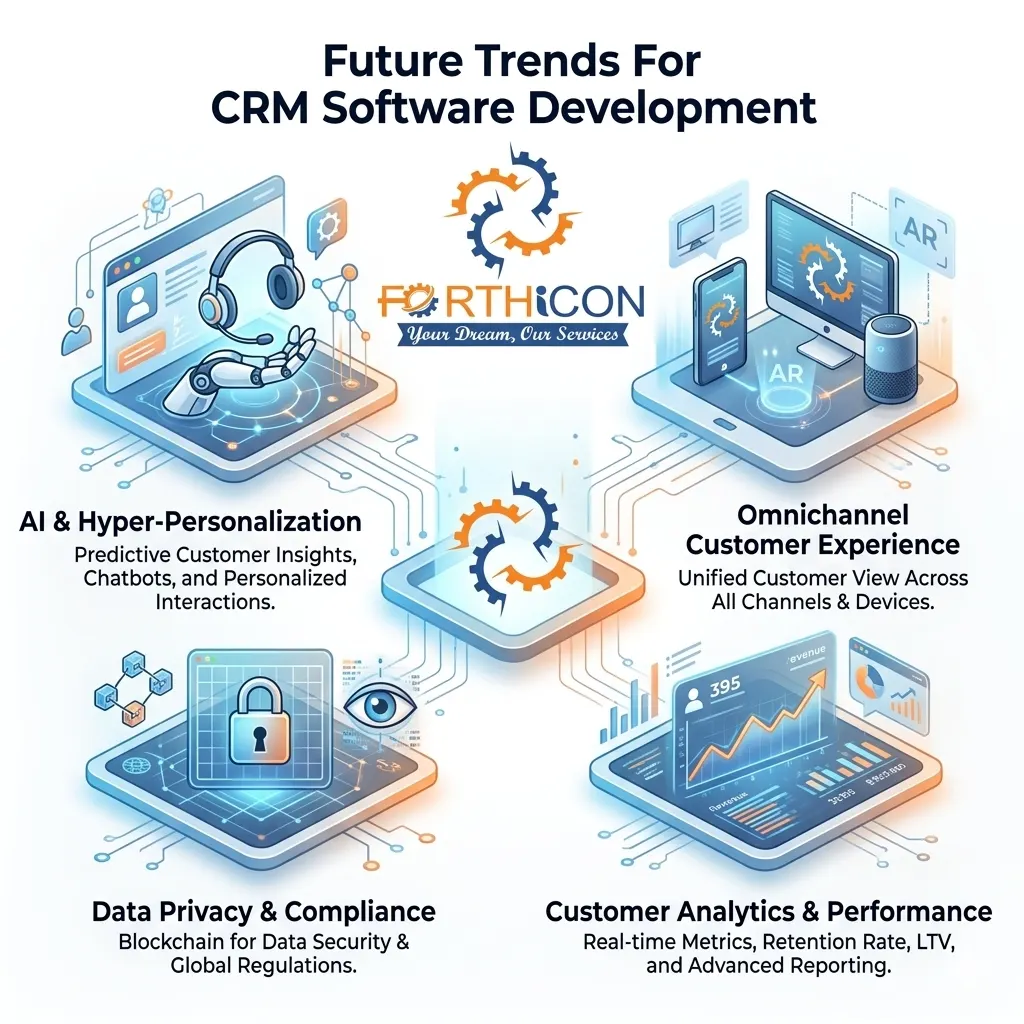
Future Trends in CRM Software Development
Technology continues to transform CRM systems rapidly.
Artificial Intelligence Integration
AI-powered CRM systems provide predictive analytics and intelligent customer recommendations.
Cloud-Based CRM Solutions
Cloud CRM platforms offer better scalability, security, and remote accessibility.
Mobile CRM Applications
Businesses increasingly use mobile CRM apps for remote team management and real-time updates.
Automation and Chatbots
AI chatbots improve customer support and automate communication processes.
Data Security Enhancements
Advanced encryption and cybersecurity features protect customer data from breaches.
How to Choose the Right CRM Development Company
Choosing the right CRM development partner is essential for project success.
Evaluate Experience
Look for companies with proven experience in CRM Software Development.
Check Technology Expertise
Ensure the company uses modern technologies and scalable development practices.
Review Portfolio
Analyze previous CRM projects and client testimonials.
Focus on Support Services
Choose a company that offers long-term maintenance and technical support.
Consider Customization Options
Select developers who can create tailored CRM solutions according to your business needs.
Importance of CRM Software for Customer Management
Customer management is one of the biggest priorities for modern businesses. CRM software centralizes customer data, improves communication, and helps businesses provide personalized experiences.
By understanding customer needs and tracking interactions effectively, businesses can improve satisfaction, loyalty, and profitability. CRM systems also reduce operational complexity and provide valuable business insights for long-term growth.
Businesses that invest in CRM technology often experience:
- Better customer retention
- Improved operational efficiency
- Increased revenue growth
- Faster decision-making
- Stronger customer engagement
Conclusion
CRM Software Development has become an essential investment for businesses looking to improve customer relationships, streamline operations, and achieve sustainable growth. Modern CRM systems provide automation, analytics, customer tracking, and business intelligence features that help organizations stay competitive in today’s digital world.
Whether you are a startup, enterprise, e-commerce company, healthcare provider, or financial institution, a professionally developed CRM solution can transform your business operations and improve customer experiences significantly.
As technology evolves, CRM systems will continue integrating artificial intelligence, automation, cloud computing, and advanced analytics to provide smarter customer management solutions. Businesses that adopt advanced CRM technologies today will gain a strong competitive advantage in the future.
Investing in reliable CRM Software Development services ensures better productivity, higher customer satisfaction, improved sales performance, and long-term business success.
Frequently Asked Questions About CRM Software Development
1.What is CRM Software Development and why is it important for businesses?
CRM Software Development is the process of creating customized customer relationship management systems that help businesses manage customer interactions, sales activities, marketing campaigns, and support services efficiently. Modern businesses deal with large amounts of customer data every day, and managing this information manually can become difficult and time-consuming. A professionally developed CRM system centralizes all customer information in one secure platform, making it easier for teams to access and manage data.
CRM solutions improve communication between departments, automate repetitive tasks, and help businesses provide better customer experiences. Companies can track leads, monitor sales pipelines, manage follow-ups, and analyze customer behavior more effectively. CRM systems are especially important for businesses that want to improve customer retention, increase sales productivity, and streamline operations.
With the rise of digital transformation, CRM Software Development has become essential for industries such as healthcare, banking, e-commerce, real estate, education, and IT services. Businesses that invest in CRM technology often achieve better efficiency, stronger customer relationships, and higher revenue growth.
2.What are the main features included in CRM software?
Modern CRM Software Development includes a wide range of features designed to improve customer management and business efficiency. One of the core features is contact management, which allows businesses to store and organize customer information in a centralized database. CRM systems also include lead management tools that help sales teams track potential customers from inquiry to conversion.
Sales automation is another important feature that reduces manual work by automating tasks such as follow-up emails, reminders, and reporting. Customer support management tools help businesses respond quickly to customer issues and track service requests efficiently.
Advanced CRM platforms also include reporting and analytics dashboards that provide real-time business insights, sales forecasts, and performance tracking. Many CRM systems integrate with email platforms, payment gateways, marketing tools, and communication applications to improve workflow efficiency.
Cloud-based CRM solutions also provide mobile access, enabling teams to manage customer interactions remotely. These features help businesses improve productivity, customer satisfaction, and overall operational performance.
3. How does CRM software improve customer relationships?
CRM software improves customer relationships by helping businesses understand customer behavior, communication history, preferences, and service requirements. Instead of relying on spreadsheets or disconnected systems, businesses can use CRM platforms to maintain detailed customer profiles and interaction records.
This allows teams to provide personalized communication, faster support, and better service experiences. Businesses can track customer inquiries, complaints, purchase history, and engagement patterns, making it easier to understand customer needs and expectations.
CRM Software Development also supports automated follow-ups and reminders, ensuring that no customer inquiry is ignored. Personalized email campaigns, targeted marketing, and proactive customer support help businesses build trust and loyalty over time.
Strong customer relationships are essential for long-term business growth. CRM systems improve customer satisfaction by reducing response times, improving communication, and providing more efficient support services.
4. What is the difference between custom CRM software and ready-made CRM solutions?
Custom CRM Software Development involves building a CRM platform specifically designed for a business’s unique workflows and operational requirements. Ready-made CRM solutions are pre-built platforms available through monthly or yearly subscriptions.
Custom CRM systems provide greater flexibility, scalability, and integration capabilities. Businesses can add industry-specific features, customize dashboards, automate unique workflows, and integrate the CRM with existing systems. This makes custom CRM software ideal for companies with complex operations or specialized business models.
Ready-made CRM tools are easier to implement and require lower upfront investment. However, they often come with feature limitations, recurring subscription costs, and restricted customization options.
Businesses that require advanced automation, scalability, or specialized workflows often prefer custom CRM Software Development because it offers better long-term value and operational control.
5. Which industries benefit the most from CRM Software Development?
Almost every industry can benefit from CRM Software Development because customer management is important in all business sectors. However, certain industries rely heavily on CRM systems for daily operations and customer engagement.
Healthcare organizations use CRM platforms for patient communication, appointment management, and medical support services. Banking and financial institutions use CRM systems for customer onboarding, loan processing, KYC verification, and relationship management.
E-commerce businesses use CRM software for customer tracking, marketing automation, order management, and customer retention. Real estate companies manage property leads, follow-ups, and client interactions using CRM platforms.
Educational institutions use CRM systems for student enrollment, communication, and administrative processes. IT companies, marketing agencies, recruitment firms, and customer support centers also depend heavily on CRM technology to improve efficiency and customer satisfaction.
CRM systems provide industry-specific advantages that help businesses improve productivity, automate operations, and increase profitability.
6. How long does CRM Software Development take?
The development time for a CRM system depends on the complexity of the project, required features, integrations, and customization level. Simple CRM platforms with basic features may take a few weeks to develop, while advanced enterprise-level systems may require several months.
The CRM development process usually includes requirement analysis, UI/UX design, frontend development, backend development, testing, deployment, and maintenance. Businesses that require advanced features such as AI integration, automation, cloud infrastructure, or third-party API integrations may need additional development time.
Professional CRM Software Development companies follow structured development methodologies to ensure smooth implementation and quality assurance. Businesses should focus on long-term functionality and scalability rather than rushing the development process.
A well-developed CRM system provides long-term operational benefits, making the investment in development time worthwhile for growing businesses.
7. Is cloud-based CRM software better than traditional CRM systems?
Cloud-based CRM systems are becoming increasingly popular because they offer flexibility, scalability, and remote accessibility. Unlike traditional on-premise CRM software, cloud CRM platforms allow businesses to access customer data from anywhere using internet-connected devices.
Cloud CRM solutions reduce infrastructure costs because businesses do not need to maintain physical servers or extensive hardware systems. Updates, maintenance, and security management are often handled by cloud service providers, reducing IT workload.
Cloud-based CRM Software Development also improves collaboration because employees can access real-time information from multiple locations. Mobile access, automated backups, and scalability make cloud CRM systems ideal for modern businesses.
Traditional CRM systems may still be preferred by organizations requiring complete internal control over data storage and security. However, most modern businesses prefer cloud CRM solutions because of their convenience, cost efficiency, and flexibility.
8. How secure is CRM software for storing customer data?
Security is one of the most important aspects of CRM Software Development because CRM systems store sensitive customer and business information. Modern CRM platforms use advanced security technologies to protect data from cyber threats, unauthorized access, and data breaches.
CRM software often includes encryption, secure authentication, role-based access controls, firewall protection, and data backup systems. Businesses can also implement multi-factor authentication and advanced monitoring systems for additional protection.
Cloud-based CRM platforms use secure data centers and compliance standards to ensure customer information remains protected. Regular software updates and security audits further improve protection against vulnerabilities.
Businesses should choose CRM development companies that prioritize cybersecurity and follow industry best practices for data protection. Secure CRM systems help businesses maintain customer trust and regulatory compliance.
9. What technologies are commonly used in CRM Software Development?
Modern CRM Software Development uses advanced frontend, backend, database, and cloud technologies to create scalable and high-performance applications. Frontend technologies such as React.js, Angular, and Vue.js help create responsive user interfaces.
Backend development commonly uses Node.js, Python, PHP, Django, Laravel, and .NET frameworks for server-side functionality and business logic. Databases such as MySQL, PostgreSQL, MongoDB, and Redis are used to manage customer information securely.
Cloud infrastructure platforms like AWS, Microsoft Azure, and Google Cloud provide scalability, data storage, and performance optimization for CRM systems.
Developers may also integrate artificial intelligence, machine learning, automation tools, and analytics platforms to improve CRM functionality. The choice of technology depends on business requirements, scalability goals, and system complexity.
10. How can businesses choose the right CRM Software Development company?
Choosing the right CRM Software Development company is critical for project success. Businesses should first evaluate the company’s experience in developing CRM solutions for similar industries and business models.
Reviewing portfolios, case studies, and client testimonials helps businesses understand the developer’s expertise and project quality. A good CRM development company should provide customization options, scalable architecture, integration support, and long-term maintenance services.
Businesses should also evaluate communication processes, development methodologies, technical expertise, and support services before making a decision. Transparent pricing and clear project timelines are also important factors.
The right CRM development partner will understand business goals, recommend suitable technologies, and build a CRM solution that improves customer management, operational efficiency, and business growth.