
Table of Contents
Introduction
Online Reputation Management has become one of the most important aspects of digital business success in today’s internet-driven world. Customers now rely heavily on online reviews, social media feedback, Google ratings, and digital content before making purchasing decisions. A single negative review or poor online presence can significantly impact customer trust, brand credibility, and revenue growth.
Businesses of all sizes — from startups and local companies to large enterprises — need professional Online Reputation Management strategies to maintain a positive brand image across digital platforms. Whether it is managing customer reviews, improving search engine visibility, responding to feedback, or handling social media engagement, reputation management plays a crucial role in building long-term customer trust.
Modern consumers research businesses online before buying products or services. If customers find negative reviews, outdated information, or poor ratings, they are likely to choose competitors instead. This makes Online Reputation Management essential for protecting brand reputation and improving customer confidence.
Professional reputation management services help businesses monitor online mentions, respond to customer concerns, improve review ratings, and create positive digital experiences. With the growth of social media platforms, online marketplaces, review websites, and search engines, businesses must actively manage their online image to stay competitive.
In this detailed guide, we will explore the importance of Online Reputation Management, its benefits, strategies, services, tools, industry applications, future trends, and how businesses can build a strong and trustworthy digital reputation.
What is Online Reputation Management?
Online Reputation Management is the process of monitoring, improving, and maintaining a positive online image for a business, brand, or individual. It involves managing customer reviews, social media feedback, search engine results, online mentions, and digital content to ensure a trustworthy public perception.
The main goal of Online Reputation Management is to create a positive impression that influences customer decisions and strengthens brand credibility. Businesses use reputation management strategies to respond to negative feedback, improve online visibility, and promote positive customer experiences.
Online reputation management includes:
- Review management
- Social media monitoring
- Search engine reputation management
- Brand mention tracking
- Content creation
- Public relations strategies
- Customer engagement
Businesses that invest in Online Reputation Management are more likely to build customer trust, improve retention rates, and increase revenue growth.
Why Online Reputation Management is Important
The internet has changed the way customers interact with businesses. Today, customers can instantly share reviews, opinions, and experiences online. This makes reputation management more important than ever.
Builds Customer Trust
Customers trust businesses with positive reviews and strong online reputations. A professional Online Reputation Management strategy helps businesses build credibility and trust among potential customers.
Improves Brand Image
A strong online reputation enhances brand perception and creates a positive image across search engines and social media platforms.
Increases Sales and Conversions
Businesses with better ratings and reviews often receive more customer inquiries, leads, and conversions.
Enhances Search Engine Visibility
Online Reputation Management helps businesses improve their presence on Google search results through positive content and review optimization.
Protects Against Negative Publicity
Negative reviews and online complaints can damage a business reputation quickly. Reputation management helps businesses handle such situations professionally.
Key Components of Online Reputation Management
Review Management
Customer reviews influence purchasing decisions significantly. Businesses must monitor and respond to reviews on platforms like Google, Facebook, and industry-specific review websites.
Benefits:
- Improves customer
- Enhances local SEO rankings
- Encourages customer engagement
Best Practices:
- Respond professionally to reviews
- Encourage positive feedback
- Resolve customer issues quickly
Social Media Reputation Management
Social media platforms are powerful channels where customers discuss brands openly.
Important Activities
- Monitoring comments and mentions
- Responding to customer queries
- Managing social engagement
- Addressing complaints quickly
A strong social media presence helps businesses improve customer relationships and brand awareness.
Search Engine Reputation Management
Google search results heavily influence customer perception. Businesses need positive content and optimized profiles to maintain a strong search presence.
Strategies Include:
- Publishing quality blog content
- Optimizing Google Business Profiles
- Managing press releases
- Improving SEO rankings
Search engine reputation management helps businesses control how their brand appears online.
Content Marketing for Reputation Building
High-quality content plays a major role in Online Reputation Management.
Effective Content Types:
- Blog posts
- Case studies
- Press releases
- Customer success stories
- Educational articles
Positive content helps businesses build authority and improve brand perception.
Benefits of Online Reputation Management for Businesses
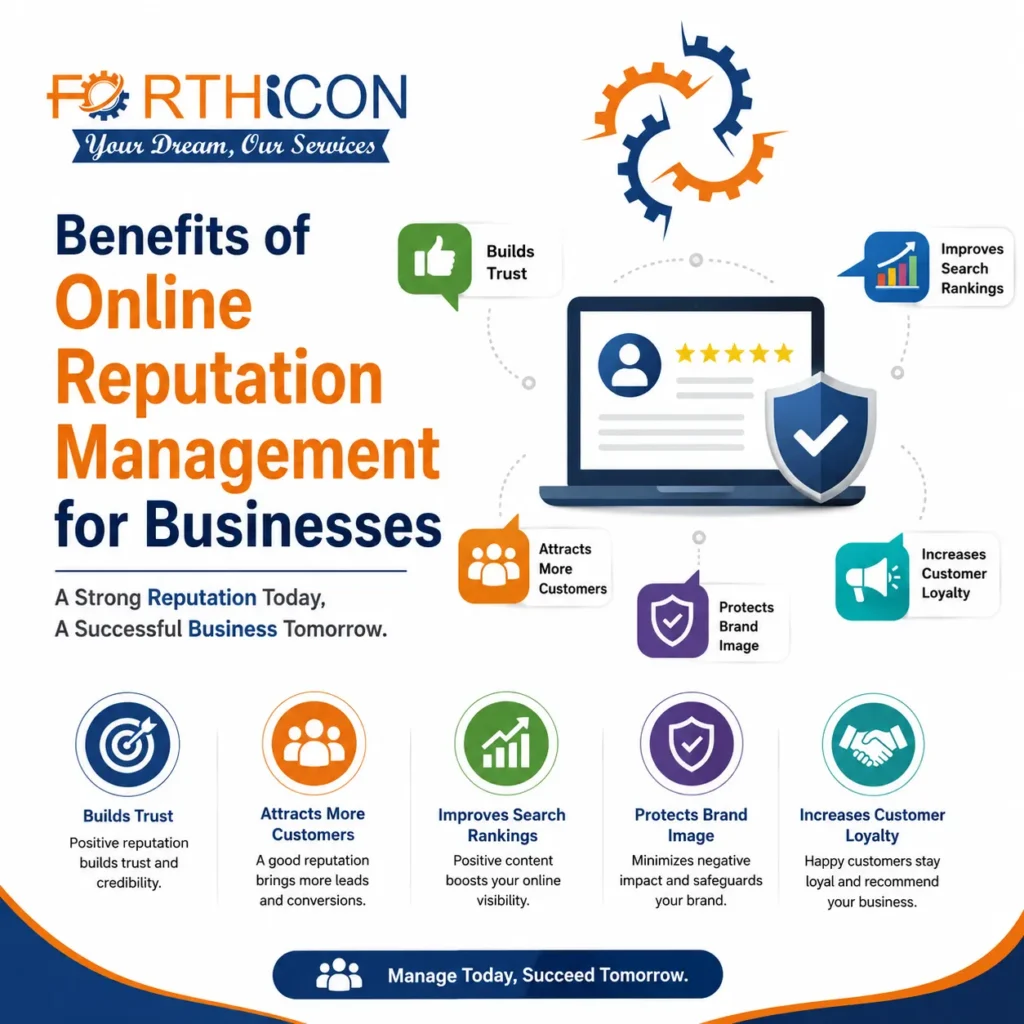
Better Customer Retention
Customers prefer businesses with strong online reputations and positive reviews.
Increased Revenue Growth
Positive ratings and customer trust directly impact purchasing decisions and sales performance.
Improved Brand Authority
Businesses with professional Online Reputation Management strategies appear more credible and reliable.
Stronger Competitive Advantage
A positive online reputation helps businesses stand out from competitors in crowded markets.
Enhanced Customer Engagement
Responding to customer feedback builds stronger relationships and improves satisfaction.
Common Online Reputation Challenges
Businesses face several challenges when managing their online reputation.
Negative Reviews
Negative customer feedback can impact brand trust if not handled properly.
Fake Reviews
Competitors or fake accounts may post misleading reviews that damage reputation.
Social Media Complaints
Public complaints on social media platforms can spread quickly and affect brand image.
Poor Search Engine Results
Negative search results can discourage potential customers from choosing a business.
Inconsistent Brand Messaging
Different online platforms may present inconsistent business information.
Professional Online Reputation Management services help businesses overcome these challenges effectively.
Best Online Reputation Management Strategies
Monitor Brand Mentions Regularly
Businesses should track mentions across review platforms, social media, and search engines.
Useful Tools:
- Google Alerts
- Social listening tools
- Review management platforms
Monitoring helps businesses respond quickly to customer concerns.
Encourage Positive Customer Reviews
Satisfied customers should be encouraged to leave reviews and ratings.
Effective Methods:
- Email follow-ups
- SMS requests
- Review incentives
- Customer surveys
Positive reviews improve credibility and local SEO performance.
Respond to Negative Feedback Professionally
Businesses should never ignore negative reviews.
Best Practices:
- Stay calm and professional
- Acknowledge customer concerns
- Offer solutions
- Move conversations offline if needed
Professional responses demonstrate customer care and responsibility.
Create Positive Content
Publishing informative and valuable content improves search engine rankings and brand authority.
Recommended Content:
- Industry blogs
- Customer success stories
- Business updates
- Educational resources
Content marketing is a powerful Online Reputation Management strategy.
Industries That Need Online Reputation Management
Healthcare Industry
Hospitals and clinics depend heavily on patient reviews and online trust.
Restaurants and Hospitality
Hotels and restaurants rely on customer ratings and social media feedback.
E-Commerce Businesses
Online stores need positive reviews and strong digital credibility.
Financial Services
Banks and financial companies require customer trust and secure reputations.
Real Estate Businesses
Property buyers often research agencies online before making decisions.
Every industry benefits from professional Online Reputation Management strategies.
Technologies Used in Online Reputation Management
Modern Online Reputation Management services use advanced tools and technologies.
Review Monitoring Tools
Businesses use review tracking software to monitor customer feedback across platforms.
Social Media Analytics
Analytics tools help businesses understand audience sentiment and engagement.
SEO Optimization Tools
SEO tools improve search engine visibility and content rankings.
AI-Powered Sentiment Analysis
Artificial intelligence helps businesses analyze customer opinions and online sentiment.
Future Trends in Online Reputation Management
AI and Automation
Artificial intelligence will automate review monitoring and customer engagement.
Voice Search Optimization
Businesses will optimize reputation strategies for voice-based searches.
Video Reputation Marketing
Video testimonials and video content will become more important for brand trust.
Real-Time Customer Engagement
Businesses will focus on faster customer response systems across digital platforms.
Personalized Brand Experiences
Brands will create personalized customer interactions to improve loyalty and satisfaction.
How to Choose the Right Online Reputation Management Company
Choosing the right reputation management partner is essential for long-term success.
Check Industry Experience
Choose agencies with proven expertise in Online Reputation Management.
Analyze Client Reviews
Review testimonials and case studies before selecting a service provider.
Evaluate Reporting Transparency
Professional agencies provide regular performance reports and insights.
Focus on Ethical Practices
Avoid companies using fake reviews or unethical SEO methods.
Look for Complete Services
The best companies offer SEO, review management, social media management, and content marketing together.
Importance of Online Reputation Management in Digital Marketing
Online Reputation Management is closely connected with digital marketing success. A positive online image improves customer trust, SEO rankings, and conversion rates.
Businesses investing in digital marketing campaigns must also manage reviews, ratings, and social media perception effectively. Even strong advertising campaigns may fail if customers discover negative feedback online.
A strong reputation improves:
- Search engine rankings
- Brand authority
- Customer confidence
- Lead generation
- Customer retention
This makes Online Reputation Management an essential part of modern business marketing strategies.
Conclusion
Online Reputation Management is no longer optional for modern businesses. In today’s digital marketplace, customers rely heavily on online reviews, ratings, social media interactions, and search engine results before choosing products or services.
Businesses with strong online reputations build customer trust, increase brand credibility, improve search visibility, and generate more sales opportunities. Professional Online Reputation Management services help businesses monitor feedback, manage reviews, create positive content, and maintain strong customer relationships.
As technology continues to evolve, businesses must actively invest in reputation management strategies to stay competitive and maintain customer confidence. Companies that focus on building positive online experiences will achieve stronger brand loyalty and long-term business growth.
Whether you are a startup, local business, healthcare provider, e-commerce brand, or enterprise organization, Online Reputation Management is essential for protecting your brand image and ensuring sustainable digital success.
Frequently Asked Questions About Online Reputation Management
1. What is Online Reputation Management and why is it important for businesses?
Online Reputation Management is the process of monitoring, improving, and maintaining a positive image of a business across digital platforms such as Google, social media, review websites, blogs, and online directories. In today’s digital-first world, customers often search online before making purchasing decisions. They read reviews, check ratings, visit social media pages, and compare customer experiences before trusting a company.
This is why Online Reputation Management has become essential for businesses of all sizes. A positive online image helps companies build trust, improve customer confidence, and increase sales opportunities. On the other hand, negative reviews, poor ratings, or damaging online content can significantly impact customer decisions and reduce revenue growth.
Professional Online Reputation Management strategies help businesses respond to customer feedback, manage online reviews, improve search engine visibility, and create a trustworthy digital presence. Businesses that actively monitor their online reputation are more likely to maintain strong customer relationships and long-term growth.
Online reputation also affects SEO rankings because Google considers reviews, engagement, and online credibility when displaying search results. Businesses with strong online reputations usually receive better visibility and higher customer engagement compared to competitors with weak reputations.
2. How does Online Reputation Management improve customer trust?
Online Reputation Management improves customer trust by ensuring that businesses maintain positive and professional interactions across digital platforms. Customers are more likely to trust businesses that have positive reviews, active social media engagement, and transparent communication.
When businesses respond politely to reviews and address customer concerns professionally, it shows that they care about customer satisfaction. This creates confidence among potential buyers who are researching the business online.
Positive reviews and testimonials also act as social proof. When customers see that others had good experiences, they feel more comfortable choosing the same business. Online Reputation Management encourages businesses to collect genuine customer feedback and highlight positive experiences across websites and social media channels.
Professional reputation management also helps businesses remove outdated information, improve search engine results, and create high-quality content that reflects brand credibility. These efforts contribute to a stronger digital presence and better customer perception.
Trust is one of the most important factors in customer decision-making, especially in industries like healthcare, banking, e-commerce, and professional services. Businesses that invest in Online Reputation Management often experience better customer retention and stronger brand loyalty.
3. What are the key services included in Online Reputation Management?
Online Reputation Management includes several important services designed to protect and improve a business’s online image. One of the main services is review management, where businesses monitor customer reviews on platforms like Google, Facebook, Yelp, and industry-specific directories.
Social media reputation management is another important service. Businesses monitor comments, mentions, messages, and discussions related to their brand across social media platforms. Quick responses and professional engagement help maintain a positive image.
Search engine reputation management focuses on improving how a business appears in Google search results. This may include SEO optimization, content marketing, press releases, and suppression of negative search results through positive content creation.
Content marketing also plays a major role in Online Reputation Management. Businesses publish blogs, articles, videos, and customer success stories to improve brand authority and online visibility.
Other services may include:
- Crisis management
- Brand monitoring
- Online PR management
- Influencer collaborations
- Customer feedback analysis
- Competitor reputation analysis
Professional reputation management agencies combine these strategies to create a complete digital reputation improvement plan for businesses.
4. How do negative reviews affect businesses online?
Negative reviews can significantly impact a business’s online reputation, customer trust, and revenue growth. Many customers rely heavily on online ratings and reviews before choosing products or services. Even a few negative reviews can influence buying decisions if they are not managed properly.
Negative reviews can reduce customer confidence and create doubts about product quality, customer service, or business reliability. Businesses with poor ratings often experience lower website traffic, reduced conversions, and decreased customer inquiries.
Search engines also consider reviews as ranking signals. Poor review ratings can negatively affect local SEO performance and reduce visibility in search results.
However, negative reviews are not always harmful if businesses respond professionally. In fact, customers often evaluate how businesses handle criticism rather than expecting perfect ratings. Professional Online Reputation Management strategies help businesses address complaints politely, offer solutions, and demonstrate accountability.
Businesses should avoid ignoring negative reviews because silence may appear unprofessional. Instead, they should respond quickly, remain calm, and focus on resolving customer concerns constructively.
A strong reputation management strategy helps businesses minimize the impact of negative feedback while maintaining customer trust and brand credibility.
5. Can Online Reputation Management improve Google search rankings?
Yes, Online Reputation Management can improve Google search rankings because reputation signals influence search engine visibility. Search engines prioritize businesses that appear trustworthy, relevant, and authoritative online.
Positive customer reviews, active social media engagement, quality content, and strong user experiences contribute to better search rankings. Businesses with higher review ratings and consistent customer engagement often appear more prominently in local search results and Google Maps listings.
Content marketing is also an important part of Online Reputation Management. Publishing valuable blogs, articles, FAQs, and educational resources helps businesses improve SEO rankings and attract organic traffic.
Review optimization plays a major role in local SEO performance. Google considers review quantity, quality, and recency when ranking local businesses.
Search engine reputation management also helps businesses reduce the visibility of negative content by promoting positive pages, news articles, and brand-related content.
Combining Online Reputation Management with SEO strategies helps businesses improve visibility, increase website traffic, and attract more potential customers through organic search results.
6. Which industries benefit the most from Online Reputation Management?
Almost every industry benefits from Online Reputation Management because customer trust is essential for business growth. However, some industries depend more heavily on digital reputation due to high customer research behavior.
Healthcare organizations rely on patient reviews and online trust before people book appointments or choose medical services. Restaurants and hotels depend heavily on ratings and customer feedback on travel and review platforms.
E-commerce businesses require strong online credibility because customers cannot physically inspect products before purchasing. Positive reviews and brand trust significantly influence online sales.
Financial institutions and banking services also benefit from reputation management because customers prioritize security and reliability when choosing financial partners.
Real estate companies, educational institutions, IT service providers, legal firms, and digital marketing agencies also require strong online reputations to attract and retain customers.
In today’s digital environment, businesses across all industries need Online Reputation Management strategies to maintain positive customer perceptions and competitive advantages.
7. What tools are used in Online Reputation Management?
Modern Online Reputation Management uses various tools and technologies to monitor online mentions, manage reviews, and analyze customer sentiment effectively.
Google Alerts is commonly used to monitor brand mentions and online discussions. Social listening tools help businesses track conversations and engagement across platforms like Facebook, Instagram, LinkedIn, and Twitter.
Review management platforms allow businesses to monitor customer feedback from multiple review websites in one centralized dashboard. SEO tools help improve search engine rankings and optimize brand visibility online.
Analytics tools provide insights into customer behavior, engagement trends, and reputation performance metrics. AI-powered sentiment analysis tools help businesses understand customer opinions and identify reputation risks.
Some common categories of Online Reputation Management tools include:
- Review monitoring software
- Social media analytics tools
- SEO optimization tools
- Brand tracking platforms
- Customer feedback systems
- Content monitoring tools
Professional agencies often combine multiple tools to create comprehensive reputation management strategies for businesses.
8. How long does Online Reputation Management take to show results?
Online Reputation Management is a long-term strategy, and the time required to see results depends on the current reputation status, competition level, and business goals. Some improvements, such as responding to reviews and optimizing profiles, may show quick results within weeks.
However, improving search engine rankings, increasing positive reviews, and rebuilding brand trust usually takes several months. Reputation management involves consistent monitoring, customer engagement, SEO optimization, and content creation.
Businesses facing major reputation issues or negative publicity may require more extensive strategies and longer recovery periods. Reputation improvement is not an overnight process because search engines and customer perceptions take time to change.
The key to successful Online Reputation Management is consistency. Businesses that actively maintain positive customer interactions and continuously improve digital experiences often achieve long-term reputation growth and stronger brand authority.
9. Why is social media important for Online Reputation Management?
Social media platforms play a major role in Online Reputation Management because customers frequently discuss brands, products, and services publicly on these platforms. Social media provides direct communication channels between businesses and customers.
Customers expect quick responses to questions, complaints, and feedback on social media. Businesses that engage actively and professionally create stronger customer relationships and improve brand trust.
Social media also helps businesses showcase positive customer experiences, company updates, educational content, and community involvement. Positive engagement improves brand perception and online visibility.
Negative social media interactions can spread quickly if not handled properly. This makes reputation monitoring essential for businesses using digital marketing strategies.
Professional Online Reputation Management includes social media monitoring, customer engagement, content creation, and crisis response planning to maintain a positive online image across all platforms.
10. How can businesses choose the right Online Reputation Management company?
Choosing the right Online Reputation Management company is essential for protecting and improving brand image effectively. Businesses should first evaluate the company’s experience, portfolio, and industry expertise.
Reviewing client testimonials, case studies, and online reviews helps businesses understand the agency’s reputation and service quality. Professional reputation management companies should provide transparent strategies and realistic expectations.
Businesses should avoid agencies promising instant results or using unethical methods such as fake reviews or black-hat SEO techniques. Ethical reputation management focuses on genuine customer engagement, quality content, and professional communication.
The best Online Reputation Management companies offer complete services including review management, SEO optimization, social media monitoring, content marketing, and analytics reporting.
Businesses should also consider communication quality, reporting transparency, support services, and long-term partnership potential before selecting a reputation management agency.