
Table of Contents
Introduction
In today’s digital-first world, businesses must adapt quickly to changing technologies and market demands. Traditional IT infrastructure often struggles to keep up with the need for scalability, flexibility, and efficiency. This is where cloud computing services play a transformative role.
From startups to large enterprises, organizations are rapidly adopting cloud solutions to streamline operations, improve collaboration, and reduce costs. Whether it’s storing data, running applications, or managing servers, the cloud provides a powerful and flexible environment for modern businesses.
In this guide, we’ll explore everything you need to know about cloud computing services, including types, benefits, use cases, and how to choose the right solution for your business.
🔍 What Are Cloud Computing Services?
Cloud computing services refer to the delivery of computing resources such as servers, storage, databases, networking, and software over the internet.
Instead of relying on physical hardware, businesses can access these resources on demand through cloud providers.
Simple Example:
Instead of storing files on your computer, you use platforms like Google Drive to store and access them from anywhere.
🎯 Why Businesses Need Cloud Computing Services
Modern businesses require speed, scalability, and cost-efficiency. Cloud computing services help achieve these goals by eliminating the need for expensive hardware and complex infrastructure.
Key Benefits:
✔ Scalability
Easily scale resources up or down based on demand.
✔ Cost Efficiency
Pay only for what you use—no upfront hardware investment.
✔ Flexibility
Access data and applications from anywhere in the world.
✔ Security
Advanced security measures protect business data.
✔ Disaster Recovery
Quick data recovery in case of system failures.
🧩 Types of Cloud Computing Services
Understanding the different types of cloud services helps businesses choose the right solution.
1.Infrastructure as a Service (IaaS)
Provides virtualized computing resources such as servers and storage.
2.Platform as a Service (PaaS)
Offers a platform for developers to build, test, and deploy applications.
3. Software as a Service (SaaS)
Delivers software applications over the internet.
Example:
Tools like Microsoft 365 fall under SaaS.
🏗️ Deployment Models in Cloud Computing
🌐 Public Cloud
Services offered over the internet by providers like Amazon Web Services.
🔒 Private Cloud
Dedicated cloud infrastructure for a single organization.
🔄 Hybrid Cloud
Combination of public and private cloud environments.
⚙️ Key Features of Cloud Computing Services
A reliable cloud computing service should include:
- High availability and uptime
- Data security and encryption
- Scalability and flexibility
- Automated backups
- Performance monitoring
These features ensure smooth and efficient business operations.
📊 Use Cases of Cloud Computing Services
Cloud computing services are widely used across industries.
🔹 Business Applications
Run ERP, CRM, and HR systems in the cloud.
🔹 Data Storage & Backup
Securely store and manage large volumes of data.
🔹 Web Hosting
Host websites and applications with high uptime.
🔹 Software Development
Develop and test applications in a scalable environment.
🔹 Remote Work Solutions
Enable teams to collaborate from anywhere.
📈 Benefits of Cloud Computing for Business Growth
Adopting cloud computing services can significantly impact business performance.
🚀 Faster Time-to-Market
Launch applications quickly without infrastructure delays.
💰 Reduced IT Costs
Lower maintenance and hardware expenses.
📊 Better Performance
Optimized systems for speed and reliability.
🔄 Business Continuity
Ensure operations continue during disruptions.
🔐 Security in Cloud Computing
Security is a top concern for businesses adopting cloud solutions.
Key Security Measures:
- Data encryption
- Identity and access management
- Regular security updates
- Compliance with industry standards
Cloud providers invest heavily in security, often making cloud systems more secure than traditional setups.
🛠️ Technologies Used in Cloud Computing
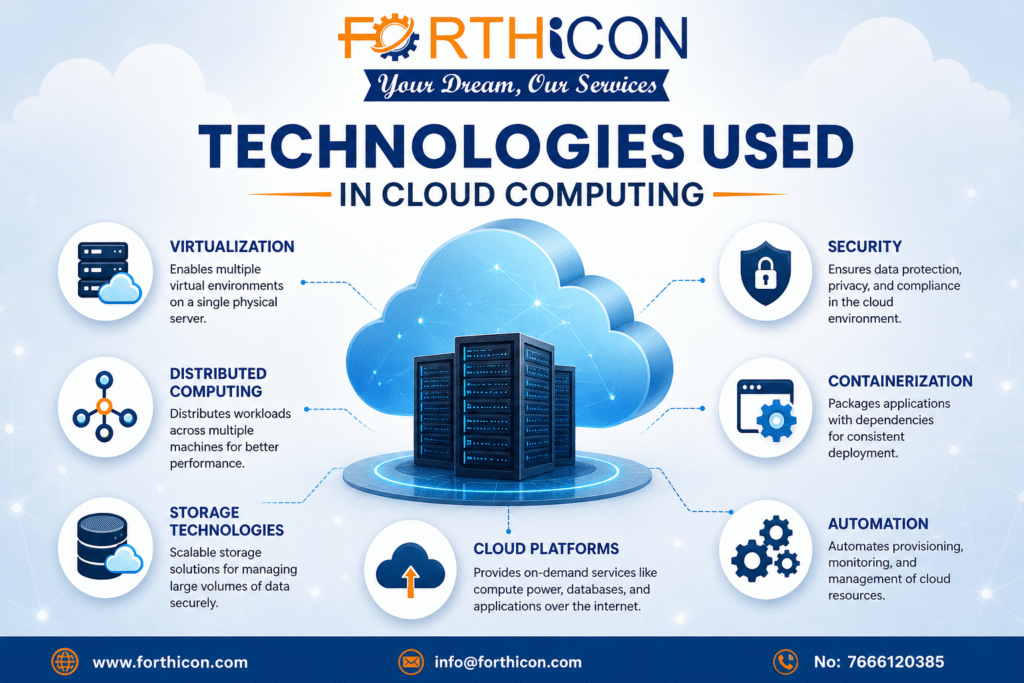
Modern cloud computing relies on advanced technologies:
- Virtualization
- Containers (Docker, Kubernetes)
- Microservices architecture
- Serverless computing
These technologies enhance scalability, efficiency, and performance.
⚠️ Challenges in Cloud Computing Services
While cloud computing offers many advantages, there are challenges:
- Data privacy concerns
- Downtime risks
- Vendor lock-in
- Migration complexity
Proper planning and choosing the right provider can help overcome these challenges.
🌟 How to Choose the Right Cloud Computing Services
Selecting the right cloud solution is critical for success.
Consider These Factors:
- Business requirements
- Budget and pricing model
- Security features
- Scalability options
- Customer support
A well-chosen cloud computing service ensures long-term efficiency and growth.
🔮 Future Trends in Cloud Computing
Cloud technology continues to evolve rapidly.
🚀 Emerging Trends:
- AI-powered cloud services
- Edge computing
- Multi-cloud strategies
- Serverless architecture
Staying updated with these trends helps businesses remain competitive.
🔗 External Tools & Platforms
Businesses often use tools like Google Cloud Platform and Microsoft Azure for scalable and reliable cloud solutions.
Conclusion
In conclusion, cloud computing services have become essential for modern businesses looking to stay competitive in a digital landscape. They offer unmatched flexibility, scalability, and cost efficiency while enabling innovation and growth.
By choosing the right cloud solutions and implementing best practices, businesses can improve operations, enhance security, and deliver better customer experiences.
If you want to future-proof your business, investing in cloud computing services is a smart and strategic decision.
Frequently Asked Questions About Cloud Computing Services
1. What are cloud computing services and how do they work?
Cloud computing services refer to the delivery of computing resources such as servers, storage, databases, networking, and software over the internet. Instead of relying on physical hardware or local servers, businesses can access these resources remotely through a cloud provider.
The way cloud computing works is quite simple yet powerful. A cloud provider hosts data centers equipped with advanced infrastructure. Businesses connect to these resources via the internet and use them on demand. This eliminates the need for expensive hardware, maintenance, and in-house IT management.
For example, instead of installing software on every employee’s computer, organizations can use cloud-based tools that are accessible from anywhere. This improves collaboration, increases flexibility, and ensures that teams can work efficiently regardless of location.
Another important aspect is scalability. Cloud services allow businesses to increase or decrease resources based on demand. During peak seasons, companies can scale up their infrastructure, and during low demand, they can scale down, ensuring cost efficiency.
Overall, cloud computing services simplify IT operations, reduce costs, and provide businesses with the agility needed to compete in today’s fast-paced digital environment.
2. What are the different types of cloud computing services available?
Cloud computing services are generally categorized into three main types: Infrastructure as a Service (IaaS), Platform as a Service (PaaS), and Software as a Service (SaaS).
Infrastructure as a Service provides basic computing resources such as virtual machines, storage, and networking. Businesses can build their own applications and systems on top of this infrastructure without worrying about hardware management.
Platform as a Service offers a development platform where developers can build, test, and deploy applications. It eliminates the need to manage underlying infrastructure and allows teams to focus on coding and innovation.
Software as a Service delivers ready-to-use applications over the internet. These applications can be accessed through a web browser without installation. Examples include email platforms, CRM tools, and collaboration software.
Additionally, cloud deployment models include public cloud, private cloud, and hybrid cloud. Public cloud services are shared across multiple users, while private cloud is dedicated to a single organization. Hybrid cloud combines both, offering flexibility and control.
Understanding these types helps businesses choose the right cloud computing services based on their specific needs, technical requirements, and budget.
3. What are the key benefits of cloud computing services for businesses?
Cloud computing services offer a wide range of benefits that make them essential for modern businesses. One of the most significant advantages is cost savings. Companies no longer need to invest heavily in hardware, maintenance, and IT infrastructure. Instead, they pay only for the resources they use.
Scalability is another major benefit. Businesses can quickly scale their operations up or down based on demand. This is especially useful for startups and growing companies that need flexibility.
Cloud solutions also improve accessibility. Employees can access data and applications from anywhere, enabling remote work and global collaboration. This increases productivity and ensures business continuity.
Security is also a strong advantage. Cloud providers implement advanced security measures such as encryption, firewalls, and regular updates. In many cases, cloud systems are more secure than traditional setups.
Additionally, cloud computing enhances disaster recovery. Data is backed up automatically, and businesses can quickly recover from system failures or cyberattacks.
Overall, cloud computing services provide efficiency, flexibility, and reliability, making them a powerful tool for business growth.
4. Are cloud computing services secure for storing business data?
Security is one of the most common concerns when it comes to cloud computing services. However, modern cloud providers invest heavily in advanced security technologies to protect data and systems.
Cloud platforms use encryption to secure data both in transit and at rest. This ensures that sensitive information cannot be accessed by unauthorized users. Access control mechanisms allow businesses to define who can view or edit data.
Another important feature is regular security updates. Cloud providers continuously monitor their systems and apply patches to protect against new threats. This reduces the risk of vulnerabilities compared to traditional systems that may not be updated regularly.
Compliance is also a key aspect. Many cloud providers follow industry standards and regulations, ensuring that businesses meet legal and security requirements.
However, security is a shared responsibility. While providers handle infrastructure security, businesses must implement strong passwords, access controls, and employee training to prevent breaches.
In conclusion, cloud computing services are highly secure when used correctly and can provide better protection than many on-premise systems.
5. How do cloud computing services help reduce business costs?
One of the biggest advantages of cloud computing services is cost reduction. Traditional IT infrastructure requires significant investment in hardware, software licenses, maintenance, and skilled personnel. Cloud computing eliminates many of these expenses.
With cloud solutions, businesses operate on a pay-as-you-go model. This means they only pay for the resources they use, avoiding unnecessary costs. There is no need to purchase expensive servers or maintain data centers.
Maintenance costs are also reduced. Cloud providers handle updates, security patches, and system management. This allows businesses to focus on their core operations instead of IT maintenance.
Energy costs are another factor. Running physical servers consumes a lot of electricity. Cloud computing reduces energy usage by utilizing optimized data centers.
Additionally, cloud services improve efficiency, which leads to indirect cost savings. Faster deployment, improved collaboration, and reduced downtime all contribute to better productivity.
Overall, cloud computing services offer a cost-effective solution that helps businesses optimize their budgets while improving performance.
6. What industries benefit the most from cloud computing services?
Cloud computing services are versatile and can benefit almost every industry. However, some sectors gain particularly significant advantages.
The IT and software industry relies heavily on cloud platforms for development, testing, and deployment. Cloud environments enable faster innovation and scalability.
The healthcare sector uses cloud services to store patient records, manage data, and improve collaboration among medical professionals. It also supports telemedicine and remote consultations.
Financial institutions benefit from cloud computing through secure data management, fraud detection, and digital banking solutions. It helps them maintain compliance while improving efficiency.
Retail and e-commerce businesses use cloud platforms to manage inventory, process transactions, and handle high traffic during peak seasons.
Education is another sector where cloud computing plays a major role. Online learning platforms, virtual classrooms, and collaboration tools rely on cloud infrastructure.
Manufacturing, logistics, and media industries also leverage cloud services for automation, data analytics, and content delivery.
In short, cloud computing services are essential across industries, helping organizations improve efficiency, scalability, and innovation.
7. How can businesses choose the right cloud computing services provider?
Choosing the right cloud computing services provider is a critical decision that impacts performance, security, and cost.
Businesses should start by identifying their specific needs. This includes understanding the type of applications, data requirements, and expected growth.
Security should be a top priority. Companies must ensure that the provider offers strong encryption, compliance standards, and data protection measures.
Scalability is another important factor. The provider should allow easy scaling of resources without performance issues.
Pricing models should also be evaluated carefully. Transparent pricing and flexible plans help avoid unexpected costs.
Customer support plays a crucial role as well. Reliable support ensures quick resolution of issues and smooth operations.
Additionally, businesses should consider the provider’s reputation, reliability, and uptime guarantees.
By carefully evaluating these factors, organizations can choose cloud computing services that align with their goals and deliver long-term value.
8. What is the future of cloud computing services?
The future of cloud computing services looks extremely promising as technology continues to evolve. One of the major trends is the integration of artificial intelligence and machine learning into cloud platforms. This allows businesses to automate processes, analyze data, and make smarter decisions.
Edge computing is another emerging trend. It brings data processing closer to the source, reducing latency and improving performance for real-time applications.
Multi-cloud strategies are becoming more popular. Businesses are using multiple cloud providers to avoid dependency on a single vendor and improve flexibility.
Serverless computing is also gaining traction. It allows developers to run applications without managing servers, simplifying development and reducing costs.
Security innovations will continue to improve, making cloud platforms even more reliable.
As businesses become more digital, cloud computing services will play a central role in driving innovation, efficiency, and growth.