Table of Contents
Introduction
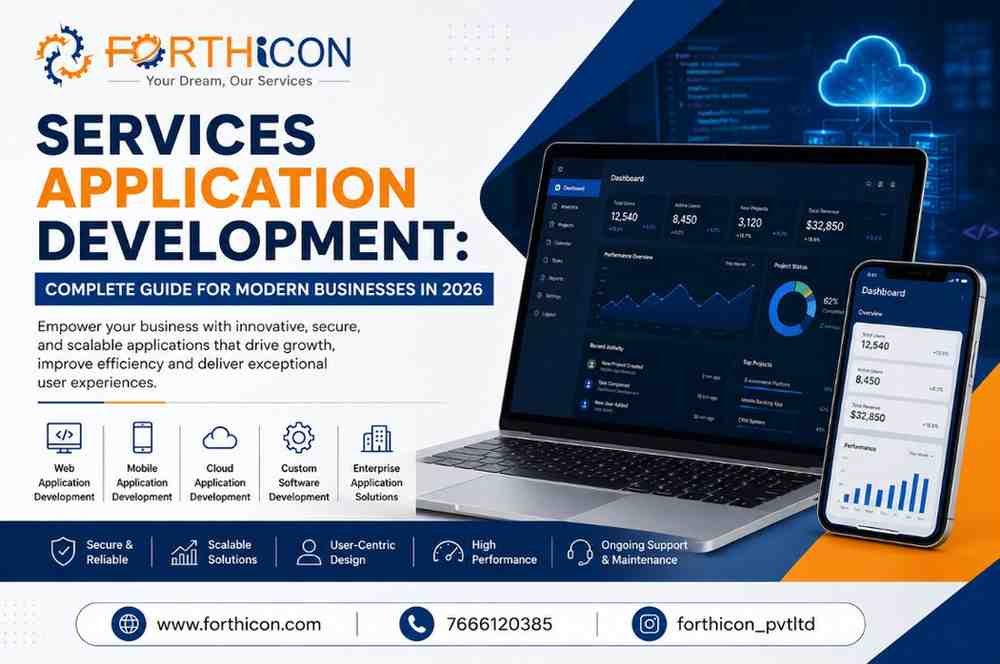
Technology continues to transform how businesses operate, communicate, and serve customers. In today’s competitive digital economy, organizations are increasingly investing in software applications to streamline operations, improve customer engagement, and drive innovation. As businesses embrace digital transformation, the demand for Services Application Development has grown significantly across industries.
From startups and small businesses to large enterprises, organizations are leveraging application development services to create customized solutions that meet specific business requirements. Whether it is a customer-facing mobile app, an internal workflow management system, a cloud-based platform, or an enterprise software solution, modern applications play a critical role in achieving business objectives.
Services Application Development refers to the process of designing, building, testing, deploying, and maintaining software applications that support business operations and customer interactions. These applications can be developed for web platforms, mobile devices, cloud environments, enterprise systems, and emerging technologies such as artificial intelligence and the Internet of Things (IoT).
As we move through 2026, businesses that invest in innovative application development strategies are gaining significant advantages in productivity, scalability, customer satisfaction, and market competitiveness. This comprehensive guide explores everything organizations need to know about Services Application Development and how it contributes to long-term business success.
What is Services Application Development?
Services Application Development is the process of creating software applications that address specific business needs, automate workflows, improve communication, and deliver digital services to customers and stakeholders.
Unlike generic software products, custom-developed applications are designed around the unique requirements of an organization. These applications can support various business functions such as:
- Customer relationship management
- Inventory management
- Human resource management
- Financial operations
- Project management
- E-commerce operations
- Data analytics
- Business intelligence
- Customer support services
- Workflow automation
Modern application development focuses on creating secure, scalable, user-friendly, and high-performance solutions that align with business goals.
Why Services Application Development Matters in 2026
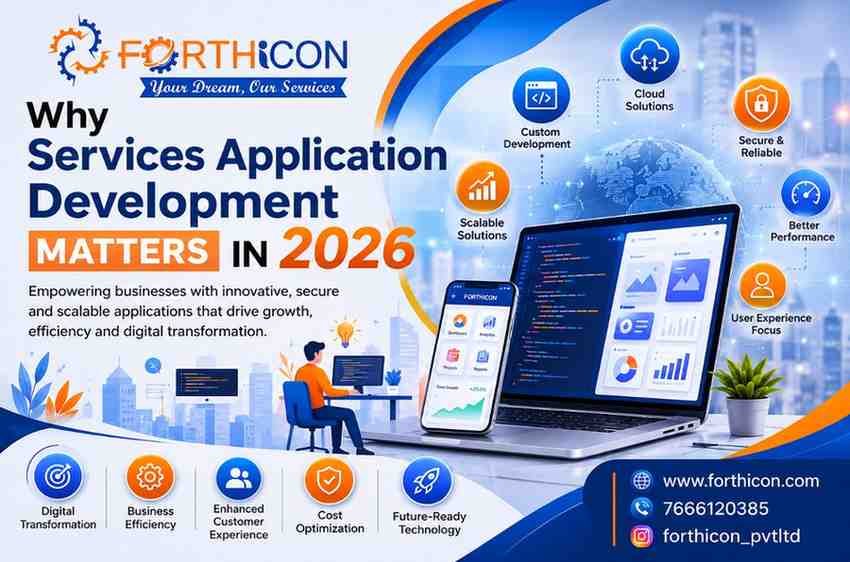
The digital landscape continues to evolve rapidly. Businesses must adapt to changing customer expectations, increasing competition, and emerging technologies. Services Application Development helps organizations remain agile and competitive by providing customized digital solutions.
Several factors contribute to the growing importance of application development:
Increased Digital Adoption
Customers now expect seamless digital experiences across websites, mobile apps, and online platforms. Businesses must provide fast, reliable, and personalized services to remain competitive.
Business Process Automation
Organizations are increasingly automating repetitive tasks to improve efficiency and reduce operational costs. Custom applications make automation easier and more effective.
Data-Driven Decision Making
Modern applications collect and analyze business data, enabling organizations to make informed decisions based on real-time insights.
Remote and Hybrid Work Models
The rise of remote work has increased demand for collaborative digital platforms and cloud-based applications that support distributed teams.
Enhanced Customer Experience
Businesses use applications to provide better customer service, faster response times, personalized recommendations, and convenient digital interactions.
Key Components of Services Application Development
Successful application development involves multiple stages and technical components.
Requirement Analysis
The development process begins by understanding business objectives, target users, challenges, and operational requirements.
Planning and Strategy
Developers create project plans, define features, select technologies, and establish development timelines.
UI and UX Design
User Interface (UI) and User Experience (UX) design focus on creating visually appealing and easy-to-use applications.
Application Development
Developers write code and build application functionality using programming languages, frameworks, and development tools.
Testing and Quality Assurance
Comprehensive testing ensures that applications perform reliably, securely, and efficiently.
Deployment
The application is launched in a production environment and made available to users.
Maintenance and Support
Ongoing updates, security patches, bug fixes, and feature enhancements ensure long-term application performance.
Types of Services Application Development
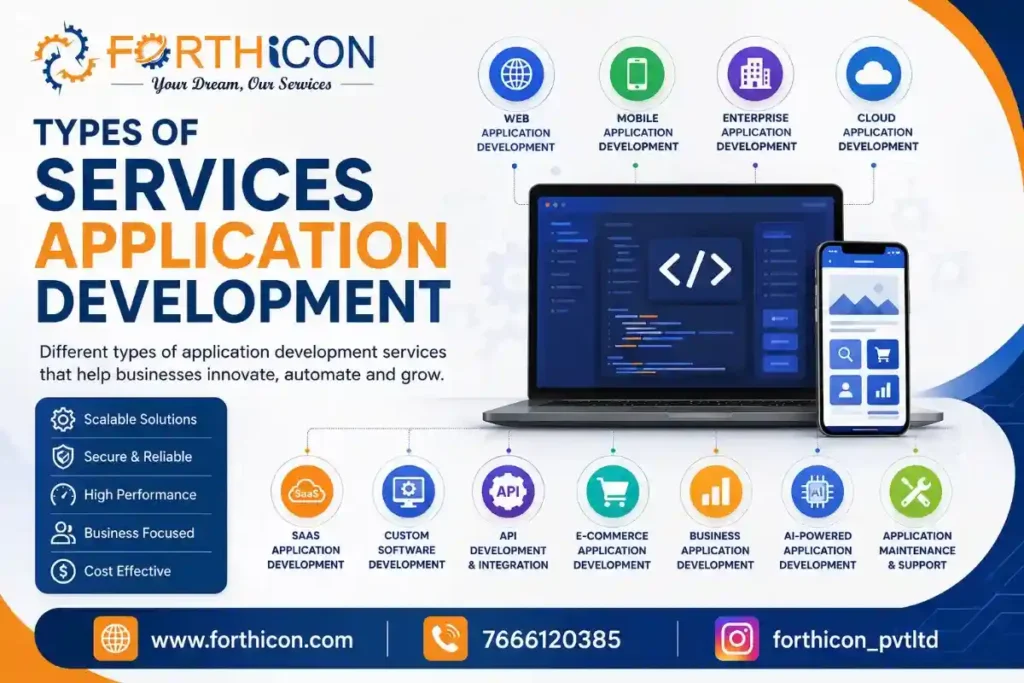
Businesses require different types of applications depending on their goals and operational requirements.
Web Application Development
Web applications run through internet browsers and do not require installation on user devices.
Examples include:
- Customer portals
- Online booking systems
- E-commerce platforms
- Business management dashboards
- Learning management systems
Web applications offer accessibility, scalability, and cross-platform compatibility.
Mobile Application Development
Mobile applications are designed for smartphones and tablets.
Common mobile app categories include:
- E-commerce apps
- Banking applications
- Healthcare applications
- Educational apps
- Business productivity tools
Mobile applications provide personalized experiences and improved customer engagement.
Enterprise Application Development
Enterprise applications support large-scale business operations and organizational workflows.
Examples include:
- ERP systems
- CRM platforms
- Supply chain management solutions
- Financial management systems
Enterprise applications improve operational efficiency and organizational collaboration.
Cloud Application Development
Cloud-based applications operate through cloud infrastructure rather than local servers.
Benefits include:
- Scalability
- Remote accessibility
- Cost efficiency
- Automatic updates
- Improved data security
SaaS Application Development
Software-as-a-Service (SaaS) applications allow users to access software through subscription models.
Popular SaaS examples include:
- Project management tools
- CRM software
- Accounting platforms
- Collaboration tools
SaaS solutions reduce infrastructure costs and improve software accessibility.
Benefits of Services Application Development
Improved Business Efficiency
Custom applications automate repetitive tasks, reduce manual effort, and improve operational workflows.
Better Customer Experience
Applications provide users with convenient access to services, information, and support.
Enhanced Productivity
Employees can complete tasks faster using streamlined digital tools and automated processes.
Competitive Advantage
Organizations with innovative applications often outperform competitors by offering better services and experiences.
Scalability
Custom applications can grow alongside business requirements and support future expansion.
Data Security
Modern applications include advanced security features that protect sensitive business information.
Cost Savings
Automation and optimized workflows help businesses reduce operational expenses over time.
Emerging Technologies in Services Application Development
Technology continues to shape the future of application development.
Artificial Intelligence
AI-powered applications can automate customer support, analyze data, and improve decision-making processes.
Examples include:
- Chatbots
- Virtual assistants
- Predictive analytics
- Recommendation engines
Machine Learning
Machine learning enables applications to improve performance based on user behavior and historical data.
Internet of Things (IoT)
IoT applications connect devices and sensors to collect and analyze real-time information.
Blockchain Technology
Blockchain applications improve security, transparency, and trust in digital transactions.
Augmented Reality and Virtual Reality
AR and VR technologies create immersive digital experiences for industries such as education, healthcare, and retail.
Application Development Trends in 2026
Low-Code and No-Code Platforms
Businesses are increasingly using low-code platforms to accelerate development and reduce technical complexity.
Cloud-Native Development
Cloud-native applications offer improved scalability, flexibility, and performance.
Cybersecurity Integration
Security is becoming a fundamental component of application development rather than an afterthought.
API-First Development
Applications are being designed with APIs that facilitate integration with other platforms and services.
Progressive Web Applications
PWAs combine the benefits of web and mobile applications, offering fast and responsive user experiences.
AI-Powered Development Tools
AI-assisted coding and testing tools help developers improve productivity and reduce development time.
Industries Benefiting from Services Application Development
Healthcare
Healthcare organizations use applications for patient management, telemedicine, appointment scheduling, and medical records management.
Banking and Financial Services
Banks leverage applications for digital payments, online banking, fraud detection, and customer service.
Retail and E-commerce
Retail businesses use applications to improve customer engagement, sales management, and inventory tracking.
Education
Educational institutions use learning management systems, online examination platforms, and virtual classrooms.
Manufacturing
Manufacturers use applications for production planning, inventory control, and supply chain management.
Logistics and Transportation
Applications help logistics companies optimize routes, track shipments, and manage deliveries efficiently.
Challenges in Services Application Development
While application development offers significant benefits, organizations may face challenges such as:
Changing Requirements
Business needs often evolve during development projects.
Budget Constraints
Development costs can increase if project scope is not properly managed.
Security Risks
Applications must be protected against cyber threats and data breaches.
Technology Selection
Choosing the right technology stack is critical for long-term success.
User Adoption
Employees and customers must be trained to use new applications effectively.
Proper planning and collaboration help overcome these challenges.
Choosing the Right Application Development Partner
Selecting the right development partner is one of the most important decisions for any organization.
Businesses should consider:
- Industry experience
- Technical expertise
- Portfolio of successful projects
- Security practices
- Development methodology
- Post-launch support
- Scalability capabilities
- Client testimonials
A reliable development partner helps ensure successful project delivery and long-term application performance.
How Forthicon Supports Application Development
Forthicon Pvt Ltd provides modern technology solutions designed to help businesses accelerate digital transformation and operational efficiency.
With expertise in software solutions, IT services, digital transformation, and technology consulting, Forthicon helps organizations implement innovative applications that support business growth and improve customer experiences.
From planning and development to deployment and ongoing support, businesses can benefit from professional guidance and customized technology solutions tailored to their requirements.
Future of Services Application Development
The future of Services Application Development is driven by innovation, automation, and intelligent technologies. Businesses will continue investing in applications that improve efficiency, enhance customer experiences, and create competitive advantages.
Artificial intelligence, machine learning, cloud computing, blockchain, and automation technologies will play increasingly important roles in application development strategies. Organizations that embrace these innovations will be better positioned to adapt to changing market demands and achieve sustainable growth.
Conclusion
Services Application Development has become an essential component of modern business success. Organizations across industries rely on custom applications to streamline operations, improve customer engagement, automate processes, and support digital transformation initiatives.
As technology continues to evolve, businesses must invest in scalable, secure, and innovative applications that align with their strategic objectives. Whether developing web applications, mobile apps, enterprise systems, or cloud-based platforms, a well-planned application development strategy can deliver significant operational and financial benefits.
By leveraging modern technologies and partnering with experienced development professionals, organizations can create powerful digital solutions that drive growth, efficiency, and long-term success in 2026 and beyond.
Frequently Asked Questions (FAQs) About Services Application Development
1. What is Services Application Development?
Services Application Development refers to the process of designing, developing, testing, deploying, and maintaining software applications that help businesses deliver services more efficiently. These applications can be web-based, mobile-based, cloud-based, or enterprise solutions designed to automate business operations and improve customer experiences. Modern businesses use application development to streamline workflows, enhance productivity, and support digital transformation initiatives.
2. Why is Services Application Development important for businesses in 2026?
In 2026, businesses are increasingly relying on digital technologies to stay competitive. Services Application Development helps organizations automate manual processes, improve communication, reduce operational costs, and provide better customer experiences. With growing customer expectations and increasing digital adoption, businesses need customized applications to manage operations efficiently and scale their services effectively.
3. What are the different types of Services Application Development?
Services Application Development includes several categories depending on business requirements. These include web application development, mobile application development, enterprise application development, cloud application development, SaaS application development, and custom software development. Each type serves specific business needs and helps organizations improve operational efficiency, customer engagement, and overall performance.
4. How long does a Services Application Development project take?
The timeline for Services Application Development depends on the complexity, features, technology stack, and project scope. A simple application may take a few weeks, while complex enterprise applications can require several months. Factors such as user interface design, integrations, security requirements, testing, and customization also affect development timelines. Proper planning and project management help ensure timely delivery.
5. What technologies are commonly used in Services Application Development?
Modern Services Application Development uses a variety of technologies including Java, Python, PHP, JavaScript, React, Angular, Node.js, .NET, Flutter, and cloud platforms such as AWS, Microsoft Azure, and Google Cloud. Developers choose technologies based on project requirements, scalability needs, security considerations, and long-term maintenance goals. The right technology stack ensures performance, flexibility, and future growth.
6. How much does Services Application Development cost?
The cost of Services Application Development varies based on project size, functionality, integrations, platform requirements, and development complexity. Basic applications generally cost less than enterprise-level solutions with advanced features. Factors such as UI/UX design, cloud infrastructure, security implementation, maintenance, and third-party integrations influence overall project costs. Investing in quality development often delivers long-term business value and higher returns.
7. What are the key benefits of Services Application Development?
Services Application Development offers numerous advantages for businesses. These include improved operational efficiency, workflow automation, enhanced customer experiences, better data management, increased productivity, and stronger business scalability. Custom applications can also provide competitive advantages by addressing unique business challenges and enabling organizations to adapt quickly to changing market demands.
8. How does cloud technology support Services Application Development?
Cloud technology plays a major role in modern Services Application Development by providing scalable, flexible, and secure infrastructure. Cloud-based applications allow businesses to access data and services from anywhere, improve collaboration, reduce hardware costs, and support remote work environments. Cloud platforms also enable automatic updates, backup management, disaster recovery, and seamless scalability as business needs grow.
9. How can businesses choose the right Services Application Development company?
Selecting the right development partner requires evaluating factors such as technical expertise, industry experience, project portfolio, client reviews, security practices, and post-launch support capabilities. Businesses should choose a company that understands their goals, offers transparent communication, follows modern development methodologies, and provides long-term maintenance services. A reliable development partner contributes significantly to project success and business growth.
10. What is the future of Services Application Development?
The future of Services Application Development is driven by emerging technologies such as artificial intelligence, machine learning, blockchain, cloud computing, automation, and the Internet of Things. Businesses are increasingly adopting intelligent applications that improve decision-making, personalize customer experiences, and automate complex workflows. As digital transformation continues to accelerate, application development will remain a critical investment for organizations seeking innovation, efficiency, and sustainable growth in the years ahead.