Table of Contents
Introduction
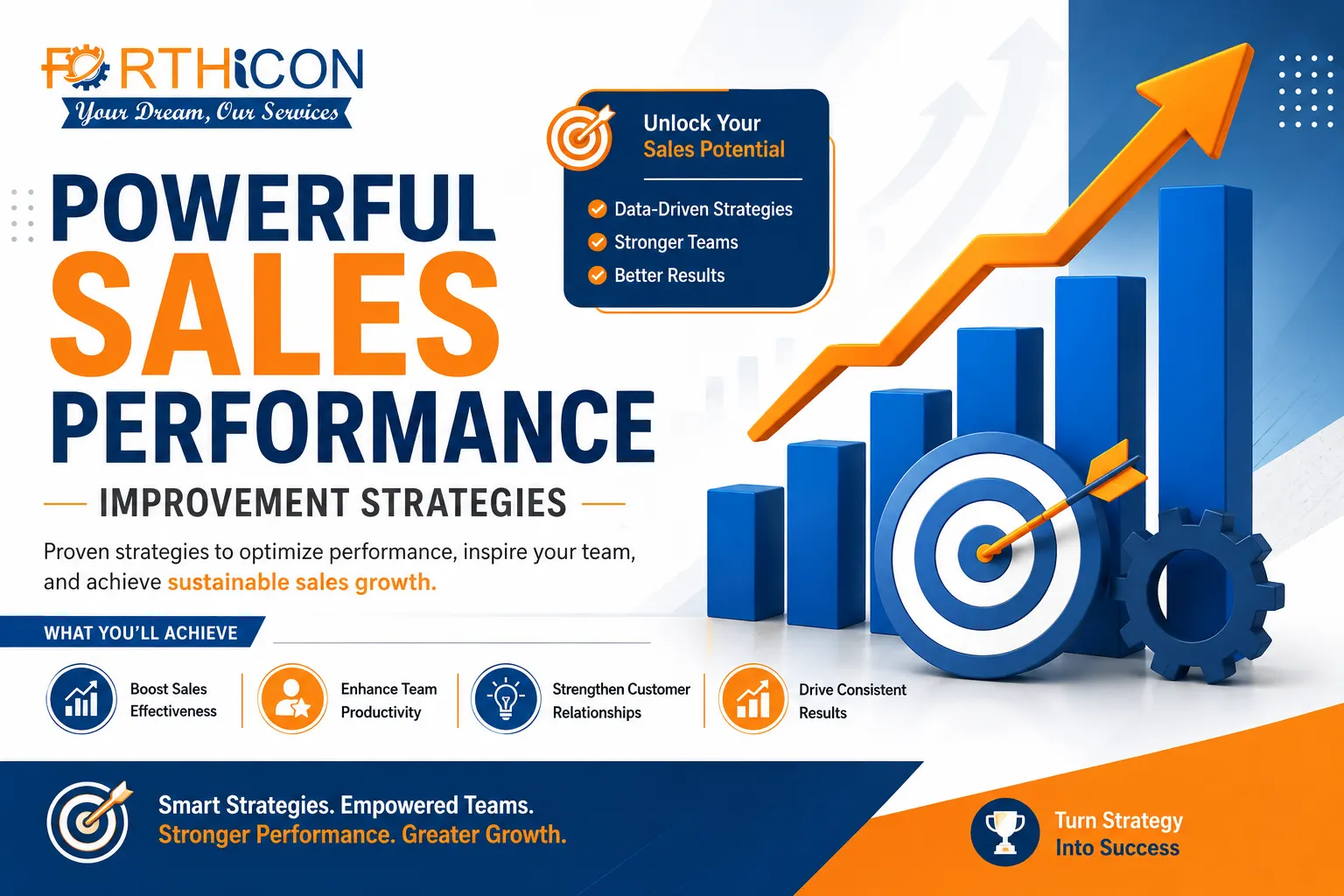
Sales Performance Improvement is one of the most important goals for organizations seeking higher revenue, stronger customer relationships, and long-term business growth. In today’s competitive marketplace, companies must continuously improve sales processes, employee productivity, communication strategies, and customer engagement to stay ahead of competitors.
Modern businesses face increasing pressure to achieve better conversion rates, improve customer experiences, and maximize profitability. Traditional sales methods are no longer enough in a digital-first business environment. Organizations now rely on advanced sales strategies, automation tools, CRM platforms, and data-driven insights to improve performance and operational efficiency.
Sales Performance Improvement focuses on enhancing the overall productivity and effectiveness of sales teams. It involves improving communication skills, lead generation, customer relationship management, sales training, negotiation techniques, and sales analytics. Businesses that invest in improving sales performance often experience higher customer retention, improved conversion rates, and stronger revenue growth.
What Is Sales Performance Improvement?
Sales Performance Improvement refers to the process of optimizing sales strategies, employee productivity, operational workflows, and customer engagement techniques to increase business revenue and sales efficiency.
This process includes:
- Improving sales communication skills
- Enhancing lead conversion rates
- Implementing CRM systems
- Automating sales workflows
- Providing sales training
- Improving customer relationship management
- Tracking sales metrics and KPIs
- Strengthening negotiation skills
- Optimizing sales funnels
- Enhancing team collaboration
The goal of Sales Performance Improvement is to help organizations achieve sustainable business growth while improving operational productivity.
Importance of Sales Performance Improvement
Every business depends on sales growth for long-term success. Without effective sales processes and skilled teams, companies struggle to maintain profitability and customer loyalty.
Key benefits include:
- Increased revenue generation
- Higher customer conversion rates
- Improved employee productivity
- Better customer retention
- Faster sales cycles
- Enhanced customer experiences
- Improved team confidence
- Better decision-making through analytics
- Stronger competitive advantage
- Scalable business growth
Businesses that prioritize Sales Performance Improvement can adapt more effectively to changing customer expectations and market trends.
Common Challenges Affecting Sales Performance
Many organizations face challenges that reduce sales productivity and business profitability.
Lack of Proper Sales Training
Sales teams without proper training often struggle with communication, customer engagement, and negotiation.
Weak Lead Management
Poor lead tracking and follow-up processes reduce conversion opportunities.
Inefficient CRM Systems
Without modern CRM tools, businesses find it difficult to manage customer relationships effectively.
Poor Communication Skills
Communication gaps negatively impact customer trust and business relationships.
Limited Sales Analytics
Businesses lacking performance data often struggle to optimize sales strategies.
Manual Sales Processes
Manual workflows reduce productivity and increase operational delays.
Sales Performance Improvement strategies help businesses overcome these challenges effectively.
Effective Sales Performance Improvement Strategies
Sales Training Programs
Professional sales training improves communication, negotiation, lead handling, and customer engagement skills. Training programs help employees understand modern sales techniques and customer expectations.
CRM Implementation
Customer Relationship Management systems improve customer data management, lead tracking, and communication workflows. CRM platforms help businesses improve customer experiences and sales efficiency.
Sales Automation
Automation tools reduce repetitive tasks such as follow-up emails, reporting, and lead assignment. This improves productivity and operational speed.
Data-Driven Sales Analytics
Analytics platforms provide valuable insights into customer behavior, sales trends, and employee performance. Businesses can optimize strategies using real-time data.
Lead Generation Optimization
Improving lead generation strategies helps businesses attract high-quality prospects and improve conversion rates.
Performance Monitoring
Tracking KPIs such as revenue growth, conversion rates, customer retention, and sales cycle duration helps organizations measure progress effectively.
Role of Technology in Sales Performance Improvement
Technology plays a major role in modern Sales Performance Improvement strategies. Businesses now use AI, cloud platforms, automation software, and analytics tools to optimize sales operations.
AI-Powered Sales Tools
Artificial Intelligence helps businesses analyze customer behavior, predict sales trends, and improve lead targeting.
Cloud-Based CRM Systems
Cloud CRM platforms improve accessibility, collaboration, and customer data management.
Sales Automation Platforms
Automation software streamlines repetitive sales tasks and improves workflow management.
Real-Time Reporting Tools
Reporting dashboards help businesses monitor sales performance instantly.
Technology-driven solutions improve operational efficiency and customer engagement significantly.
Sales Performance Improvement Through Customer Relationship Management
Strong customer relationships are essential for long-term business success. CRM systems help organizations manage customer interactions, sales pipelines, and communication workflows more efficiently.
Benefits of CRM systems include:
- Improved lead management
- Better customer communication
- Faster follow-ups
- Enhanced customer retention
- Personalized marketing campaigns
- Improved sales forecasting
Businesses using CRM-driven Sales Performance Improvement strategies often experience stronger customer loyalty and higher profitability.
Importance of Communication Skills in Sales
Communication is one of the most important aspects of sales success. Sales professionals must communicate clearly, confidently, and persuasively to build trust and close deals effectively.
Essential communication skills include:
- Active listening
- Presentation skills
- Negotiation techniques
- Customer handling
- Objection management
- Relationship building
Professional communication training helps sales teams improve customer interactions and conversion rates.
Sales Performance Improvement for Small Businesses
Small businesses often face limited resources, smaller teams, and high competition. Sales Performance Improvement strategies help startups and SMEs improve efficiency without increasing operational costs significantly.
Small businesses can improve sales performance through:
- Digital marketing strategies
- CRM systems
- Lead generation campaigns
- Sales automation tools
- Customer retention programs
- Employee training
These strategies help small businesses scale operations and improve profitability.
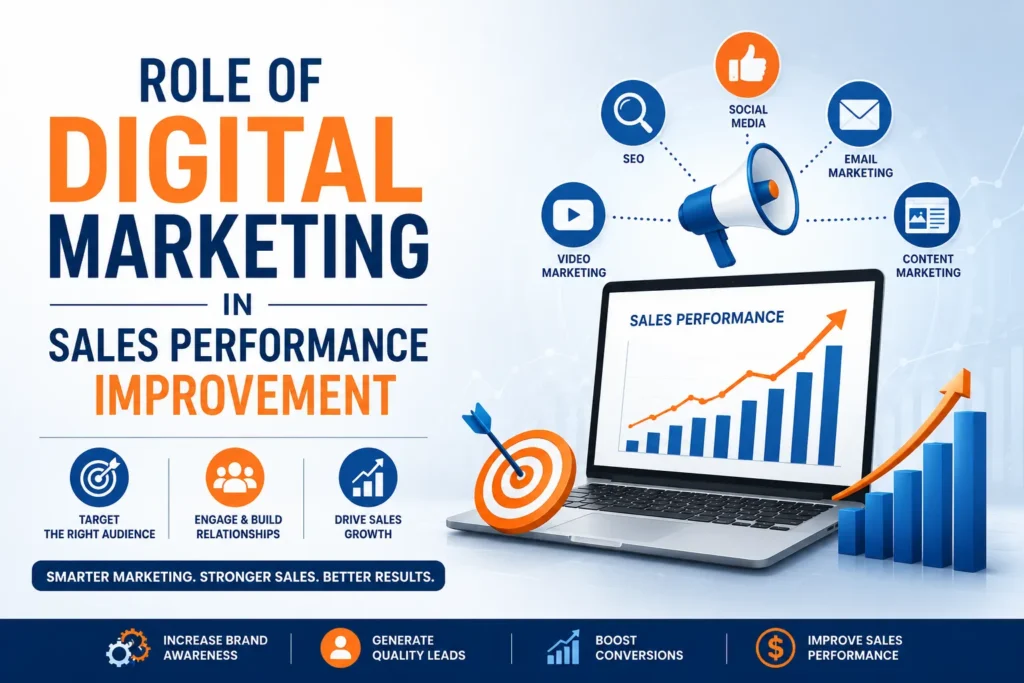
Role of Digital Marketing in Sales Performance Improvement
Digital marketing supports sales growth by increasing brand visibility and generating high-quality leads.
Important digital marketing channels include:
- Search engine optimization
- Social media marketing
- Email marketing
- Pay-per-click advertising
- Content marketing
- Influencer marketing
Combining digital marketing with Sales Performance Improvement strategies improves customer acquisition and revenue generation.
Sales Funnel Optimization
Sales funnel optimization improves customer journeys from lead generation to final conversions.
Stages of a sales funnel include:
- Lead generation
- Customer engagement
- Lead nurturing
- Proposal presentation
- Negotiation
- Conversion
- Customer retention
Businesses that optimize sales funnels improve conversion rates and customer experiences.
Importance of Sales KPIs and Metrics
Tracking key performance indicators helps organizations measure sales success and identify improvement areas.
Important sales KPIs include:
- Lead conversion rate
- Customer acquisition cost
- Revenue growth
- Average sales cycle
- Customer retention rate
- Employee productivity
- Monthly sales targets
- Customer satisfaction scores
Performance analytics help businesses improve operational strategies and sales outcomes.
Sales Coaching and Employee Development
Continuous learning is essential for maintaining high sales performance. Sales coaching helps employees improve confidence, communication, and problem-solving abilities.
Benefits of coaching include:
- Improved motivation
- Better customer engagement
- Higher conversion rates
- Increased productivity
- Stronger leadership skills
Organizations investing in employee development often experience stronger business growth.
Future Trends in Sales Performance Improvement
AI-Driven Sales Systems
AI tools will continue improving predictive analytics and customer targeting.
Hyper-Personalization
Businesses will focus more on personalized customer experiences and targeted communication.
Remote Sales Management
Virtual selling and cloud-based collaboration tools will continue growing.
Automation and CRM Integration
Automation platforms will improve operational efficiency and workflow management.
Data-Driven Decision Making
Businesses will increasingly rely on analytics and performance insights to optimize sales strategies.
Why Businesses Need Sales Performance Improvement
Businesses operating in competitive industries must continuously improve operational efficiency and customer engagement. Without proper strategies, organizations struggle to maintain growth and profitability.
Sales Performance Improvement helps businesses:
- Increase sales revenue
- Improve customer satisfaction
- Enhance operational efficiency
- Strengthen employee productivity
- Improve lead conversion
- Support business scalability
- Build long-term customer relationships
Organizations implementing modern sales strategies gain stronger competitive advantages in the marketplace.
Choosing the Right Sales Performance Improvement Strategy
Businesses should focus on strategies aligned with organizational goals, customer expectations, and operational requirements.
Important factors include:
- Team skill development
- CRM implementation
- Sales analytics
- Automation platforms
- Customer engagement strategies
- Performance tracking
Customized strategies help organizations achieve sustainable sales growth.
Conclusion
Sales Performance Improvement is essential for businesses seeking long-term growth, higher revenue, and improved customer relationships. Modern organizations must continuously optimize sales processes, employee performance, communication strategies, and customer engagement techniques to remain competitive.
From CRM systems and automation tools to sales coaching and digital marketing strategies, businesses now have access to advanced technologies that improve operational efficiency and customer experiences. Companies investing in Sales Performance Improvement strategies often achieve stronger profitability, improved customer loyalty, and sustainable business growth.
As digital transformation continues shaping modern business environments, organizations focusing on sales optimization and customer engagement will remain ahead of competitors and achieve long-term success.
FAQ – Sales Performance Improvement
1. What is Sales Performance Improvement and why is it important for businesses?
Sales Performance Improvement refers to the process of enhancing the productivity, efficiency, and effectiveness of a sales team to achieve higher revenue and better customer relationships. Businesses today operate in highly competitive markets where customer expectations constantly evolve. Without proper sales strategies, employee training, and performance monitoring, organizations may struggle to maintain growth and profitability.
A strong Sales Performance Improvement strategy helps businesses identify weaknesses in their sales process and optimize every stage of the customer journey. This includes lead generation, customer engagement, product presentation, negotiation, and closing deals. Companies that focus on improving sales performance often experience higher conversion rates, improved customer retention, and increased revenue.
Modern businesses use various tools and technologies to improve sales performance. CRM software, sales analytics, automation tools, and AI-driven insights help organizations track customer behavior and measure team productivity. These technologies provide real-time data that allows businesses to make informed decisions and improve their sales processes.
Employee training is another essential aspect of Sales Performance Improvement. Sales professionals need continuous learning to stay updated with changing market trends and customer expectations. Training programs improve communication skills, negotiation techniques, and customer relationship management abilities.
Businesses also benefit from improved team collaboration through Sales Performance Improvement initiatives. When marketing and sales teams work together, they can create better customer experiences and generate higher-quality leads. This alignment results in better sales outcomes and long-term business growth.
Ultimately, Sales Performance Improvement is important because it directly impacts revenue generation, customer satisfaction, and business competitiveness. Organizations that invest in improving sales performance position themselves for sustainable success in the modern digital marketplace.
2. How can businesses improve Sales Performance Improvement effectively?
Businesses can improve Sales Performance Improvement by implementing strategic planning, advanced technology, and continuous employee development. The first step is understanding the current sales process and identifying areas that require improvement. Organizations should analyze customer behavior, sales conversion rates, and team productivity to develop effective improvement strategies.
One of the most effective methods for improving sales performance is adopting CRM software. Customer Relationship Management systems help businesses organize customer information, track interactions, and automate follow-ups. This improves communication and ensures sales teams can manage leads more efficiently.
Sales training programs also play a major role in Sales Performance Improvement. Employees need proper training in communication, negotiation, objection handling, and product knowledge. Regular workshops and coaching sessions help sales professionals stay motivated and improve their performance.
Data analytics is another powerful tool for improving sales results. Businesses can use analytics to identify high-performing products, successful sales techniques, and customer purchasing patterns. These insights help organizations make better decisions and create targeted sales strategies.
Goal setting and performance tracking are equally important. Businesses should establish clear sales targets and regularly monitor employee performance. Incentive programs and rewards can motivate sales teams to achieve better results and maintain high productivity levels.
Automation tools can also improve efficiency by reducing repetitive tasks. Automated email campaigns, lead scoring systems, and scheduling tools allow sales professionals to focus more on customer engagement and relationship building.
Finally, businesses should encourage collaboration between departments. Marketing and sales teams working together can generate higher-quality leads and improve customer experiences. By combining technology, training, analytics, and teamwork, organizations can significantly improve Sales Performance Improvement and achieve long-term business success.
3. What are the benefits of Sales Performance Improvement for companies?
Sales Performance Improvement offers multiple benefits that directly contribute to business growth, profitability, and customer satisfaction. One of the biggest advantages is increased revenue generation. When sales teams perform efficiently, businesses can close more deals and maximize their profits.
Another major benefit is improved customer relationships. Effective sales strategies help businesses understand customer needs and provide personalized solutions. This creates trust and encourages long-term customer loyalty. Satisfied customers are more likely to make repeat purchases and recommend the company to others.
Sales Performance Improvement also enhances employee productivity. With proper training, technology, and performance tracking, sales professionals can manage their tasks more efficiently. This leads to higher motivation and better overall performance within the organization.
Improved forecasting and decision-making are additional advantages. Businesses can use sales data and analytics to predict market trends, customer preferences, and future revenue opportunities. Accurate forecasting allows organizations to plan their resources effectively and reduce business risks.
Operational efficiency is another key benefit. Automation tools and streamlined sales processes reduce manual work and improve workflow management. This saves time and allows teams to focus on high-value activities such as customer engagement and deal closing.
Competitive advantage is also an important outcome of Sales Performance Improvement. Companies with strong sales strategies can adapt quickly to market changes and outperform competitors. Businesses that continuously improve their sales performance remain relevant and successful in competitive industries.
Furthermore, improved sales performance supports business scalability. As organizations grow, efficient sales processes ensure consistent customer experiences and sustainable expansion. Companies can enter new markets and handle larger customer bases more effectively.
Overall, Sales Performance Improvement benefits businesses by increasing revenue, enhancing customer satisfaction, improving productivity, and strengthening long-term market competitiveness.
4. Which tools are useful for Sales Performance Improvement?
Various tools and technologies help businesses achieve effective Sales Performance Improvement. One of the most important tools is CRM software, which helps organizations manage customer data, track sales activities, and improve communication. Popular CRM systems allow businesses to organize leads, automate follow-ups, and monitor customer interactions.
Sales automation tools are also highly valuable. These platforms automate repetitive tasks such as email marketing, appointment scheduling, and lead nurturing. Automation saves time and allows sales professionals to focus more on customer relationships and closing deals.
Analytics and reporting tools provide businesses with valuable insights into sales performance. These tools help organizations measure conversion rates, identify successful strategies, and track team productivity. Data-driven decisions improve efficiency and support long-term business growth.
Communication tools are another important component of Sales Performance Improvement. Video conferencing platforms, team messaging apps, and collaboration software improve communication between employees and customers. Effective communication strengthens teamwork and enhances customer experiences.
Artificial Intelligence and machine learning tools are becoming increasingly popular in sales management. AI-powered platforms analyze customer behavior, predict buying patterns, and recommend personalized marketing strategies. These insights help businesses improve customer engagement and increase sales opportunities.
Lead generation tools also support Sales Performance Improvement by helping businesses identify potential customers. These tools collect customer information from websites, social media platforms, and online campaigns. Sales teams can then focus on high-quality leads that are more likely to convert.
Performance management software helps organizations track employee goals and evaluate productivity. Managers can monitor sales targets, provide feedback, and identify training opportunities to improve team performance.
By integrating CRM systems, automation tools, analytics platforms, AI solutions, and communication software, businesses can achieve effective Sales Performance Improvement and maintain a competitive edge in the market.
5. Why is employee training important in Sales Performance Improvement?
Employee training is one of the most critical factors in successful Sales Performance Improvement because sales professionals directly influence customer experiences and business revenue. Without proper training, sales teams may struggle with communication, negotiation, and customer engagement, leading to missed opportunities and lower conversion rates.
Training programs help employees understand products and services more effectively. Sales representatives who possess deep product knowledge can confidently answer customer questions and provide suitable solutions. This builds trust and improves customer satisfaction.
Communication and negotiation skills are also improved through training. Sales professionals learn how to present products persuasively, handle objections, and close deals more efficiently. Strong communication skills help businesses build lasting relationships with customers and improve brand reputation.
Modern training programs often include digital tools and technology education. Employees learn how to use CRM software, automation platforms, and analytics tools effectively. This increases efficiency and allows sales teams to manage customer interactions more professionally.
Training also keeps employees updated with changing market trends and customer expectations. Consumer behavior evolves rapidly, especially in digital markets. Businesses that regularly train their sales teams can adapt quickly and maintain a competitive advantage.
Another important benefit of training is increased employee confidence and motivation. Well-trained employees feel more prepared to handle customer interactions and sales challenges. This improves morale and encourages better performance within the organization.
Sales Performance Improvement also depends on consistency. Training ensures all employees follow standardized sales processes and maintain professional communication standards. Consistent customer experiences strengthen brand trust and improve customer loyalty.
Ultimately, employee training supports higher productivity, stronger customer relationships, and increased revenue generation. Businesses that invest in regular training programs create skilled sales teams capable of driving long-term business growth and sustainable success.