Table of Contents
Introduction
In today’s competitive job market, attracting talented employees is only half the battle. The real challenge lies in keeping them engaged, motivated, and committed to your organization. High employee turnover can significantly impact productivity, company culture, customer satisfaction, and profitability. This is why businesses across industries are investing heavily in effective employee retention strategies.
Employee retention refers to an organization’s ability to retain its workforce over a period of time. Companies with strong retention rates benefit from lower recruitment costs, higher employee morale, and increased operational efficiency. On the other hand, organizations struggling with employee turnover often face recurring hiring expenses, knowledge loss, and reduced team performance.
As workforce expectations continue to evolve in 2026, businesses must adopt modern and practical employee retention strategies that address employee needs while supporting organizational growth. This guide explores proven retention techniques that actually work and help companies build a loyal, productive workforce.
Why Employee Retention Matters
Before discussing specific employee retention strategies, it is important to understand why retention is critical for business success.
When employees leave an organization, companies incur several hidden and direct costs, including:
- Recruitment expenses
- Training and onboarding costs
- Productivity losses
- Project delays
- Reduced customer satisfaction
- Lower employee morale
Research consistently shows that replacing an employee can cost anywhere from 50% to 200% of their annual salary, depending on their role and expertise.
By implementing effective employee retention strategies, businesses can reduce turnover, improve workplace satisfaction, and maintain a competitive advantage.
Common Reasons Employees Leave Organizations
Understanding why employees resign is the first step toward improving retention.
Some of the most common reasons include:
Lack of Career Growth
Employees want opportunities to learn, develop skills, and advance their careers. When growth opportunities are limited, they often seek better prospects elsewhere.
Inadequate Compensation
Competitive salaries and benefits remain major factors influencing employee decisions.
Poor Management
Many employees leave managers rather than companies. Ineffective leadership can lead to frustration and disengagement.
Lack of Recognition
Employees want their efforts acknowledged and appreciated.
Work-Life Imbalance
Long working hours and excessive stress can quickly lead to burnout.
Toxic Workplace Culture
Negative work environments significantly impact employee satisfaction and retention.
Identifying these issues allows organizations to develop targeted employee retention strategies that address employee concerns effectively.
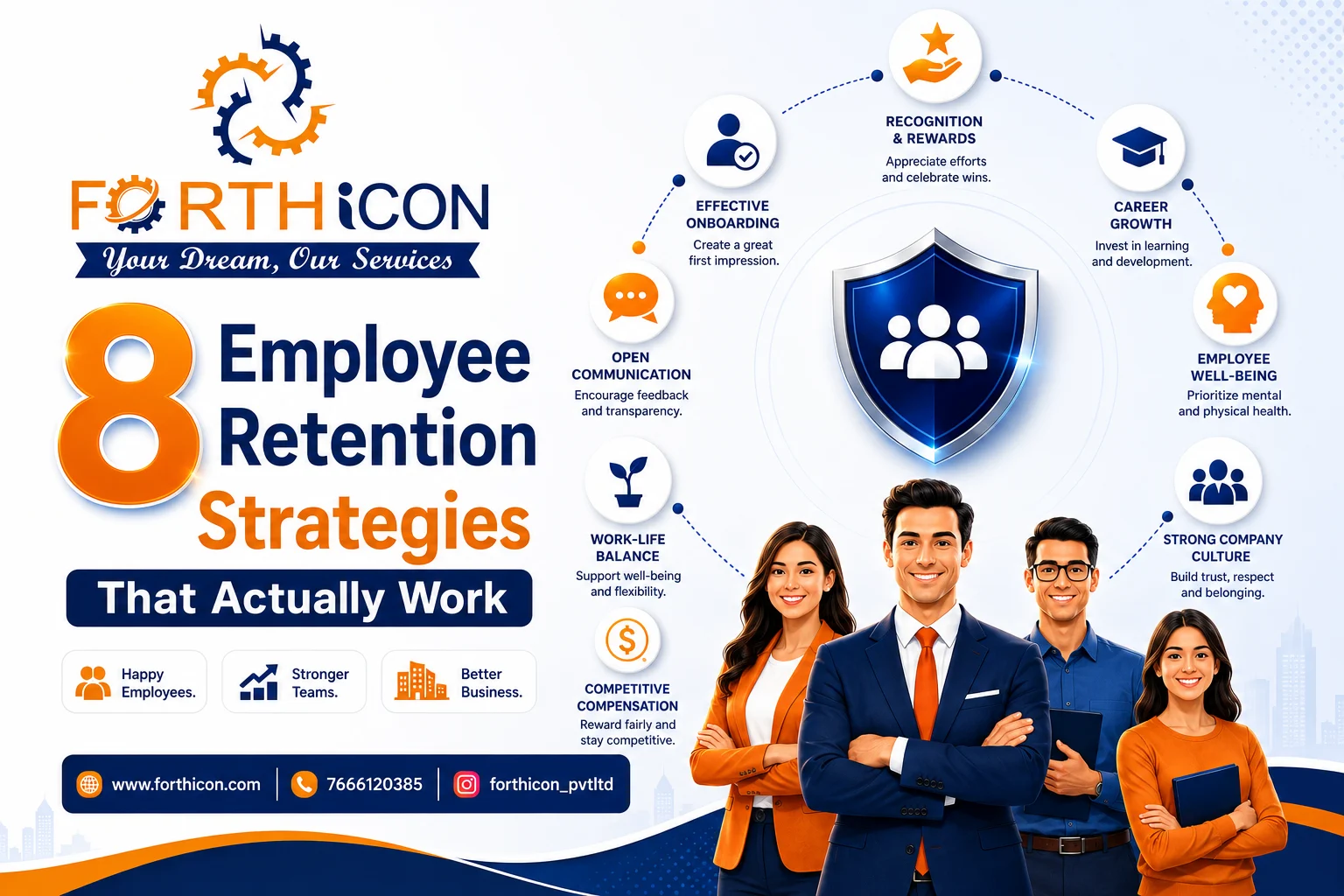
Top Employee Retention Strategies That Actually Work
1. Offer Competitive Compensation and Benefits
One of the most effective employee retention strategies is providing fair and competitive compensation.
Employees compare their salaries with industry standards and competitors. If compensation falls below expectations, retention becomes difficult.
Consider offering:
- Competitive salaries
- Performance bonuses
- Health insurance
- Retirement benefits
- Paid leave
- Wellness programs
A comprehensive compensation package demonstrates that employees are valued and appreciated.
2. Create Clear Career Development Opportunities
Career growth remains a top priority for today’s workforce.
Organizations should provide:
- Skill development programs
- Leadership training
- Certification support
- Internal promotions
- Mentorship programs
Employees who see a future within the organization are more likely to stay long-term.
Investing in employee development is one of the most successful employee retention strategies available.
3. Build a Positive Workplace Culture
A healthy workplace culture encourages employees to remain committed to the organization.
Companies should focus on:
- Respectful communication
- Team collaboration
- Diversity and inclusion
- Employee well-being
- Transparency
Employees are more engaged when they feel connected to the company’s mission and values.
Positive workplace culture consistently ranks among the most impactful employee retention strategies.
4. Recognize and Reward Employee Contributions
Recognition plays a crucial role in employee satisfaction.
Simple appreciation can significantly improve morale and motivation.
Recognition methods include:
- Employee of the Month programs
- Performance awards
- Public appreciation
- Incentive bonuses
- Personalized recognition
Employees who feel valued are less likely to seek opportunities elsewhere.
5. Strengthen Leadership and Management Skills
Managers have a direct influence on employee retention.
Organizations should invest in leadership development programs to help managers:
- Communicate effectively
- Provide constructive feedback
- Support employee growth
- Resolve conflicts professionally
Strong leadership is a cornerstone of successful employee retention strategies.
6. Promote Work-Life Balance
Modern employees prioritize flexibility and well-being.
Businesses can support work-life balance through:
- Flexible schedules
- Hybrid work options
- Remote work opportunities
- Mental health programs
- Wellness initiatives
Employees who maintain a healthy balance between personal and professional life are generally more productive and loyal.
7. Improve Employee Engagement
Engaged employees are more likely to remain with an organization.
Ways to boost engagement include:
- Regular feedback sessions
- Team-building activities
- Open communication
- Employee surveys
- Participation in decision-making
Employee engagement should be a central component of all employee retention strategies.
8. Provide Meaningful Work
Employees want to feel that their work matters.
Organizations should help employees understand:
- Their role’s impact
- Company goals
- Customer outcomes
- Organizational achievements
Purpose-driven employees often demonstrate higher commitment levels.
9. Offer Flexible Working Arrangements
Flexibility has become a major factor in employee retention.
Many employees now prefer:
- Hybrid work models
- Remote work options
- Flexible hours
- Compressed workweeks
Flexible work arrangements improve job satisfaction while reducing burnout.
10. Conduct Stay Interviews
Many companies focus solely on exit interviews, but stay interviews can be even more valuable.
Stay interviews help organizations understand:
- Employee concerns
- Career goals
- Workplace challenges
- Retention risks
This proactive approach allows businesses to address issues before employees decide to leave.
How Technology Supports Employee Retention Strategies
Technology plays an increasingly important role in workforce management.
Modern HR platforms help organizations:
- Monitor employee engagement
- Track performance
- Conduct surveys
- Manage learning programs
- Analyze retention trends
Data-driven insights allow HR teams to improve employee retention strategies continuously.
The Role of Employee Recognition Programs
Employee recognition programs contribute significantly to workplace satisfaction.
Effective programs should be:
- Consistent
- Transparent
- Inclusive
- Performance-based
Recognition does not always require financial rewards. Public acknowledgment and appreciation often have a powerful impact on employee motivation.
Companies with strong recognition programs typically experience lower turnover rates.
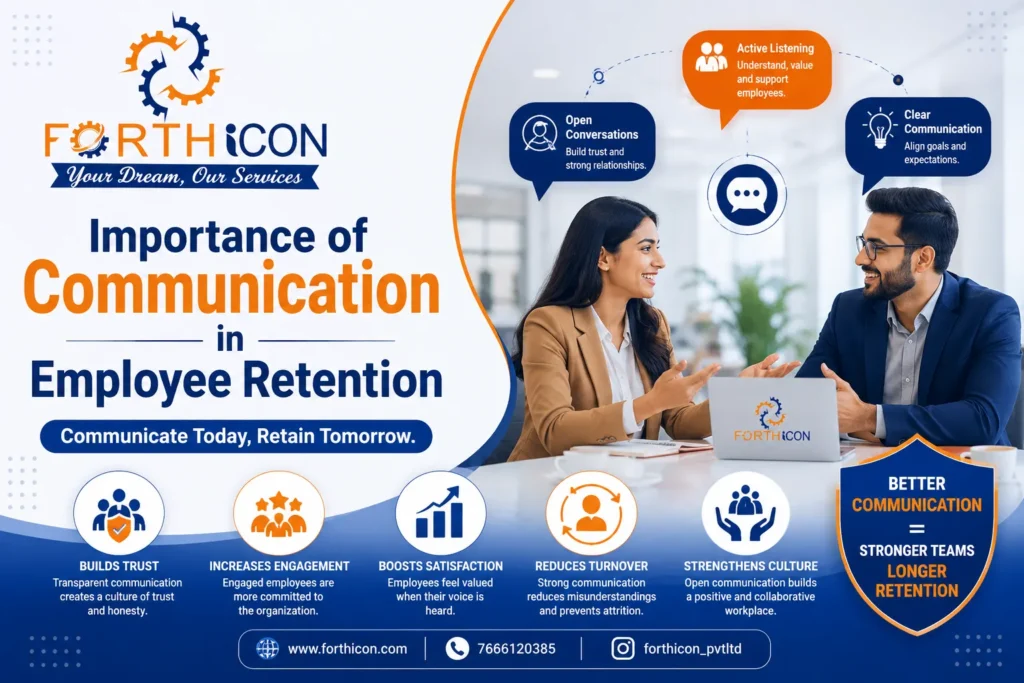
Importance of Communication in Employee Retention
Open communication builds trust between employees and management.
Organizations should encourage:
- Regular team meetings
- One-on-one discussions
- Feedback channels
- Transparent updates
Employees who feel heard and informed are more likely to remain engaged and committed.
Communication remains one of the most overlooked yet effective employee retention strategies.
Employee Wellness Programs and Retention
Employee wellness has become a business priority.
Wellness initiatives may include:
- Mental health support
- Fitness programs
- Stress management workshops
- Health screenings
- Employee assistance programs
Healthy employees are generally happier, more productive, and more loyal.
Businesses investing in wellness often see significant improvements in retention rates.
Measuring the Success of Employee Retention Strategies
Organizations should regularly evaluate the effectiveness of their retention initiatives.
Important metrics include:
Employee Turnover Rate
Tracks the percentage of employees leaving the organization.
Retention Rate
Measures the percentage of employees who remain over a specific period.
Employee Satisfaction Score
Evaluates overall employee happiness and engagement.
Internal Promotion Rate
Indicates career growth opportunities within the company.
Employee Net Promoter Score (eNPS)
Measures how likely employees are to recommend the company as a workplace.
Monitoring these metrics helps organizations refine their employee retention strategies over time.
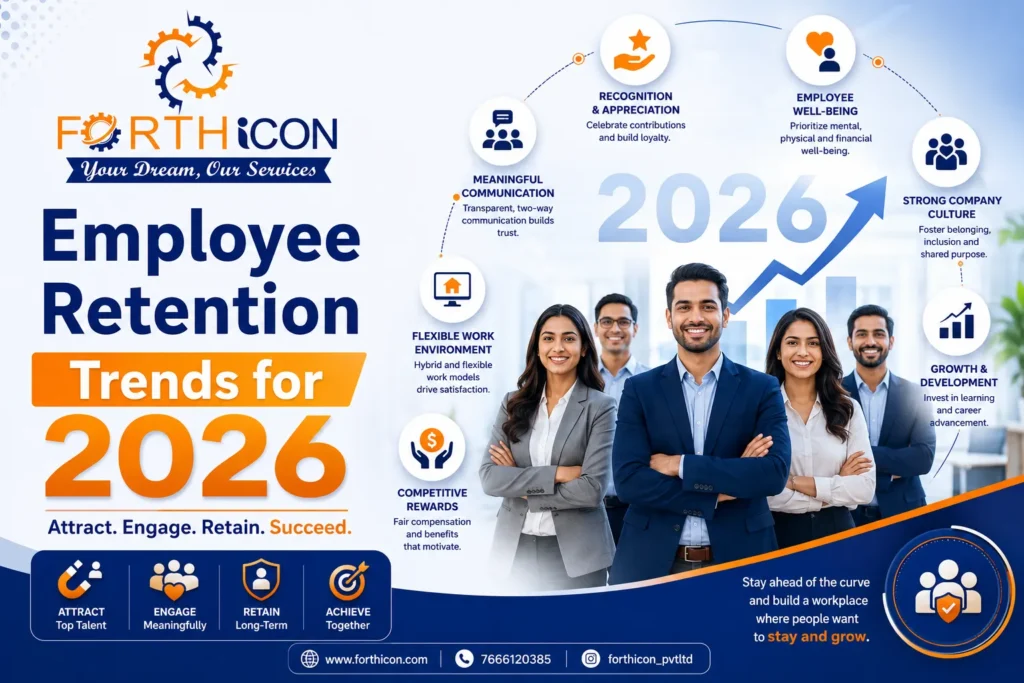
Employee Retention Trends for 2026
As workplace expectations evolve, several trends are shaping the future of retention:
AI-Powered Employee Engagement
Artificial intelligence helps identify disengagement risks early.
Personalized Career Development
Customized learning paths improve employee growth opportunities.
Flexible Work Models
Hybrid and remote work options continue to influence retention.
Focus on Mental Health
Organizations increasingly prioritize employee well-being.
Skills-Based Development
Continuous learning and upskilling remain critical retention drivers.
Businesses that adapt to these trends will be better positioned to retain top talent.
Mistakes to Avoid in Employee Retention
While implementing employee retention strategies, organizations should avoid common mistakes such as:
- Ignoring employee feedback
- Delaying promotions
- Offering below-market salaries
- Micromanaging teams
- Neglecting workplace culture
- Failing to recognize achievements
Avoiding these pitfalls can significantly improve retention outcomes.
Conclusion
Successful businesses understand that retaining talented employees is just as important as hiring them. Effective employee retention strategies help organizations reduce turnover, improve productivity, strengthen workplace culture, and achieve sustainable growth.
From offering competitive compensation and career development opportunities to promoting work-life balance and employee engagement, organizations have numerous ways to build a loyal workforce. Companies that prioritize employee satisfaction and continuously refine their retention efforts will gain a significant competitive advantage in 2026 and beyond.
Investing in proven employee retention strategies is not merely an HR initiative—it is a long-term business strategy that drives performance, innovation, and organizational success.
FAQs Employee retention strategies
1. What are employee retention strategies and why are they important?
Employee retention strategies are structured initiatives, policies, and workplace practices designed to keep talented employees engaged and committed to an organization for a longer period. These strategies help businesses reduce employee turnover, improve productivity, and maintain operational stability.
Employee retention is important because replacing employees can be expensive and time-consuming. Organizations must spend money on recruitment, training, onboarding, and productivity recovery whenever an employee leaves. Additionally, frequent turnover can negatively affect team morale and customer satisfaction. Effective employee retention strategies ensure that businesses retain experienced employees, preserve organizational knowledge, and create a more positive work environment. In today’s competitive job market, retaining skilled employees is often more cost-effective than constantly hiring new talent.
2. What are the main reasons employees leave a company?
Employees leave organizations for a variety of reasons, and understanding these reasons is crucial for developing successful employee retention strategies. Some of the most common causes include inadequate compensation, lack of career advancement opportunities, poor management, excessive workload, work-life imbalance, limited recognition, and toxic workplace culture.
Many employees also leave because they feel undervalued or disconnected from the organization’s mission. A lack of communication and feedback can further contribute to dissatisfaction. Businesses that regularly gather employee feedback and address workplace concerns proactively are more likely to improve retention rates. Identifying the root causes of employee turnover helps organizations implement targeted solutions that encourage employees to stay and grow within the company.
3. How does workplace culture affect employee retention?
Workplace culture plays a significant role in employee retention. A positive culture fosters collaboration, trust, respect, and employee engagement, while a negative culture often leads to dissatisfaction and turnover. Employees want to work in environments where they feel supported, appreciated, and aligned with organizational values.
Strong workplace cultures promote open communication, teamwork, diversity, inclusion, and professional growth. When employees enjoy coming to work and feel connected to their colleagues and leaders, they are more likely to remain loyal to the organization. Businesses that prioritize culture as part of their employee retention strategies often experience higher productivity, stronger employee morale, and lower turnover rates.
4. How can career development improve employee retention?
Career development is one of the most effective employee retention strategies because employees want opportunities to learn, grow, and advance professionally. When organizations provide clear career paths and development opportunities, employees are more likely to see a future within the company.
Career development initiatives may include training programs, certifications, workshops, mentoring, leadership development, and internal promotions. Employees who feel their employer is invested in their growth are generally more engaged and motivated. By helping employees build new skills and advance their careers, organizations can improve job satisfaction and reduce the likelihood of employees seeking opportunities elsewhere.
5. Why is employee recognition important for retention?
Employee recognition is a powerful tool for improving retention because it helps employees feel valued and appreciated. Recognition can take many forms, including verbal praise, awards, bonuses, incentives, public acknowledgment, and performance-based rewards.
When employees consistently receive recognition for their contributions, they develop a stronger sense of belonging and motivation. Lack of recognition, on the other hand, can lead to disengagement and frustration. Effective employee retention strategies often include formal and informal recognition programs that celebrate employee achievements and reinforce positive workplace behaviors. Recognition contributes to higher job satisfaction and encourages employees to remain committed to the organization.
6. How do competitive salaries and benefits impact employee retention?
Compensation remains one of the most important factors influencing employee retention. Employees expect their salaries and benefits to reflect their skills, experience, and market value. If compensation is significantly lower than industry standards, employees may seek better opportunities elsewhere.
Competitive benefits packages often include health insurance, retirement plans, paid time off, wellness programs, performance bonuses, flexible work options, and professional development support. While salary is important, employees increasingly evaluate the overall value of the benefits package. Organizations that regularly review compensation structures and offer attractive benefits are more likely to attract and retain top talent. Competitive compensation is a fundamental component of successful employee retention strategies.
7. What role does leadership play in employee retention?
Leadership has a direct impact on employee satisfaction and retention. Employees often leave managers rather than organizations. Effective leaders inspire trust, provide support, communicate clearly, and create positive work environments.
Managers who actively listen to employees, provide constructive feedback, and support career development help build stronger employee relationships. Poor leadership, on the other hand, can contribute to workplace stress, disengagement, and turnover. Organizations should invest in leadership training to ensure managers have the skills needed to motivate and retain employees. Strong leadership is one of the most influential employee retention strategies because it shapes the daily employee experience.
8. How does work-life balance contribute to employee retention?
Work-life balance has become a major priority for employees in recent years. Employees who struggle to balance personal and professional responsibilities often experience stress, burnout, and reduced job satisfaction. As a result, they may seek employment with organizations that offer greater flexibility.
Businesses can support work-life balance through flexible schedules, remote work options, hybrid work arrangements, wellness programs, and generous leave policies. Encouraging employees to take breaks and maintain healthy boundaries between work and personal life can significantly improve well-being. Organizations that prioritize work-life balance as part of their employee retention strategies often benefit from increased productivity, higher engagement, and lower turnover rates.
9. How can businesses measure the success of employee retention strategies?
Measuring retention success is essential for understanding whether employee retention strategies are delivering desired results. Businesses can track several key metrics to evaluate retention performance.
Important metrics include employee turnover rate, retention rate, employee satisfaction scores, employee engagement levels, internal promotion rates, absenteeism rates, and employee net promoter scores (eNPS). Conducting regular employee surveys and stay interviews can also provide valuable insights into workforce satisfaction. By analyzing these metrics, organizations can identify strengths, address weaknesses, and continuously improve their retention initiatives. Data-driven decision-making helps businesses create more effective retention strategies over time.
10. What are the best employee retention strategies for 2026 and beyond?
As workplace expectations continue to evolve, organizations must adapt their employee retention strategies to meet changing employee needs. Some of the most effective strategies for 2026 include offering flexible work arrangements, investing in employee development, prioritizing mental health, strengthening workplace culture, and leveraging technology to improve engagement.
Companies should also focus on personalized career growth plans, diversity and inclusion initiatives, employee wellness programs, and continuous feedback systems. Artificial intelligence and HR analytics are increasingly helping organizations identify retention risks before employees decide to leave. Businesses that combine modern technology with a people-first approach will be best positioned to retain top talent, reduce turnover, and achieve long-term success in an increasingly competitive labor market.