
Table of Contents
Introduction
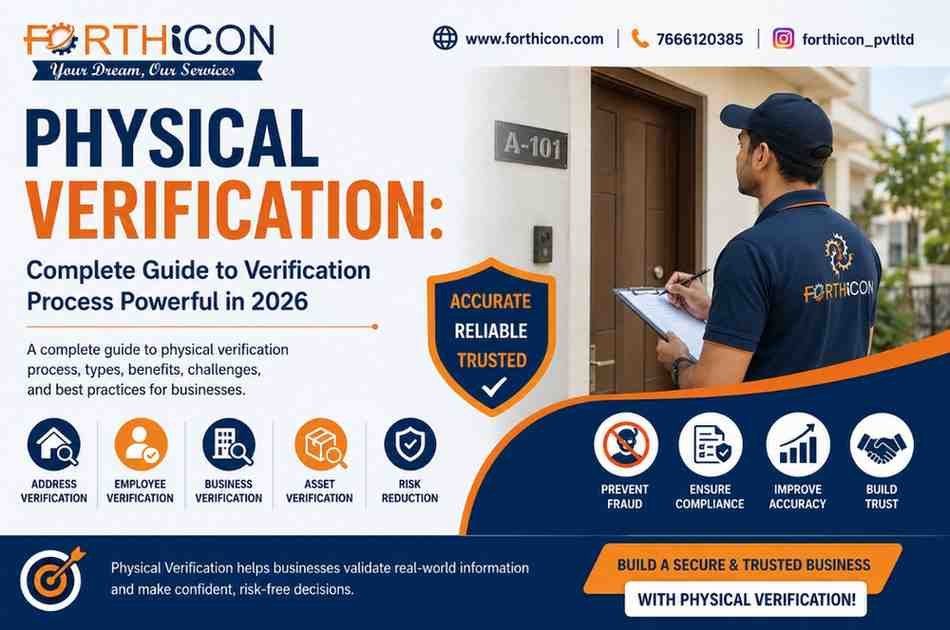
In today’s fast-paced business environment, trust, accuracy, and compliance have become essential components of successful operations. Organizations across industries rely on accurate information to make informed decisions regarding employees, customers, vendors, assets, and business partners. This is where Physical Verification plays a critical role.
Physical Verification is a systematic process used to confirm the authenticity and existence of individuals, addresses, assets, inventory, businesses, and documents through on-site inspections or field visits. It helps organizations reduce risks, prevent fraud, ensure compliance, and maintain operational efficiency.
As businesses continue to expand and digital transactions become more common, the need for reliable verification processes has grown significantly. In 2026, physical verification remains one of the most trusted methods for validating information and ensuring transparency.
This comprehensive guide explains everything you need to know about Physical Verification, including its importance, process, benefits, applications, challenges, and future trends.
What is Physical process?
Verification process refers to the process of physically inspecting and validating information, assets, locations, individuals, or business entities through direct observation and field investigation.
Unlike digital verification methods that rely solely on electronic records, Verification process involves real-world confirmation of facts.
The objective is to ensure that the provided information is accurate, genuine, and trustworthy.
Verification process can be conducted for:
- Employee address verification
- Customer verification
- Vendor verification
- Business verification
- Inventory verification
- Asset verification
- Property verification
- Banking verification
- Loan verification
- Insurance verification
Organizations use physical verification to minimize risks associated with fraud, misrepresentation, and inaccurate information.
Why is Verification process Important in 2026?
As businesses increasingly rely on digital systems, cyber fraud and identity-related risks have also increased. While online verification methods are useful, they may not always provide complete assurance.
Verification process adds an additional layer of trust and security.
Key Reasons Why Verification process is Important
Fraud Prevention
One of the primary reasons businesses conduct Verification process is to prevent fraud.
Physical inspections help identify:
- Fake addresses
- False identities
- Non-existent businesses
- Fraudulent documentation
- Misrepresented assets
Improved Accuracy
Verification process ensures that information provided by individuals or organizations matches actual conditions.
This helps businesses make informed decisions based on verified data.
Regulatory Compliance
Many industries require verification procedures to comply with government regulations and industry standards.
Verification process supports:
- KYC compliance
- Banking regulations
- Insurance requirements
- Corporate governance standards
Better Risk Management
Organizations can reduce operational and financial risks through proper verification procedures.
This helps protect business interests and maintain customer trust.
Types of Verification process
Verification process can be categorized based on the object being verified.
Employee Verification
Organizations conduct employee verification to confirm:
- Residential addresses
- Educational qualifications
- Employment history
- Identity information
This helps employers hire trustworthy candidates.
Benefits
- Reduces hiring risks
- Prevents identity fraud
- Enhances workplace security
Customer Verification
Businesses verify customer information to ensure authenticity.
Common applications include:
- Banking
- Financial services
- Insurance
- Telecom services
Benefits
- Prevents fraudulent accounts
- Supports KYC compliance
- Improves customer trust
Vendor Verification
Companies verify suppliers and vendors before entering into business relationships.
Verification includes:
- Business registration
- Office location
- Operational capabilities
- Financial credibility
Benefits
- Reduces supplier risk
- Improves procurement decisions
- Ensures business continuity
Asset Verification
Asset verification confirms the existence and condition of company assets.
Examples include:
- Machinery
- Equipment
- Vehicles
- Furniture
- Technology assets
Benefits
- Prevents asset mismanagement
- Improves asset tracking
- Supports auditing processes
Inventory Verification
Inventory verification involves physically counting and inspecting stock.
Businesses use inventory verification to:
- Confirm stock levels
- Identify discrepancies
- Improve warehouse management
Benefits
- Accurate inventory records
- Reduced stock losses
- Better operational planning
Property Verification
Property verification is commonly used in:
- Real estate
- Banking
- Mortgage lending
- Insurance
Verification includes:
- Property inspection
- Ownership validation
- Location confirmation
Benefits
- Reduces property fraud
- Supports loan approvals
- Protects investments
The Verification process Process
Although the exact process may vary across industries, most physical verification procedures follow a structured approach.
Step 1: Verification Request
The process begins when an organization requests verification.
This may involve:
- Employee onboarding
- Customer registration
- Vendor selection
- Asset auditing
Step 2: Information Collection
Relevant information is gathered for verification purposes.
Examples include:
- Names
- Addresses
- Identification documents
- Business details
- Asset records
Step 3: Field Visit
A verification officer visits the specified location.
The officer conducts:
- Physical inspection
- Observation
- Data validation
- Interviews if necessary
Step 4: Evidence Collection
Evidence may include:
- Photographs
- GPS coordinates
- Site observations
- Verification forms
This documentation supports the verification findings.
Step 5: Verification Report
The collected information is compiled into a report.
The report typically includes:
- Verification status
- Findings
- Supporting evidence
- Recommendations
Applications of Verification process Across Industries
Physical verification is widely used across multiple sectors.
Banking and Financial Services
Banks conduct physical verification for:
- Customer onboarding
- Loan applications
- Address verification
- Business verification
Benefits
- Fraud prevention
- Regulatory compliance
- Risk reduction
Insurance Industry
Insurance companies use verification to:
- Validate policyholder information
- Assess claims
- Inspect insured assets
Benefits
- Accurate underwriting
- Reduced fraudulent claims
- Better risk assessment
Manufacturing Industry
Manufacturers conduct verification for:
- Vendors
- Suppliers
- Assets
- Inventory
Benefits
- Supply chain reliability
- Asset control
- Better operational efficiency
Real Estate Sector
Property verification is essential in real estate transactions.
Benefits
- Ownership confirmation
- Property authenticity
- Reduced legal disputes
Benefits of Physical Verification
Enhanced Trust and Credibility
Verified information builds trust between businesses and stakeholders.
Organizations can confidently engage with verified individuals and entities.
Fraud Detection and Prevention
Physical verification helps identify inconsistencies and fraudulent activities before they cause significant damage.
Improved Compliance
Verification procedures support regulatory requirements and industry standards.
This reduces compliance risks and potential penalties.
Better Decision-Making
Accurate information leads to more informed business decisions.
Organizations can assess risks effectively and allocate resources wisely.
Operational Efficiency
Reliable verification processes improve workflow efficiency and reduce administrative errors.
Challenges in Physical Verification
Although physical verification offers numerous benefits, it also presents certain challenges.
Time-Consuming Process
Field visits require planning and coordination.
Large-scale verification projects may take significant time to complete.
Operational Costs
Organizations must allocate resources for:
- Field staff
- Transportation
- Reporting systems
Geographic Limitations
Verification becomes more challenging when locations are spread across multiple regions.
Data Accuracy Issues
Incomplete or outdated information can complicate the verification proces
Security Concerns
Verification personnel may encounter safety challenges while conducting field visits in unfamiliar locations.
Best Practices for Effective Physical Verification
Organizations can improve verification outcomes by following industry best practices.
Use Standardized Procedures
Develop consistent verification guidelines for all verification activities.
Train Verification Personnel
Proper training improves:
- Accuracy
- Professionalism
- Reporting quality
Leverage Technology
Modern verification tools can enhance efficiency.
Examples include:
- Mobile applications
- GPS tracking
- Digital reporting systems
- Cloud databases
Maintain Detailed Records
Comprehensive documentation improves accountability and supports audits.
Conduct Periodic Reviews
Regular reviews ensure verification processes remain effective and compliant.
Technology and Physical Verification
Technology has significantly transformed physical verification processes.
Modern verification solutions include:
Mobile Verification Apps
Field officers can capture:
- Photos
- Signatures
- GPS locations
- Verification notes
Using smartphones and tablets.
GPS Tracking
GPS technology confirms the exact location of verification visits.
Cloud-Based Reporting
Cloud systems enable real-time report submission and centralized data management.
Artificial Intelligence
AI assists with:
- Data analysis
- Fraud detection
- Pattern recognition
Improving verification accuracy and efficiency.
Future Trends in Physical Verification
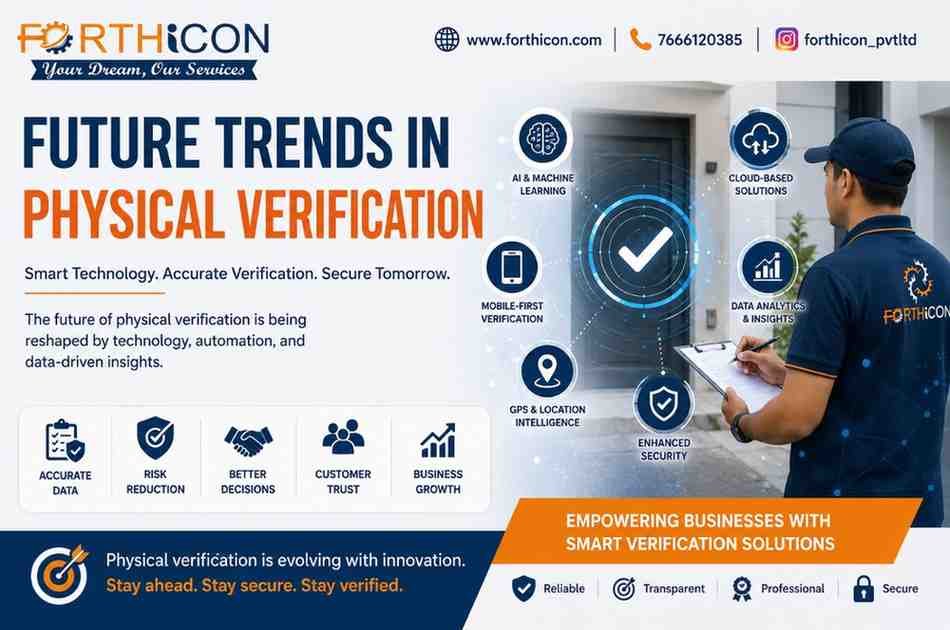
As businesses continue to embrace digital transformation, physical verification processes are also evolving.
AI-Powered Verification
Artificial intelligence will automate data validation and improve fraud detection capabilities.
Mobile-First Verification
Mobile technology will continue to streamline field operations and reporting.
Real-Time Verification
Organizations will increasingly demand instant verification updates and reporting.
Enhanced Security Measures
Advanced encryption and cybersecurity solutions will protect verification data.
Integration with ERP and CRM Systems
Verification platforms will integrate seamlessly with business management systems for improved workflow automation.
How Physical Verification Supports Business Growth
Physical verification contributes directly to business success by:
- Reducing fraud-related losses
- Improving operational transparency
- Enhancing customer confidence
- Supporting regulatory compliance
- Strengthening business relationships
Organizations that invest in reliable verification processes gain a competitive advantage through increased trust and risk management.
Conclusion
In 2026, Physical Verification remains one of the most effective methods for confirming the authenticity of individuals, businesses, assets, and information. While digital verification technologies continue to evolve, physical verification provides an additional layer of assurance that cannot always be achieved through electronic records alone.
From employee background checks and customer onboarding to asset audits and vendor assessments, physical verification plays a crucial role in risk management, compliance, fraud prevention, and operational excellence.
Businesses that implement robust physical verification processes can improve decision-making, build stakeholder trust, reduce risks, and position themselves for sustainable growth in an increasingly competitive marketplace.
Whether you operate in banking, insurance, manufacturing, real estate, telecom, or corporate services, investing in professional Physical Verification services is a strategic step toward greater security, transparency, and long-term success.
Frequently Asked Questions (FAQs) About Physical Verification
1. What is Physical Verification and why is it important for businesses?
Physical Verification is the process of confirming the authenticity of information, assets, addresses, businesses, or individuals through direct on-site inspection. Unlike digital verification methods that rely on online records and documents, this approach involves a field visit to validate facts in real-world conditions.
In 2026, businesses operate in a highly competitive and risk-sensitive environment. Fraudulent activities, inaccurate records, fake addresses, and identity theft have increased significantly. As a result, organizations need reliable methods to validate information before making important decisions.
Physical verification helps businesses:
- Confirm customer and employee addresses
- Verify vendor and supplier information
- Validate business operations
- Check property ownership
- Inspect inventory and assets
- Prevent fraud and misrepresentation
The process adds an extra layer of trust because information is verified directly rather than relying solely on submitted documents. Many industries such as banking, insurance, manufacturing, telecom, logistics, and real estate depend on verification services to maintain compliance and reduce operational risks.
A strong verification system also improves transparency, protects company assets, and enhances customer confidence. Businesses that use professional verification services often experience fewer fraudulent transactions and better decision-making.
2. How does the Physical Verification process work?
The verification process follows a structured approach to ensure accurate results. While procedures may vary depending on the industry, the overall workflow remains similar.
Step 1: Verification Request
The organization initiates a verification request for a person, business, address, asset, or property.
Step 2: Data Collection
Relevant information is gathered, including:
- Name
- Address
- Contact details
- Business records
- Asset information
Step 3: Field Investigation
A trained verification executive visits the specified location to inspect and validate the information.
Step 4: Evidence Collection
Evidence may include:
- Photographs
- GPS coordinates
- Site observations
- Interview notes
Step 5: Reporting
A detailed report is prepared highlighting findings and discrepancies.
Step 6: Review and Decision
The client reviews the report and takes appropriate action.
This structured process ensures reliable outcomes and helps organizations make informed decisions based on verified information.
3. Which industries commonly use Physical Verification services?
Verification services are used across a wide range of industries where trust, compliance, and accuracy are essential.
Banking and Financial Services
Banks use verification to validate customer information, addresses, loan applicants, and business entities.
Insurance Companies
Insurance providers conduct inspections to verify policyholder details and assess claims.
Manufacturing Sector
Manufacturers verify suppliers, inventory, warehouses, and business partners.
Telecom Industry
Telecom companies confirm subscriber information and installation addresses.
Real Estate Industry
Property inspections help validate ownership, location, and legal status.
Human Resource Management
Organizations verify employee addresses and background information during recruitment.
Logistics and Transportation
Companies verify delivery locations, warehouses, and transportation assets.
These industries rely heavily on accurate verification to minimize risk and maintain regulatory compliance.
4. What are the major benefits of Physical Verification?
Organizations invest in verification services because they offer numerous operational and financial advantages.
Fraud Prevention
One of the most important benefits is the ability to identify false information and fraudulent activities before they cause damage.
Improved Decision-Making
Verified information helps management make confident and informed decisions.
Better Compliance
Many industries require verification procedures to meet legal and regulatory requirements.
Increased Trust
Customers, partners, and stakeholders trust organizations that maintain accurate records and verification standards.
Risk Reduction
Verification helps reduce financial, operational, and reputational risks.
Asset Protection
Companies can confirm the existence and condition of assets, reducing losses and mismanagement.
These benefits contribute directly to business growth and operational efficiency.
5. How is Physical Verification different from digital verification?
Although both methods serve the purpose of validating information, they differ significantly in their approach.
Digital Verification
Digital verification uses electronic records and online databases to authenticate information.
Examples include:
- Aadhaar verification
- OTP validation
- Online KYC checks
- Email verification
Physical Verification
This method involves an actual site visit and real-world inspection.
Examples include:
- Address confirmation
- Property inspection
- Asset validation
- Business location checks
Key Differences
| Digital Verification | Physical Verification |
|---|---|
| Faster process | More detailed validation |
| Remote execution | On-site inspection |
| Lower cost | Higher accuracy |
| Limited evidence | Direct observation |
| Automated | Human verification |
Most organizations use both methods together to achieve maximum accuracy and security.
6. Why do banks and financial institutions require Physical Verification?
Banks handle large volumes of financial transactions and are exposed to significant risks if customer information is inaccurate.
Verification helps financial institutions:
- Confirm residential addresses
- Validate business locations
- Assess loan applicants
- Prevent identity fraud
- Meet KYC requirements
Before approving loans, banks often conduct field investigations to verify customer information and ensure that the applicant actually resides or operates at the declared location.
Benefits for banks include:
- Reduced loan defaults
- Better fraud prevention
- Improved compliance
- Enhanced customer trust
As financial fraud becomes more sophisticated, verification continues to play a crucial role in protecting banking operations.
7. How does Physical Verification help in employee background checks?
Hiring the wrong employee can lead to security risks, productivity issues, and reputational damage.
Organizations conduct verification during recruitment to confirm:
- Residential address
- Identity details
- Employment history
- Educational qualifications
- References
Field verification helps employers ensure that the candidate has provided genuine information.
Advantages include:
- Reduced hiring risks
- Improved workplace security
- Better employee reliability
- Protection against identity fraud
In industries involving sensitive data, financial transactions, or customer interaction, employee verification has become an essential part of the hiring process.
8. What challenges are associated with Physical Verification?
Despite its advantages, verification activities can face certain challenges.
Geographic Constraints
Remote locations may be difficult to access.
Higher Operational Costs
Field visits require manpower, transportation, and reporting resources.
Time Requirements
The process may take longer than digital verification methods.
Incomplete Information
Incorrect or outdated details can delay investigations.
Safety Concerns
Verification personnel may encounter challenges while visiting unfamiliar areas.
Documentation Issues
Obtaining reliable evidence sometimes becomes difficult in complex cases.
Organizations overcome these challenges by using trained professionals, technology-enabled tools, and standardized procedures.
9. How is technology improving Physical Verification in 2026?
Technology has significantly transformed traditional verification processes.
Modern verification services now use advanced digital tools to improve speed and accuracy.
Mobile Applications
Field executives can:
- Capture photographs
- Record observations
- Upload reports instantly
GPS Tracking
GPS confirms the exact location of field visits.
Cloud-Based Systems
Reports can be submitted and accessed in real time.
Artificial Intelligence
AI helps identify inconsistencies and detect suspicious patterns.
Digital Documentation
Paper-based processes are being replaced by digital reporting systems.
Data Analytics
Organizations can analyze verification trends and improve risk management.
These innovations help businesses complete verification tasks more efficiently while maintaining high levels of accuracy.
10. What should businesses consider when choosing a Physical Verification service provider?
Selecting the right service provider is critical for obtaining accurate and reliable verification results.
Industry Experience
Choose a provider with experience in your specific industry.
Geographic Coverage
Ensure they can conduct verifications across required locations.
Technology Integration
Modern tools improve efficiency and reporting accuracy.
Trained Verification Staff
Professional field investigators produce more reliable results.
Turnaround Time
Faster reporting helps organizations make timely decisions.
Compliance Standards
The provider should follow industry regulations and privacy requirements.
Reporting Quality
Detailed reports with evidence provide greater confidence.
Customer Support
Reliable communication and support are essential throughout the process.
A trusted verification partner can significantly improve business security, compliance, and operational effectiveness