
Table of Contents
Introduction
Performance Marketing has become one of the most effective digital marketing strategies for businesses that want measurable growth, higher conversions, and improved return on investment. In today’s highly competitive online marketplace, businesses can no longer rely only on traditional advertising methods that offer limited tracking and uncertain results. Modern companies need marketing strategies that focus on performance, accountability, and real-time data analysis.
Performance Marketing is a results-driven approach where businesses pay only when specific actions are completed, such as clicks, leads, app downloads, or sales. This model allows companies to optimize their marketing budgets and focus on campaigns that deliver measurable business outcomes.
From startups and e-commerce brands to large enterprises and service providers, organizations across industries use Performance Marketing to attract targeted audiences, improve lead generation, and increase online revenue. With the growth of social media platforms, search engines, AI-powered analytics, and automation tools, Performance Marketing has evolved into a highly advanced and data-driven marketing system.
Businesses today use Performance Marketing across multiple channels, including Google Ads, Facebook Ads, Instagram campaigns, YouTube advertising, influencer marketing, affiliate marketing, email campaigns, and search engine optimization. By leveraging analytics and customer behavior data, marketers can improve campaign performance and maximize profitability.
In this comprehensive guide, we will explore the importance of Performance Marketing, key techniques, benefits, tools, trends, strategies, and how businesses can use it effectively to drive sales and long-term growth.
What is Performance Marketing?
Performance Marketing is a digital advertising strategy where businesses pay marketing platforms or agencies based on measurable results. Unlike traditional advertising methods that charge fixed fees regardless of outcomes, Performance Marketing focuses on actions and conversions.
These actions may include:
- Website clicks
- Product purchases
- Lead form submissions
- Mobile app installs
- Email signups
- Customer inquiries
This results-oriented model helps businesses monitor campaign effectiveness in real time and optimize marketing investments for better performance.
Performance Marketing combines several digital marketing channels, including paid advertising, search engine marketing, social media advertising, affiliate marketing, influencer marketing, and conversion optimization.
Modern Performance Marketing relies heavily on analytics, automation, customer targeting, and AI-powered tools to improve campaign results.
Why Performance Marketing is Important for Businesses
Digital competition continues growing across every industry. Businesses need marketing systems that deliver measurable outcomes while controlling advertising costs. Performance Marketing helps companies achieve these goals through data-driven strategies and precise targeting.
Measurable Results
Businesses can track every click, conversion, and customer interaction using advanced analytics tools.
Better ROI
Marketing budgets are optimized because businesses pay only for specific results or customer actions.
Improved Audience Targeting
Performance Marketing platforms allow advertisers to target audiences based on demographics, interests, behavior, and search intent.
Faster Business Growth
Data-driven campaigns improve lead generation, sales conversions, and customer acquisition.
Real-Time Optimization
Businesses can adjust campaigns instantly based on performance data and market trends.
Performance Marketing has become essential for organizations focused on digital growth and online customer acquisition.
Core Components of Performance Marketing
Search Engine Marketing
Search engine marketing involves paid advertisements on search engines like Google and Bing.
Benefits:
- High-intent traffic
- Faster visibility
- Increased conversions
Businesses can target customers actively searching for products or services.
Social Media Advertising
Social platforms play a major role in modern Performance Marketing strategies.
Popular Platforms:
- TikTok
Social advertising helps businesses improve brand awareness, engagement, and lead generation.
Affiliate Marketing
Affiliate marketing allows businesses to partner with publishers or influencers who promote products for commissions.
Advantages:
- Performance-based payments
- Expanded audience reach
- Lower marketing risk
Affiliate partnerships improve sales opportunities and brand visibility.
Influencer Marketing
Influencer marketing uses content creators and social media personalities to promote products or services.
Benefits:
- Increased trust
- Higher engagement
- Improved brand exposure
Influencer campaigns have become highly effective for modern digital businesses.
Key Performance Marketing Techniques
Audience Targeting
Precise audience targeting is one of the most important aspects of Performance Marketing.
Targeting Methods:
- Geographic targeting
- Behavioral targeting
- Interest-based targeting
- Device targeting
- Retargeting
Businesses can reach highly relevant audiences and improve campaign efficiency.
Conversion Rate Optimization
Conversion optimization focuses on improving the percentage of visitors who complete desired actions.
Techniques Include:
- Landing page optimization
- Faster website speed
- Strong call-to-actions
- Mobile optimization
- A/B testing
Higher conversion rates improve profitability and marketing ROI.
Retargeting Campaigns
Retargeting helps businesses reconnect with users who previously visited websites or interacted with ads.
Benefits:
- Improved customer recall
- Increased conversions
- Better ad efficiency
Retargeting is widely used in Performance Marketing campaigns to improve sales opportunities.
Data Analytics and Reporting
Analytics tools help marketers monitor campaign performance and customer behavior.
Metrics Monitored:
- Click-through rate
- Conversion rate
- Cost per acquisition
- Return on ad spend
- Customer lifetime value
Data-driven insights improve decision-making and campaign optimization.
Benefits of
Cost Efficiency
Businesses pay only for measurable actions, reducing wasted advertising budgets.
Better Scalability
Successful campaigns can be scaled quickly to reach larger audiences.
Faster Results
Paid digital campaigns generate immediate visibility and traffic.
Increased Sales
Performance-focused strategies improve lead quality and conversion opportunities.
Enhanced Customer Insights
Analytics tools provide valuable information about audience behavior and purchasing patterns.
Performance Marketing offers measurable business growth opportunities for organizations of all sizes.
Role of Artificial Intelligence in Conversion-Based Marketing
Artificial Intelligence has transformed modern Performance Marketing by improving automation, personalization, and predictive analytics.
AI Applications Include:
- Automated bidding
- Predictive audience targeting
- Chatbots
- Personalized recommendations
- Automated reporting
AI-powered systems help marketers optimize campaigns more efficiently and improve customer experiences.
Machine learning algorithms analyze customer behavior patterns and predict future actions, helping businesses improve targeting accuracy and conversion rates.
AI-driven automation has become one of the biggest trends in Performance Marketing.
Best Channels for Performance Marketing
Google Ads
Google Ads allows businesses to target users searching for products and services online.
Features:
- Search ads
- Display ads
- Shopping ads
- Video ads
Google remains one of the most powerful Performance Marketing platforms.
Facebook and Instagram Ads
Meta advertising platforms provide advanced audience targeting and engagement tools.
Benefits:
- Detailed audience segmentation
- Visual content promotion
- Retargeting features
Social media advertising improves brand awareness and customer engagement.
LinkedIn Advertising
LinkedIn is highly effective for B2B Performance Marketing campaigns.
Best For:
- Lead generation
- Professional networking
- Corporate promotions
Businesses targeting professionals often use LinkedIn advertising successfully.
YouTube Advertising
Video marketing continues growing rapidly in digital marketing.
Advantages:
- Higher engagement
- Strong visual storytelling
- Better audience retention
YouTube advertising improves brand visibility and customer education.
Conversion-Based Marketingfor E-Commerce Businesses
E-commerce companies rely heavily on Performance Marketing to increase online sales and customer acquisition.
Popular Strategies:
- Product retargeting
- Shopping ads
- Influencer collaborations
- Email automation
- Conversion optimization
Performance Marketing helps online stores improve traffic quality and reduce cart abandonment rates.
E-commerce businesses often combine multiple channels to maximize sales performance and customer retention.
Performance Marketing Metrics Businesses Should Track
Return on Ad Spend (ROAS)
Measures revenue generated from advertising investments.
Cost Per Click (CPC)
Tracks advertising costs for each user click.
Conversion Rate
Measures the percentage of visitors who complete desired actions.
Customer Acquisition Cost (CAC)
Calculates the cost of acquiring new customers.
Lifetime Customer Value (LCV)
Estimates the long-term revenue generated by customers.
Tracking these metrics helps businesses optimize Performance Marketing campaigns effectively.
Common Challenges in Marketing Automation Strategy
Rising Advertising Costs
Competition across digital platforms can increase ad expenses.
Ad Fatigue
Users may lose interest after repeatedly seeing the same advertisements.
Data Privacy Regulations
Businesses must comply with customer privacy laws and data protection regulations.
Platform Algorithm Changes
Search engines and social media platforms regularly update advertising algorithms.
Conversion Tracking Complexity
Attribution models and cross-device tracking can create measurement challenges.
Professional Performance Marketing strategies help businesses overcome these challenges successfully.
Future Trends in Marketing Automation Strategy
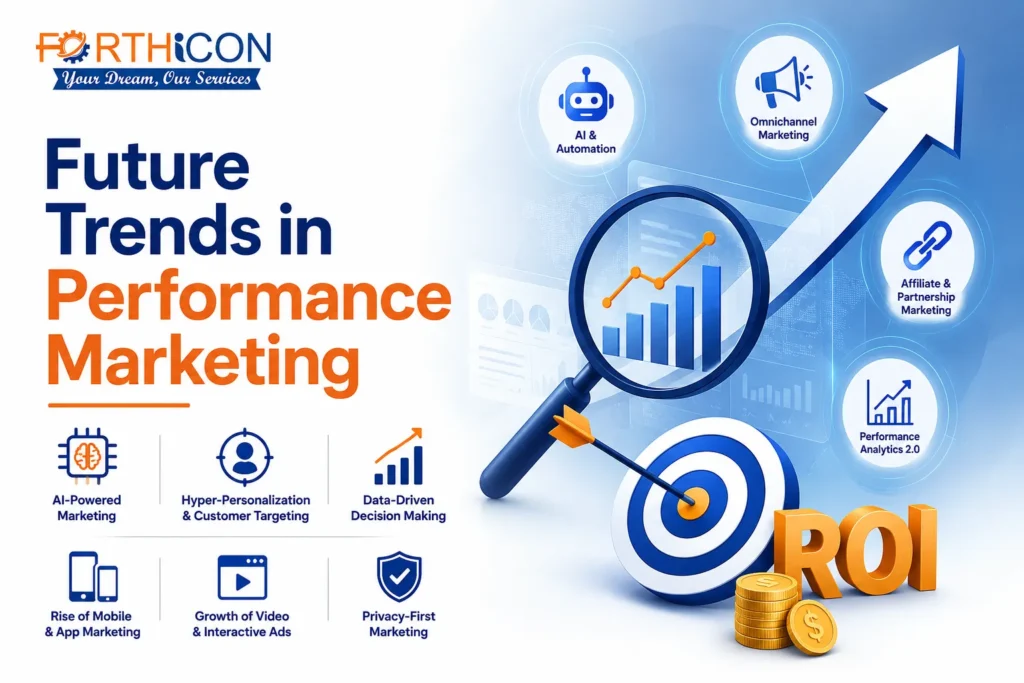
AI-Powered Automation
Artificial intelligence will continue improving targeting, bidding, and campaign optimization.
Voice Search Advertising
Voice-enabled devices are changing customer search behaviors and advertising opportunities.
Video Content Growth
Short-form videos and interactive content will dominate digital marketing trends.
Privacy-Focused Advertising
Businesses will adopt privacy-compliant marketing strategies and first-party data systems.
Omnichannel Marketing
Integrated campaigns across multiple platforms will become increasingly important.
The future of Performance Marketing will focus heavily on automation, personalization, and customer experience optimization.
How to Build a Successful Performance Marketing Strategy
Define Clear Goals
Set measurable objectives such as lead generation, sales growth, or traffic improvement.
Understand Your Target Audience
Research customer behavior, demographics, and purchasing patterns.
Choose the Right Platforms
Select digital channels that align with business goals and audience preferences.
Optimize Landing Pages
Improve user experience, website speed, and conversion-focused design.
Monitor Campaign Performance
Use analytics tools to track results and adjust campaigns regularly.
Strategic planning improves the effectiveness of Performance Marketing campaigns.
Importance of Mobile Marketing in Performance Marketing
Mobile devices have become central to customer engagement and online shopping behaviors.
Businesses must optimize Performance Marketing campaigns for:
- Mobile-friendly websites
- Fast-loading pages
- Mobile applications
- Responsive landing pages
Mobile optimization improves customer experiences and conversion rates significantly.
As smartphone usage continues growing globally, mobile-focused Performance Marketing strategies will remain essential.
How Performance Marketing Improves Business Growth
Performance Marketing supports long-term business growth by improving visibility, customer acquisition, and sales efficiency.
Businesses using Performance Marketing often experience:
- Higher revenue growth
- Better customer targeting
- Increased online engagement
- Improved lead quality
- Stronger competitive positioning
Performance-based advertising models allow businesses to scale campaigns efficiently while maintaining profitability.
Digital marketing success increasingly depends on measurable performance and data-driven decision-making.
Conclusion
Performance Marketing has become one of the most powerful digital marketing strategies for businesses seeking measurable growth, improved ROI, and higher customer engagement. Unlike traditional advertising methods, Performance Marketing focuses on real-time results, conversion tracking, and optimized campaign performance.
From search engine advertising and social media campaigns to influencer partnerships and AI-driven automation, modern businesses use Performance Marketing to increase visibility, drive sales, and strengthen brand positioning.
As digital competition continues growing, organizations must adopt data-driven marketing strategies that provide measurable outcomes and scalable growth opportunities. Businesses investing in Performance Marketing can improve customer acquisition, optimize advertising costs, and remain competitive in today’s rapidly evolving online marketplace.
With continuous advancements in automation, artificial intelligence, analytics, and mobile marketing, Performance Marketing will continue shaping the future of digital business growth and customer engagement.
Frequently Asked Questions About Marketing Automation Strategy
1. What is Performance Marketing and how does it work?
Performance Marketing is a digital advertising strategy where businesses pay only when specific actions are completed. These actions may include clicks, leads, app installs, purchases, registrations, or inquiries. Unlike traditional advertising methods where companies pay fixed fees regardless of results, Performance Marketing focuses on measurable outcomes and return on investment.
The main goal of Performance Marketing is to generate targeted traffic and conversions while optimizing marketing costs. Businesses use platforms such as Google Ads, Facebook Ads, Instagram Ads, LinkedIn Ads, YouTube Ads, and affiliate networks to reach potential customers.
Performance Marketing works through data-driven campaigns that track customer behavior and campaign performance in real time. Marketers use analytics tools to measure metrics such as click-through rates, conversion rates, customer acquisition costs, and return on ad spend.
Businesses can continuously optimize campaigns by adjusting targeting, ad creatives, bidding strategies, and landing pages. This flexibility allows organizations to improve campaign efficiency and maximize sales opportunities.
Modern businesses prefer Performance Marketing because it offers transparency, scalability, precise audience targeting, and measurable business growth.
2. Why is Conversion Marketing important for businesses?
Performance Marketing is important because modern businesses need measurable advertising strategies that generate real results. Traditional marketing methods often make it difficult to track campaign effectiveness, while Performance Marketing provides detailed insights into customer interactions and conversion performance.
Businesses use Performance Marketing to:
- Increase website traffic
- Generate qualified leads
- Improve online sales
- Build brand awareness
- Optimize marketing budgets
- Improve customer targeting
One of the biggest advantages of Performance Marketing is cost efficiency. Businesses pay only for measurable outcomes, reducing wasted advertising spending.
Performance Marketing also allows companies to monitor campaigns in real time and make adjustments quickly. If an advertisement is underperforming, marketers can optimize targeting, creatives, or bidding strategies immediately.
Another major benefit is scalability. Successful campaigns can be expanded across multiple channels and larger audiences. Businesses can increase advertising budgets gradually while monitoring profitability and conversion performance.
In today’s digital marketplace, Performance Marketing helps organizations remain competitive and responsive to changing customer behavior.
3. What are the major channels used in Results-Driven Marketing?
Performance Marketing uses several digital channels to reach targeted audiences and drive measurable results. Each platform offers unique advertising opportunities based on customer behavior, demographics, and engagement patterns.
Google Ads is one of the most popular Performance Marketing channels because it targets users actively searching for products or services. Businesses can use search ads, display ads, shopping ads, and video campaigns to generate leads and sales.
Social media platforms such as Facebook, Instagram, LinkedIn, TikTok, and Twitter are also widely used. These platforms provide advanced audience targeting features and visual advertising formats that improve engagement.
Affiliate marketing networks allow businesses to partner with publishers and influencers who promote products for commissions. This performance-based model helps businesses expand their reach without high upfront costs.
Email marketing campaigns also play an important role in customer retention, lead nurturing, and conversion optimization.
YouTube advertising continues growing because video content generates high engagement and customer interaction.
Businesses often combine multiple Performance Marketing channels to maximize reach, conversions, and return on investment.
4. How does audience targeting improve Performance Marketing campaigns?
Audience targeting is one of the most important elements of successful Performance Marketing campaigns. It allows businesses to reach users who are most likely to engage with advertisements and complete desired actions.
Digital advertising platforms provide advanced targeting options based on:
- Demographics
- Interests
- Search behavior
- Geographic location
- Purchase history
- Device usage
- Online activities
Precise audience targeting improves conversion rates because advertisements are shown to relevant users rather than broad audiences.
Behavioral targeting helps businesses understand customer intent and engagement patterns. For example, users who recently searched for products online may be more likely to purchase after viewing targeted advertisements.
Retargeting campaigns are another effective strategy. These campaigns target users who previously visited websites or interacted with advertisements but did not complete conversions.
Audience segmentation also allows businesses to create personalized advertising messages for different customer groups. Personalized campaigns often generate higher engagement and better sales performance.
Effective targeting improves advertising efficiency, reduces customer acquisition costs, and increases campaign profitability.
5. What are the key benefits of Marketing Automation Strategy?
Performance Marketing provides numerous benefits for businesses seeking measurable digital growth and improved advertising efficiency.
One major advantage is measurable results. Businesses can track every customer interaction, click, lead, and conversion using analytics tools. This transparency improves decision-making and campaign optimization.
Cost efficiency is another important benefit because businesses pay only for actual results instead of estimated audience reach.
Performance Marketing also improves scalability. Successful campaigns can be expanded quickly to larger audiences while maintaining profitability.
Additional benefits include:
- Better customer targeting
- Faster lead generation
- Improved conversion rates
- Increased online visibility
- Higher return on investment
- Real-time campaign optimization
Businesses can continuously improve advertising strategies by analyzing customer behavior and campaign performance data.
Marketing Automation Strategy also supports omnichannel marketing, allowing organizations to connect with customers across search engines, social media platforms, mobile devices, websites, and email campaigns.
These benefits make Performance Marketing one of the most effective modern advertising strategies.
6. How does Performance Marketing help increase sales?
Performance Marketing focuses directly on generating measurable customer actions that contribute to business revenue and sales growth. Unlike traditional branding campaigns, Performance Marketing prioritizes conversions, customer acquisition, and lead generation.
Businesses use targeted advertising campaigns to attract customers actively searching for products or services. Search engine marketing and social media advertising help businesses reach high-intent audiences more likely to convert.
Landing page optimization also plays a major role in increasing sales. Businesses improve user experiences through faster websites, clear call-to-actions, simplified checkout processes, and mobile optimization.
Retargeting campaigns help recover lost sales opportunities by reconnecting with users who previously interacted with products or services.
Data analytics further improves sales performance by identifying high-performing campaigns, customer behavior patterns, and profitable audience segments.
Performance Marketing also supports personalized advertising strategies that improve customer engagement and trust.
By continuously optimizing campaigns based on measurable performance metrics, businesses can improve sales efficiency and long-term revenue growth.
7. What role does data analytics play in Marketing Automation Strategy?
Data analytics is essential in modern Performance Marketing because it helps businesses measure campaign effectiveness and customer behavior accurately. Analytics tools provide valuable insights that improve marketing decisions and campaign performance.
Marketers track important metrics such as:
- Click-through rates
- Conversion rates
- Customer acquisition costs
- Return on ad spend
- Bounce rates
- User engagement
- Revenue generation
Analytics helps businesses identify which campaigns generate the best results and which areas require improvement.
Customer behavior analysis also improves audience targeting and content personalization. Businesses can understand how users interact with advertisements, websites, and products across different platforms.
Real-time reporting allows marketers to adjust campaigns immediately based on performance trends. This flexibility improves efficiency and reduces wasted advertising budgets.
Predictive analytics powered by artificial intelligence also helps businesses forecast customer behavior and optimize future campaigns.
Without data analytics, businesses would struggle to measure the effectiveness of Performance Marketing campaigns accurately.
8. How does artificial intelligence improve Marketing Automation Strategy?
Artificial intelligence has transformed Performance Marketing by improving automation, targeting, personalization, and campaign optimization. AI-powered systems analyze large amounts of customer data quickly and accurately, helping businesses make smarter marketing decisions.
AI is commonly used for:
- Automated bidding
- Predictive analytics
- Audience segmentation
- Personalized recommendations
- Chatbots
- Campaign optimization
Automated bidding systems adjust advertising budgets in real time to maximize conversions and reduce costs.
AI algorithms also identify customer behavior patterns and predict purchasing intent, helping businesses target high-converting audiences more effectively.
Personalization is another major advantage of AI-driven Performance Marketing. Businesses can deliver customized advertisements, emails, and product recommendations based on customer interests and activities.
Machine learning continuously improves campaign performance by analyzing results and optimizing future advertising strategies automatically.
As digital marketing becomes more competitive, artificial intelligence will continue playing a larger role in improving campaign efficiency and customer engagement.
9. What challenges do businesses face in Marketing Automation Strategy?
Although Performance Marketing offers many advantages, businesses may face several challenges during campaign management and optimization.
One common challenge is rising advertising costs. Competition on digital platforms such as Google and Facebook often increases cost-per-click and customer acquisition expenses.
Ad fatigue is another issue. Customers may ignore advertisements if they repeatedly see the same content. Businesses must regularly update creatives and messaging to maintain engagement.
Privacy regulations and data protection laws also affect audience targeting and customer tracking capabilities. Businesses must comply with regulations while maintaining effective advertising strategies.
Attribution tracking can become complex because customers often interact with multiple platforms before completing purchases.
Other challenges include:
- Algorithm updates
- Conversion tracking limitations
- High competition
- Audience fragmentation
- Mobile optimization issues
Businesses can overcome these challenges through continuous optimization, advanced analytics, creative testing, and strategic campaign management.
10. How can businesses create a successful Marketing Automation Strategy strategy?
Creating a successful Performance Marketing strategy requires clear goals, audience research, data analysis, and continuous optimization.
Businesses should begin by identifying measurable objectives such as:
- Lead generation
- Online sales
- Website traffic
- Brand awareness
- Customer retention
Understanding the target audience is also essential. Businesses must research customer demographics, behavior patterns, purchasing intent, and preferred digital platforms.
Choosing the right marketing channels improves campaign effectiveness. Search engine advertising, social media marketing, email campaigns, and affiliate partnerships should align with business goals.
Landing pages and websites must also be optimized for conversions. Fast-loading pages, mobile responsiveness, strong call-to-actions, and clear messaging improve customer experiences.
Analytics tools should be used to monitor campaign performance continuously. Businesses must track metrics, test creatives, optimize targeting, and adjust budgets regularly.
Consistent optimization and data-driven decision-making are the foundations of successful Performance Marketing strategies that drive long-term business growth.