
Table of Contents
Introduction
In today’s digital-first financial ecosystem, customer onboarding must be fast, secure, and compliant. Financial institutions such as banks, NBFCs, and fintech companies face increasing pressure to meet regulatory requirements while delivering seamless user experiences. This is where KYC verification service play a critical role.
Know Your Customer (KYC) is not just a compliance requirement—it is a foundational process that helps prevent fraud, identity theft, and financial crimes. With the rise of digital banking and online transactions, modern KYC solutions have evolved to become faster, smarter, and more efficient.
In this comprehensive guide, we will explore the importance, types, benefits, and future of KYC verification services for financial institutions.
What Are KYC Verification Solution Service?
KYC verification services are processes used by financial institutions to verify the identity of their customers before providing services. These services ensure that customers are genuine and comply with regulatory standards.
Key Objectives:
- Verify customer identity
- Prevent fraud and money laundering
- Ensure regulatory compliance
- Build trust with customers
KYC verification services are mandatory for banks, NBFCs, and fintech companies to operate legally and securely.
Importance of KYC for Banks, NBFCs & FinTech Companies
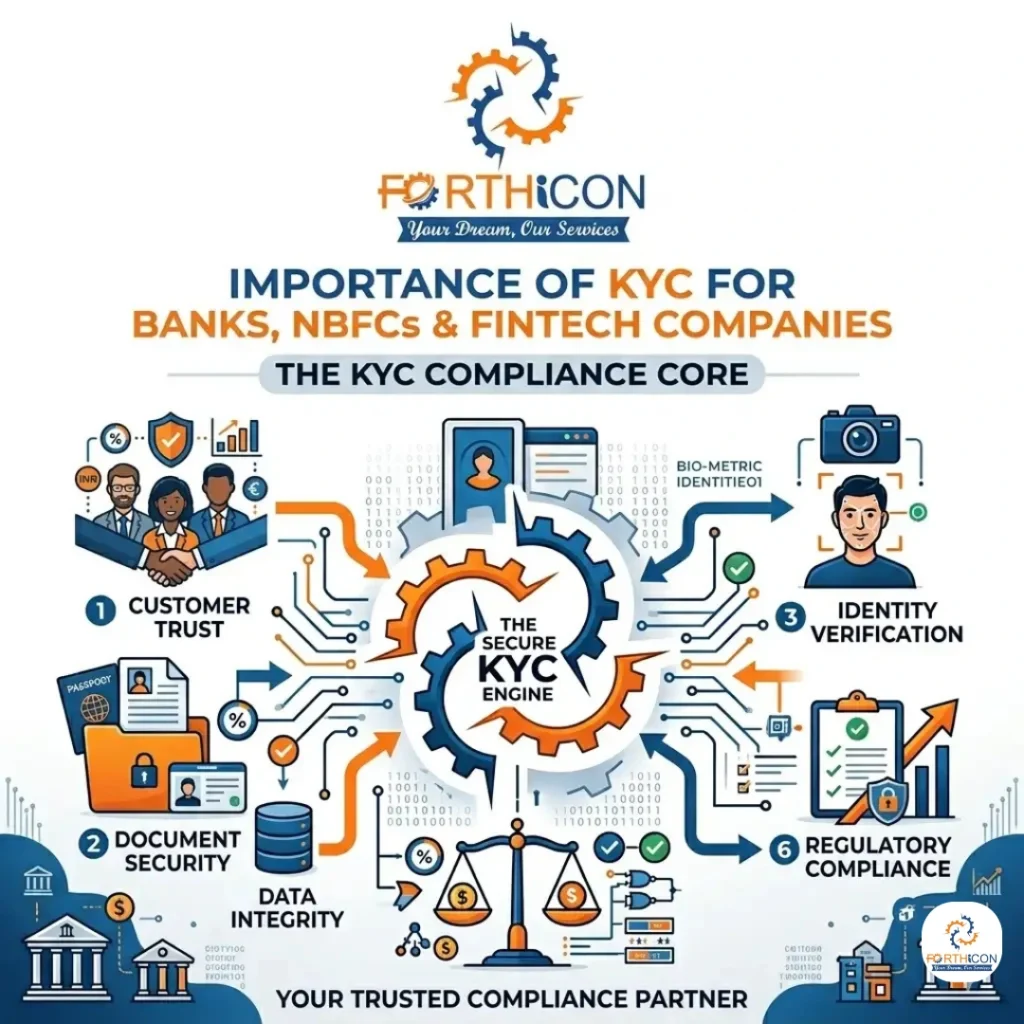
1. Regulatory Compliance
Financial institutions must comply with guidelines issued by regulatory authorities such as RBI and global AML frameworks.
2. Fraud Prevention
KYC helps identify suspicious activities and reduces risks of identity theft.
3. Secure Customer Onboarding
Ensures only verified users gain access to financial services.
4. Trust & Credibility
Customers feel safer when their data is handled securely.
Implementing robust KYC verification services is essential for maintaining operational integrity.
Types of KYC Verification Services
1. Physical KYC
Traditional method involving in-person document verification.
Features:
- Face-to-face interaction
- Physical document submission
- Used in rural or offline setups
2. Video KYC
A modern digital method using live video verification.
Features:
- Real-time identity verification
- Face recognition technology
- Faster onboarding process
3. eKYC (Electronic KYC)
Digital verification using Aadhaar or other online identity systems.
Features:
- Instant verification
- Paperless process
- Cost-effective
4. Online KYC
Fully digital onboarding using apps or web platforms.
Features:
- Upload documents
- OTP verification
- AI-based validation
Benefits of KYC Verification Services
⚡ Faster Customer Onboarding
Digital KYC reduces onboarding time from days to minutes.
🔒 Enhanced Security
Advanced technologies like AI and biometrics ensure high security.
💰 Cost Efficiency
Reduces operational costs associated with manual verification.
📊 Improved Customer Experience
Smooth and hassle-free onboarding increases customer satisfaction.
📈 Scalability
Allows businesses to handle large volumes of customers efficiently.
KYC verification services enable financial institutions to scale operations without compromising security.
Technologies Used in Modern KYC Solutions
KYC solutions help banks improve customer onboarding and compliance efficiency…
🤖 Artificial Intelligence (AI)
Detects fraudulent patterns and automates verification.
🧬 Biometrics
Includes facial recognition and fingerprint scanning.
📊 Data Analytics
Analyzes customer data for risk assessment.
🔐 Blockchain
Ensures secure and tamper-proof identity verification.
These technologies enhance accuracy and efficiency in KYC processes.
Challenges in KYC Implementation
Despite its benefits, implementing KYC verification service comes with challenges:
- High compliance requirements
- Data privacy concerns
- Integration with legacy systems
- Managing large volumes of data
Overcoming these challenges requires a reliable and scalable KYC solution provider.
KYC Requirements for Different Institutions
🏦 Banks
Require strict KYC processes for account opening and transactions.
💼 NBFCs
Focus on loan processing and customer verification.
🌍 FinTech Companies
Need fast and digital onboarding solutions for better user experience.
Each sector requires customized KYC verification services based on its operational needs.
Future of KYC Verification Services
The future of KYC is driven by innovation and digital transformation.
🔮 Emerging Trends:
- AI-powered KYC automation
- Blockchain-based identity systems
- Real-time verification
- Global compliance integration
As technology evolves, KYC verification services will become more secure, efficient, and user-friendly.
Best Practices for Effective KYC Implementation
To maximize efficiency, follow these best practices:
✔ Use Digital KYC Solutions
Reduce manual processes and improve speed.
✔ Ensure Compliance
Stay updated with regulatory guidelines.
✔ Focus on User Experience
Make onboarding simple and quick.
✔ Implement Data Security Measures
Protect sensitive customer information.
✔ Regularly Update Systems
Adopt new technologies for better performance.
Why Businesses Need Professional KYC Verification Services
Outsourcing KYC verification services offers several advantages:
- Access to expert solutions
- Reduced operational burden
- Faster implementation
- Improved compliance
Professional services ensure accuracy, security, and efficiency.
Real-World Use Cases
💳 Banking Sector
Customer onboarding for savings and current accounts.
📱 FinTech Apps
Digital wallets and payment platforms.
💼 NBFCs
Loan approvals and credit verification.
🌐 E-commerce Platforms
Seller and buyer identity verification.
KYC verification services are essential across multiple industries.
Conclusion
In the modern financial landscape, KYC solutions help banks improve customer onboarding and compliance efficiency…are no longer optional—they are essential. They ensure secure customer onboarding, regulatory compliance, and fraud prevention.
For banks, NBFCs, and fintech companies, adopting advanced KYC solutions is key to staying competitive and building customer trust. By leveraging digital technologies and best practices, businesses can streamline operations and deliver superior user experiences.
Investing in reliable KYC verification services is a smart step toward secure and scalable growth.
Frequently Asked Questions (FAQ) on KYC Verification Services
1. What are KYC verification service and why are they important for financial institutions?
KYC verification services refer to the process of verifying the identity of customers before allowing them to access financial products or services. These services are essential for banks, NBFCs, and fintech companies to ensure that every customer is legitimate and compliant with regulatory standards.
The importance of KYC verification services lies in their ability to prevent fraud, money laundering, and identity theft. Financial institutions handle large volumes of sensitive data and transactions daily. Without proper verification, the risk of financial crimes increases significantly.
KYC processes also help institutions build trust with customers. When users know that a company follows strict verification standards, they feel more secure while using financial services. In addition, regulatory authorities like RBI mandate strict KYC compliance, making it a legal requirement for all financial organizations.
2. How do KYC verification service work in banks and NBFCs?
KYC verification services follow a structured process to confirm a customer’s identity. The process may vary depending on whether it is physical KYC, digital KYC, or video KYC.
Typically, the process includes:
- Customer Registration – The user submits basic personal details
- Document Submission – Identity and address proof are provided
- Verification Check – Documents are verified manually or digitally
- Authentication – Biometric or OTP-based verification is completed
- Approval – Account or service access is granted
Modern systems use automation, AI, and biometric tools to speed up the process. This reduces manual effort and improves accuracy, making KYC verification services more efficient than traditional methods.
3. What are the different types of KYC verification service available today?
There are several types of KYC verification service used by financial institutions:
1. Physical KYC
Traditional method involving face-to-face verification and document submission.
2. Video KYC
A remote verification method where customers complete KYC through live video calls.
3. eKYC
Digital KYC using Aadhaar authentication or OTP-based verification.
4. Digital KYC
Fully online process using AI tools and automated document verification.
5. Offline KYC
Paper-based verification used in areas with limited digital access.
Each method is designed to suit different business needs and customer preferences. Among these, video KYC verification services are gaining the highest popularity due to their speed and convenience.
4. Why are KYC verification service important for FinTech companies?
FinTech companies operate in a highly competitive and fast-paced environment. They require quick onboarding processes without compromising security.
KYC verification service help FinTech companies by:
- Enabling instant customer onboarding
- Reducing fraud risks
- Ensuring compliance with regulations
- Improving user experience
- Supporting scalable growth
Since FinTech platforms handle digital payments, lending, and investments, proper identity verification is critical. Without strong KYC systems, these companies face higher risks of fraud and regulatory penalties.
5. What is the difference between traditional KYC and digital KYC verification services?
Traditional KYC involves physical document submission and in-person verification. It is time-consuming and requires manual processing.
Digital KYC verification services, on the other hand, use technology such as AI, biometrics, and online databases to verify customers instantly.
Key Differences:
- Speed: Digital KYC is much faster
- Convenience: No physical visits required
- Accuracy: Higher accuracy due to automation
- Cost: Lower operational cost
- Scalability: Easily handles large volumes
Digital KYC is now widely preferred across banks, NBFCs, and fintech companies due to its efficiency and scalability.
6. Is video KYC a part of modern KYC verification services?
Yes, video KYC is one of the most advanced forms of KYC verification services. It allows customers to complete their verification process through a live video call with a bank or service provider representative.
Benefits of Video KYC:
- Instant onboarding
- No physical documentation required
- High security with facial recognition
- RBI-compliant process
- Available 24/7 in many systems
Video KYC has become extremely popular in India due to its convenience and compliance with regulatory standards. It is especially useful for digital-first businesses.
7. How secure are modern KYC verification service?
Modern KYC verification services are highly secure due to the use of advanced technologies such as:
- Artificial Intelligence (AI)
- Machine Learning (ML)
- Biometrics (face and fingerprint recognition)
- Encryption protocols
- Blockchain-based identity systems
These technologies ensure that customer data is protected from unauthorized access and fraud. Financial institutions also follow strict regulatory guidelines to maintain data privacy and security.
Overall, digital KYC systems are far more secure than traditional manual processes.
8. What challenges do companies face while implementing KYC verification service?
Despite their benefits, companies face several challenges while implementing KYC verification services:
- Integration with legacy systems
- High regulatory compliance requirements
- Data privacy concerns
- Managing large customer volumes
- Technical implementation costs
However, with the help of modern KYC solution providers, these challenges can be minimized. Automation and cloud-based systems have made implementation easier and more efficient.
9. Can KYC verification service improve customer onboarding experience?
Yes, KYC verification services significantly improve customer onboarding experience.
In traditional systems, onboarding could take several days. With digital KYC solutions, the process is completed within minutes.
Improvements include:
- Faster account activation
- Reduced paperwork
- Seamless digital experience
- Real-time verification
Customers prefer platforms that offer quick and hassle-free onboarding. Therefore, efficient KYC systems directly improve customer satisfaction and retention.
10. What industries use KYC verification service apart from banking?
While banking is the primary sector, many other industries also use KYC verification services:
- NBFCs (Non-Banking Financial Companies)
- FinTech companies
- Insurance providers
- Cryptocurrency platforms
- Stock trading apps
- E-commerce marketplaces
Any industry that deals with financial transactions or user identity verification requires KYC processes to ensure compliance and security.