Introduction
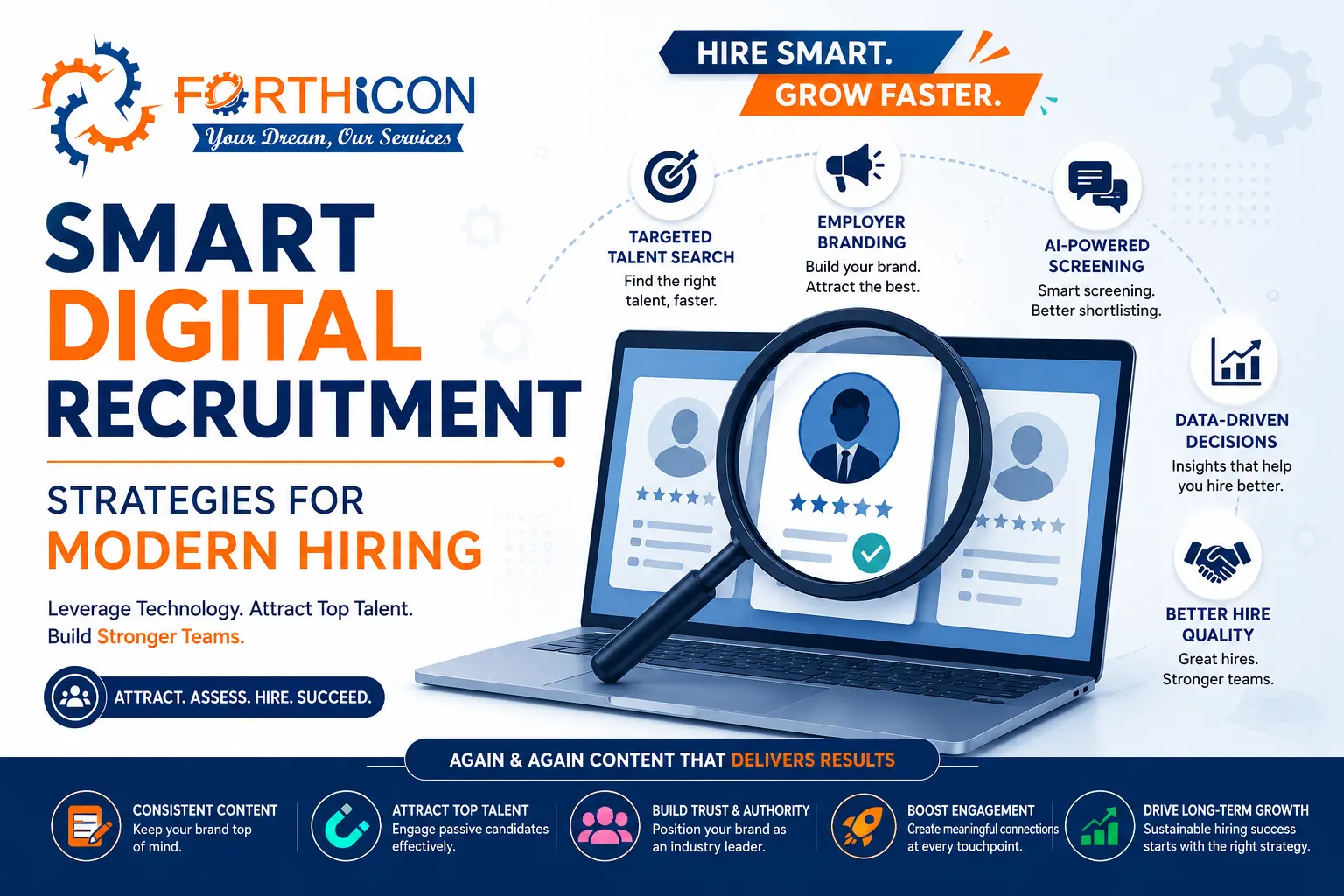
Digital Recruitment is transforming the way businesses hire talented employees in today’s competitive market. Companies are no longer relying only on traditional hiring methods such as newspaper advertisements or walk-in interviews. Instead, organizations are adopting advanced digital recruitment techniques to attract skilled professionals, improve hiring speed, and reduce recruitment costs.
In the modern business environment, hiring the right employees quickly is essential for growth and productivity. Businesses across industries are now using artificial intelligence, social media recruitment, online hiring platforms, applicant tracking systems, and automation tools to streamline recruitment operations. Digital recruitment allows companies to connect with candidates globally, improve employer branding, and create a faster hiring experience.
The rise of remote work, virtual interviews, and cloud-based recruitment software has made digital recruitment one of the fastest-growing HR trends worldwide. Whether it is a startup, IT company, banking organization, healthcare provider, or multinational enterprise, every business benefits from adopting modern recruitment technologies.
This comprehensive guide explains the importance of digital recruitment, key recruitment strategies, benefits, tools, trends, and how businesses can build a successful hiring process using modern technology.
What is Recruitment Marketing?
Digital recruitment refers to the use of digital technologies, online platforms, and automation tools to attract, evaluate, and hire employees. It includes everything from job posting websites and social media recruitment to AI-based screening and video interviews.
Modern businesses use digital recruitment strategies to improve candidate sourcing, reduce manual hiring tasks, and increase recruitment efficiency. Unlike traditional hiring methods, digital recruitment allows businesses to reach a larger talent pool in less time.
Some common digital recruitment methods include:
- Online job portals
- LinkedIn recruitment
- AI recruitment software
- Applicant tracking systems
- Recruitment automation tools
- Virtual interviews
- Social media hiring campaigns
- Recruitment chatbots
- Employee referral platforms
Digital recruitment helps businesses build a strong employer brand while improving hiring accuracy and candidate experience.
Why Recruitment Marketing is Important for Modern Businesses
The demand for skilled professionals is increasing rapidly across industries. Traditional hiring methods often take longer, cost more, and provide limited access to qualified candidates. Digital recruitment solves these challenges by providing faster, smarter, and more scalable hiring solutions.
Faster Hiring Process
Digital recruitment tools automate resume screening, interview scheduling, and candidate communication. This significantly reduces recruitment time and improves hiring speed.
Access to Global Talent
Businesses can now recruit employees from different cities and countries using digital platforms and remote hiring tools.
Better Candidate Experience
Modern recruitment platforms provide easy application processes, quick communication, and transparent hiring workflows.
Cost Reduction
Digital recruitment reduces advertising costs, paperwork, travel expenses, and manual hiring efforts.
Improved Employer Branding
Businesses can showcase company culture, employee benefits, and career opportunities through digital recruitment campaigns.
Key Components of Recruitment Marketing
Online Job Portals
Job portals remain one of the most important tools for digital recruitment. Businesses use platforms like LinkedIn, Indeed, and Glassdoor to post vacancies and attract candidates.
Benefits include:
- Large candidate database
- Easy job posting
- Resume filtering
- Industry-specific hiring
- Employer branding opportunities
Social Media Recruitment
Social media has become a powerful recruitment channel. Businesses use platforms such as LinkedIn, Facebook, Instagram, and Twitter to engage with job seekers.
Advantages of Social Media Recruitment
- Direct candidate engagement
- Improved brand visibility
- Targeted recruitment campaigns
- Faster communication
- Access to passive candidates
Social media recruitment also helps companies build trust among job seekers.
AI-Powered Recruitment
Artificial intelligence is transforming digital recruitment by automating repetitive tasks and improving hiring accuracy.
AI recruitment tools can:
- Screen resumes automatically
- Match candidate skills
- Predict employee performance
- Conduct chatbot interviews
- Reduce hiring bias
AI-based digital recruitment improves productivity while saving time for HR teams.
Applicant Tracking Systems (ATS)
An applicant tracking system helps HR departments manage recruitment workflows efficiently.
Features of ATS Software
- Resume management
- Candidate tracking
- Interview scheduling
- Automated emails
- Recruitment analytics
- Hiring workflow management
Businesses using ATS systems improve hiring organization and candidate communication.
Video Interview Technology
Virtual interviews have become a major part of digital recruitment. Businesses now conduct remote interviews using video conferencing tools.
Benefits of Video Interviews
- Faster hiring decisions
- Reduced travel costs
- Remote candidate evaluation
- Flexible interview scheduling
- Better collaboration among recruiters
Video interviews are especially useful for global recruitment and remote workforce hiring.
Recruitment Automation
Automation tools simplify repetitive recruitment tasks and improve HR efficiency.
Common Recruitment Automation Tools
- Email automation
- Resume parsing
- Chatbots
- Interview scheduling systems
- Candidate notifications
Automation reduces manual work while improving recruitment accuracy.
Best Recruitment Marketing Strategies for Modern Hiring
Build a Strong Employer Brand
Employer branding is one of the most effective digital recruitment strategies. Candidates prefer companies with positive workplace culture and strong online presence.
Ways to Improve Employer Branding
- Share employee success stories
- Publish workplace culture videos
- Maintain active social media profiles
- Showcase company achievements
- Highlight employee benefits
Strong branding improves candidate trust and application rates.
Optimize Career Pages
A company career page should be user-friendly, mobile responsive, and SEO optimized.
Important Career Page Features
- Job listings
- Application forms
- Employee testimonials
- Company culture content
- Contact information
An optimized career page improves digital recruitment performance significantly.
Use Data-Driven Hiring
Modern businesses use recruitment analytics to make smarter hiring decisions.
Recruitment Metrics to Track
- Time-to-hire
- Cost-per-hire
- Candidate conversion rate
- Employee retention rate
- Recruitment ROI
Data-driven recruitment improves workforce quality and business performance.
Benefits of Digital Recruitment for Businesses
Increased Hiring Speed
Digital recruitment tools automate major hiring tasks, helping businesses recruit employees faster.
Better Talent Quality
AI and recruitment analytics help businesses identify skilled candidates more accurately.
Reduced Recruitment Costs
Automation reduces dependency on manual recruitment operations.
Improved Hiring Accuracy
Advanced screening systems improve candidate-job matching.
Enhanced Candidate Communication
Automated emails and notifications improve candidate experience.
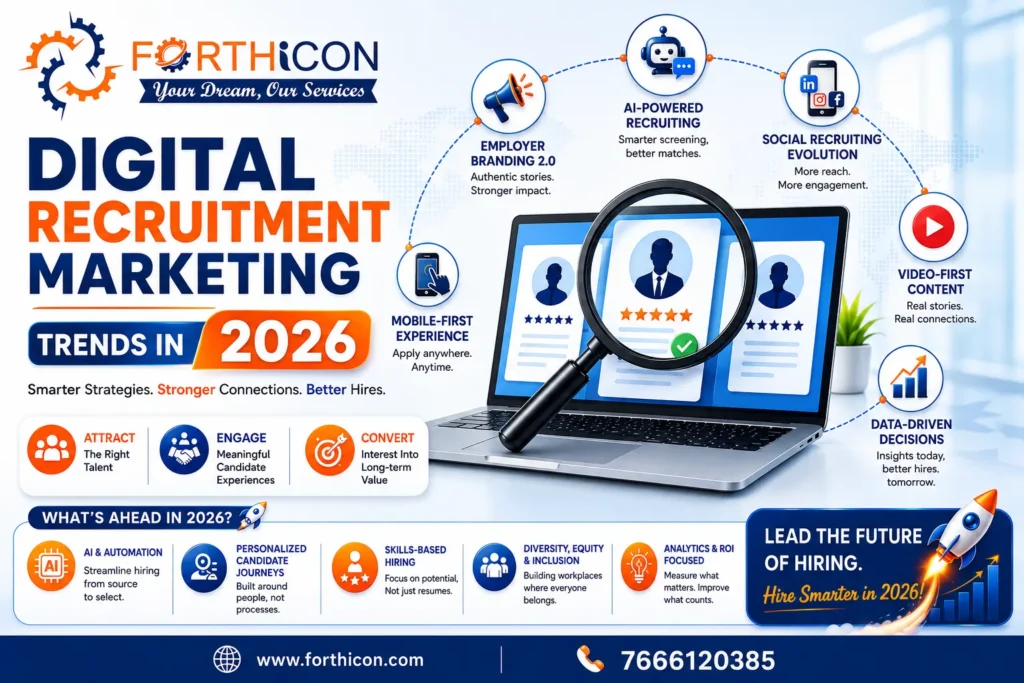
Digital Recruitment MarketingTrends in 2026
AI-Based Hiring
Artificial intelligence will continue improving recruitment automation and candidate evaluation.
Remote Workforce Recruitment
Businesses are increasingly hiring remote employees from global talent markets.
Mobile Recruitment
More job seekers now apply through smartphones and mobile apps.
Recruitment Chatbots
Chatbots provide instant communication and improve candidate engagement.
Skills-Based Hiring
Companies are focusing more on practical skills rather than traditional qualifications.
Challenges in Digital Recruitment
Despite its advantages, digital recruitment also comes with challenges.
High Competition
Companies compete aggressively for skilled professionals.
Data Security Concerns
Recruitment systems must protect candidate information securely.
Technology Integration Issues
Businesses sometimes struggle to integrate multiple recruitment platforms.
Maintaining Human Interaction
Automation should not completely replace personal communication with candidates.
Industries Benefiting from Digital Recruitment
Many industries rely heavily on digital recruitment strategies.
Information Technology
IT companies use digital recruitment for software developers and technical professionals.
Banking and Finance
Banks use digital hiring systems for compliance, KYC, and customer support recruitment.
Healthcare
Healthcare organizations recruit doctors, nurses, and support staff digitally.
Retail and Ecommerce
Retail businesses hire customer support, warehouse, and sales professionals through online recruitment.
How Forthicon Supports Digital Recruitment
Forthicon provides smart recruitment solutions for modern businesses across industries. The company helps organizations streamline hiring operations using digital recruitment strategies, staffing solutions, and workforce management support.
Forthicon offers:
- Recruitment support services
- IT staffing solutions
- HR management support
- Digital hiring strategies
- Workforce recruitment assistance
- Banking recruitment services
Businesses can improve hiring efficiency and workforce quality through professional recruitment services.
Future of Digital Recruitment
The future of digital recruitment will focus on automation, AI-driven hiring, remote workforce management, and predictive recruitment analytics. Businesses that adopt advanced hiring technologies early will gain a competitive advantage in attracting skilled employees.
Modern recruitment systems will continue improving candidate experience, hiring speed, and workforce quality. Digital recruitment is no longer optional; it has become essential for businesses that want long-term growth and operational success.
Conclusion
Recruitment Marketing has completely transformed modern hiring processes by improving speed, efficiency, and candidate engagement. Businesses today require smarter hiring strategies to attract qualified professionals in a highly competitive market.
From AI-powered recruitment software and applicant tracking systems to social media hiring and virtual interviews, digital recruitment provides scalable and cost-effective hiring solutions for businesses of all sizes.
Companies investing in modern recruitment technologies can improve hiring quality, reduce operational costs, strengthen employer branding, and achieve long-term business growth. As recruitment technology continues evolving, digital recruitment will remain one of the most important business strategies for future workforce management.
Businesses looking to improve hiring efficiency should adopt digital recruitment strategies to stay competitive in today’s fast-changing business environment.
Frequently Asked Questions On Digital Recruitment
1. What is Modern Hiring Strategies and Why is it Important for Modern Hiring?
Digital Recruitment is the process of using online technologies, digital platforms, and modern recruitment software to identify, attract, assess, and hire candidates efficiently. In today’s competitive business environment, companies are rapidly moving away from traditional hiring methods and adopting Digital Recruitment strategies to streamline recruitment operations, reduce hiring costs, and improve candidate quality.
Modern businesses face several recruitment challenges, including talent shortages, increasing competition, remote hiring requirements, and faster hiring expectations. Digital Recruitment helps organizations overcome these challenges by using AI-powered hiring tools, recruitment automation, social media hiring, applicant tracking systems (ATS), and online interview platforms.
One of the biggest advantages of Digital Recruitment is speed. Traditional recruitment processes often take weeks or months, while digital hiring platforms can significantly reduce the time-to-hire. Automated resume screening, AI-driven candidate matching, and online skill assessments help recruiters quickly shortlist qualified candidates.
Another major benefit is wider talent reach. Companies can now access global talent pools through job portals, LinkedIn, social media platforms, and professional networks. This increases the chances of finding highly skilled candidates for specialized roles.
Digital Recruitment also improves candidate experience. Applicants prefer quick communication, mobile-friendly applications, and transparent hiring processes. Automated emails, chatbots, virtual interviews, and online onboarding systems create a smoother and more professional experience for candidates.
Data analytics is another powerful aspect of Modern Hiring Strategies. Businesses can track recruitment metrics such as application rates, hiring costs, candidate sources, interview performance, and employee retention rates. These insights help companies optimize hiring strategies and improve recruitment ROI.
Artificial intelligence is transforming Digital Recruitment even further. AI tools can analyze resumes, predict candidate suitability, reduce bias, and automate repetitive tasks. Machine learning algorithms help recruiters identify top-performing candidates faster and more accurately.
Remote hiring has also increased the importance of Digital Recruitment. Companies now conduct virtual interviews, online assessments, and digital onboarding processes, allowing them to hire employees from different cities and countries without physical limitations.
Digital Recruitment supports employer branding as well. Businesses can showcase company culture, employee testimonials, workplace benefits, and career growth opportunities through social media and career websites. Strong employer branding attracts better talent and improves recruitment success.
Industries such as IT, healthcare, finance, retail, e-commerce, and manufacturing are heavily investing in Digital Recruitment technologies to improve workforce quality and operational efficiency. Small businesses and startups are also adopting digital hiring strategies to compete with larger organizations.
In the future, Digital Recruitment will continue evolving with AI automation, predictive analytics, blockchain verification, and advanced HR technologies. Businesses that invest in digital hiring systems today will gain a significant competitive advantage in attracting and retaining top talent.
2. How Does Modern Hiring Strategies Improve Hiring Efficiency?
Digital Recruitment dramatically improves hiring efficiency by automating time-consuming recruitment tasks and enhancing communication between recruiters and candidates. Companies that implement Digital Recruitment systems can hire faster, reduce manual work, and improve overall recruitment quality.
One of the primary ways Digital Recruitment improves efficiency is through automation. Traditional recruitment involves manually reviewing resumes, scheduling interviews, and sending follow-up emails. Digital hiring platforms automate these tasks, saving valuable time for HR teams.
Applicant Tracking Systems (ATS) are a key component of Digital Recruitment. ATS software collects applications, organizes candidate data, tracks hiring stages, and filters resumes based on keywords and job requirements. This reduces the workload for recruiters and speeds up candidate selection.
AI-powered recruitment tools further improve efficiency by automatically screening resumes and ranking candidates according to their qualifications and experience. Recruiters can focus only on the most relevant applicants instead of manually reviewing hundreds of resumes.
Online job portals and social media platforms also accelerate recruitment processes. Companies can instantly publish job openings on multiple platforms, reaching thousands of candidates within minutes. Digital Recruitment expands visibility and increases the chances of finding qualified talent quickly.
Communication efficiency is another major benefit. Automated email systems send interview invitations, status updates, and onboarding instructions instantly. Chatbots answer candidate queries 24/7, improving engagement and reducing delays.
Virtual interview platforms save time and travel costs. Recruiters can conduct interviews remotely using video conferencing tools, allowing faster scheduling and broader candidate reach. Digital Recruitment supports remote and hybrid hiring models efficiently.
Data analytics tools provide valuable insights into recruitment performance. Businesses can analyze hiring timelines, source effectiveness, candidate conversion rates, and recruitment costs. These metrics help optimize future hiring strategies.
Digital Recruitment also reduces paperwork and administrative burdens. Online document submission, digital signatures, and cloud-based HR systems streamline onboarding and employee record management.
Another advantage is improved collaboration among hiring teams. Cloud recruitment platforms allow HR managers, recruiters, and department heads to review applications, share feedback, and make hiring decisions collaboratively.
Mobile recruitment is becoming increasingly important. Candidates can apply for jobs through smartphones, making the application process faster and more convenient. Mobile-friendly Digital Recruitment platforms attract more applicants and improve user experience.
AI-driven predictive analytics helps businesses forecast hiring needs and identify the best recruitment channels. This proactive approach improves workforce planning and reduces hiring delays.
Overall, Digital Recruitment enables organizations to hire smarter, faster, and more cost-effectively. Companies that adopt modern recruitment technologies gain a competitive edge in attracting high-quality talent while improving operational productivity.
3. What Are the Main Benefits of Digital Recruitment for Businesses?
Digital Recruitment offers numerous benefits for businesses aiming to improve talent acquisition, reduce recruitment costs, and enhance workforce quality. As competition for skilled professionals continues to grow, companies increasingly rely on Digital Recruitment to build strong and productive teams.
One major benefit is faster hiring. Automated recruitment systems significantly reduce the time required for screening, interviewing, and onboarding candidates. Businesses can fill vacancies quickly and minimize productivity losses caused by unfilled positions.
Cost reduction is another important advantage. Traditional hiring methods involve advertising costs, paper documentation, travel expenses, and agency fees. Digital Recruitment minimizes these expenses through online job postings, virtual interviews, and automated workflows.
Digital Recruitment also expands access to global talent pools. Companies can recruit candidates from different cities, states, and countries using online job platforms and remote interview technologies. This is especially valuable for industries facing local skill shortages.
Improved candidate quality is another benefit. AI-based recruitment systems analyze candidate profiles, experience, skills, and behavioral patterns to identify the most suitable applicants. Businesses can make better hiring decisions based on data-driven insights.
Enhanced employer branding plays a crucial role in Digital Recruitment success. Career websites, social media marketing, employee testimonials, and digital campaigns help companies build attractive employer brands. Strong branding attracts top talent and improves recruitment performance.
Candidate experience improves significantly with Digital Recruitment tools. Automated communication, user-friendly application processes, and quick interview scheduling create positive impressions among applicants. Better experiences increase candidate engagement and offer acceptance rates.
Recruitment analytics is another major advantage. HR teams can measure important metrics such as time-to-hire, cost-per-hire, source effectiveness, and employee retention. These insights help businesses continuously optimize recruitment strategies.
Digital Recruitment also improves diversity and inclusion efforts. Online recruitment platforms reach broader audiences, helping companies attract candidates from different backgrounds, locations, and demographics.
Scalability is essential for growing businesses. Digital Recruitment systems can handle high application volumes efficiently, making them suitable for startups, enterprises, and rapidly expanding organizations.
Security and compliance are also enhanced through Digital Recruitment technologies. Modern recruitment platforms use secure cloud systems, encrypted data storage, and compliance tools to protect candidate information and meet legal requirements.
Remote work trends have increased the importance of Digital Recruitment. Businesses now hire remote employees globally using virtual recruitment and onboarding systems. This flexibility improves workforce diversity and operational resilience.
Digital Recruitment supports long-term workforce planning by maintaining talent databases and candidate pipelines. Companies can quickly identify suitable candidates for future openings without restarting the recruitment process from scratch.
In summary, Digital Recruitment helps businesses improve hiring speed, reduce costs, enhance candidate quality, strengthen employer branding, and increase overall recruitment efficiency. Companies adopting digital hiring technologies position themselves for sustainable business growth and workforce success.
4. Which Technologies Are Used in Digital Recruitment?
Digital Recruitment relies on advanced technologies that help businesses automate, optimize, and improve hiring processes. These technologies enable companies to identify the right talent faster while improving candidate experience and recruitment efficiency.
One of the most widely used technologies in Digital Recruitment is Applicant Tracking Systems (ATS). ATS software helps recruiters manage job applications, track candidate progress, store resumes, and automate hiring workflows.
Artificial Intelligence (AI) is transforming Digital Recruitment rapidly. AI tools analyze resumes, rank candidates, predict job fit, and automate repetitive recruitment tasks. Machine learning algorithms improve hiring accuracy by learning from recruitment data.
Chatbots are another important technology. Recruitment chatbots engage with candidates, answer frequently asked questions, collect information, and schedule interviews automatically. Chatbots improve communication speed and candidate satisfaction.
Video interviewing platforms are essential in modern Digital Recruitment. Businesses use Zoom, Microsoft Teams, Google Meet, and specialized HR video tools for remote interviews, reducing travel costs and improving scheduling flexibility.
Recruitment marketing platforms help companies promote job openings across multiple channels. These systems integrate with social media, job boards, and career websites to increase recruitment visibility and attract qualified applicants.
Cloud computing technologies support scalable Digital Recruitment operations. Cloud-based HR systems allow recruiters to access candidate data, collaborate remotely, and manage hiring processes from any location.
Data analytics and reporting tools provide valuable recruitment insights. Businesses analyze candidate sources, hiring performance, interview outcomes, and workforce trends to improve decision-making.
Social media recruitment tools enable businesses to attract candidates through LinkedIn, Facebook, Instagram, and other platforms. Social recruiting expands employer branding and increases candidate engagement.
Online assessment platforms help recruiters evaluate technical skills, personality traits, and cognitive abilities through digital tests and simulations. These tools improve hiring accuracy and reduce recruitment risks.
Mobile recruitment applications optimize hiring for smartphone users. Mobile-friendly job applications increase accessibility and improve candidate response rates.
Automation software streamlines repetitive HR tasks such as interview scheduling, follow-up emails, onboarding workflows, and document collection. This reduces administrative workload and improves efficiency.
Blockchain technology is emerging in Digital Recruitment for secure credential verification and identity validation. Blockchain can reduce recruitment fraud and improve trust in candidate data.
Virtual Reality (VR) and Augmented Reality (AR) are also being explored for immersive recruitment experiences, virtual office tours, and training simulations.
As technology continues evolving, Digital Recruitment will become even more intelligent, automated, and data-driven. Businesses investing in modern recruitment technologies will gain long-term advantages in attracting and retaining skilled professionals.
5. Why is AI Important in Digital Recruitment?
Artificial Intelligence plays a critical role in modern Digital Recruitment because it helps businesses automate hiring tasks, improve candidate matching, reduce bias, and enhance overall recruitment efficiency. AI-powered recruitment systems are transforming how organizations attract and hire talent.
AI improves resume screening by analyzing thousands of applications quickly and accurately. Instead of manually reviewing resumes, recruiters can use AI algorithms to identify candidates who best match job requirements.
Machine learning helps recruitment systems improve over time. AI learns from hiring patterns, recruiter preferences, and employee performance data to make smarter hiring recommendations.
AI chatbots provide instant communication with candidates. These bots answer questions, collect candidate information, and schedule interviews automatically, improving engagement and reducing response delays.
Predictive analytics is another important AI capability in Digital Recruitment. AI tools analyze historical hiring data to predict candidate success, retention potential, and job performance.
AI also helps reduce unconscious bias in recruitment. By focusing on skills, qualifications, and experience rather than demographic factors, AI can support fairer hiring decisions.
Automated interview analysis tools use AI to evaluate speech patterns, communication skills, and behavioral responses during video interviews. This helps recruiters assess candidates more effectively.
AI-powered recruitment marketing improves job advertising by targeting the right audiences through personalized campaigns and optimized job recommendations.
Overall, AI enhances speed, accuracy, scalability, and decision-making in Digital Recruitment, making it one of the most valuable technologies for modern hiring success.