
Table of Contents
Introduction
ERP Software Solutions have become essential for modern businesses that want to improve efficiency, automate operations, and manage resources effectively. In today’s competitive business environment, organizations must handle multiple processes such as finance, inventory, sales, human resources, customer management, and supply chain operations simultaneously. Managing all these functions manually or through disconnected systems often creates inefficiencies, delays, errors, and higher operational costs.
ERP Software Solutions provide businesses with a centralized platform that integrates various departments and business operations into one unified system. These solutions help organizations streamline workflows, improve productivity, enhance decision-making, and reduce manual processes through automation.
From startups and small businesses to large enterprises and multinational corporations, companies across industries use ERP Software Solutions to manage operations more effectively. Modern ERP platforms offer cloud-based access, real-time reporting, advanced analytics, artificial intelligence integration, and scalable infrastructure that support long-term business growth.
Businesses today face increasing challenges related to customer expectations, operational complexity, digital transformation, and market competition. ERP systems help organizations respond to these challenges by improving visibility, collaboration, and business intelligence.
In this comprehensive guide, we will explore ERP Software Solutions, their importance, benefits, features, implementation strategies, future trends, and how businesses can use them for successful automation and operational growth.
What are ERP Software Solutions?
ERP Software Solutions are integrated business management systems designed to automate and streamline organizational processes. ERP stands for Enterprise Resource Planning, which refers to managing various business resources, departments, and operations within a centralized platform.
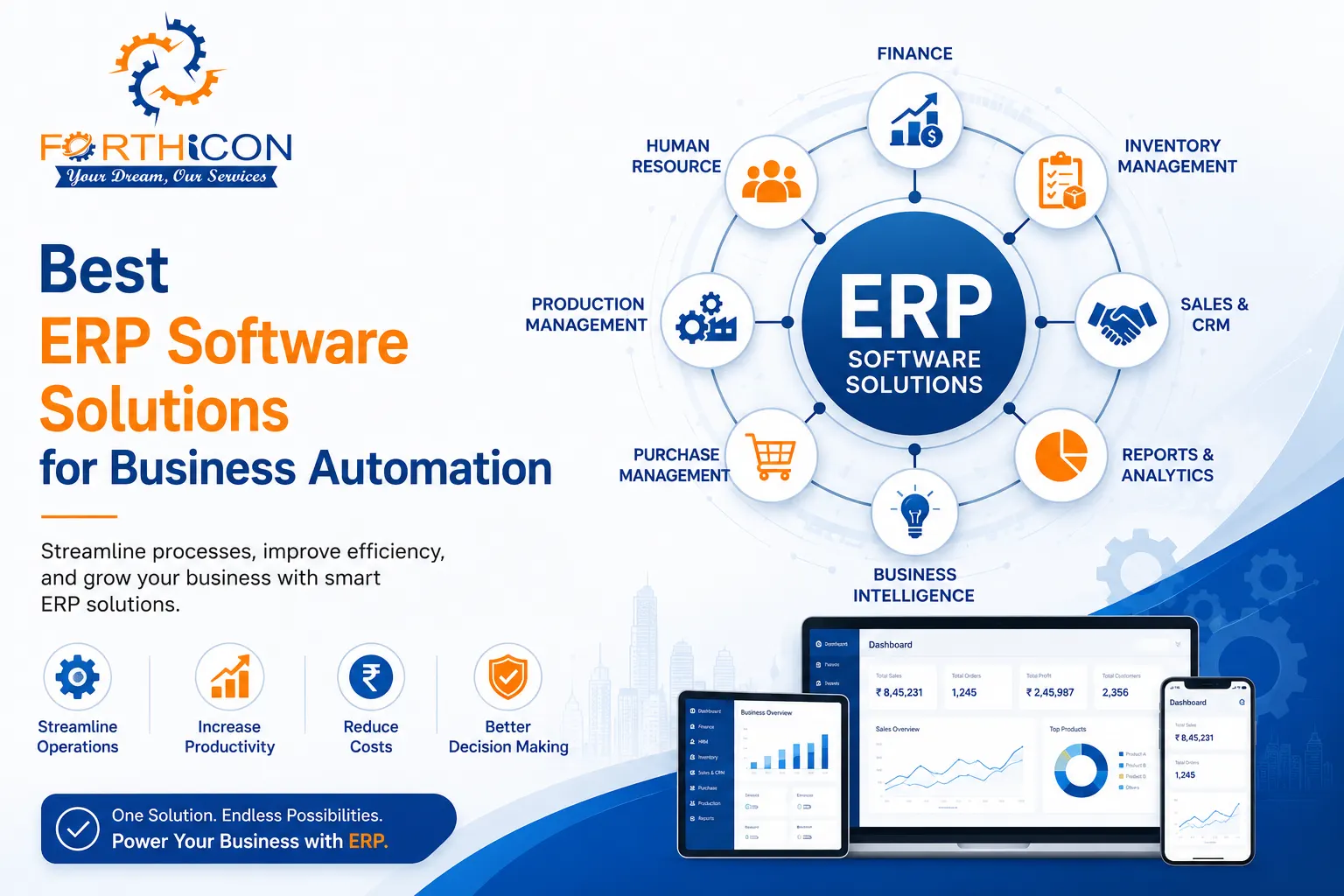
ERP systems connect different functions such as:
- Finance and accounting
- Human resources
- Inventory management
- Procurement
- Customer relationship management
- Manufacturing
- Supply chain operations
- Sales and marketing
Instead of using separate software tools for each department, businesses can manage everything through one integrated ERP platform.
ERP Software Solutions improve communication, data accuracy, workflow automation, and operational efficiency across organizations.
Modern ERP systems also support cloud computing, mobile accessibility, artificial intelligence, and real-time analytics to help businesses make informed decisions faster.
Importance of ERP Software Solutions for Businesses
Businesses today generate large amounts of operational data across multiple departments. Managing this information manually or through disconnected systems creates inefficiencies and slows business growth.
ERP Software Solutions solve these challenges by providing centralized business management and automation capabilities.
Improved Operational Efficiency
ERP systems automate repetitive tasks and reduce manual workload, improving overall business productivity.
Centralized Data Management
All departments access the same real-time data, improving communication and reducing information silos.
Better Decision-Making
Advanced analytics and reporting tools provide valuable business insights for strategic planning.
Enhanced Collaboration
Teams across departments can collaborate more efficiently through integrated workflows and shared data access.
Scalability
ERP Software Solutions grow with businesses and support expanding operational requirements.
Organizations adopting ERP systems often experience improved efficiency, reduced operational costs, and faster business growth.
Key Features of ERP Software Solutions
Modern ERP Software Solutions include various features that help businesses automate operations and improve management efficiency.
Financial Management
ERP systems streamline accounting, budgeting, invoicing, tax management, and financial reporting.
Benefits:
- Real-time financial visibility
- Improved compliance
- Faster reporting
- Reduced accounting errors
Financial automation improves accuracy and operational control.
Human Resource Management
ERP Software Solutions help organizations manage employee information, payroll, recruitment, attendance, and performance tracking.
Features Include:
- Payroll automation
- Employee self-service portals
- Attendance management
- Recruitment workflows
HR automation improves workforce management efficiency.
Customer Relationship Management
Many ERP systems include CRM capabilities that improve customer interactions and sales management.
CRM Benefits:
- Better lead tracking
- Improved customer support
- Sales forecasting
- Marketing automation
Customer-focused ERP systems improve engagement and retention.
Supply Chain Management
ERP systems optimize procurement, logistics, vendor management, and supply chain operations.
Benefits:
- Faster procurement
- Improved supplier coordination
- Reduced operational delays
- Better order management
Supply chain automation improves operational efficiency and customer satisfaction.
Types of ERP Software Solutions
Businesses can choose different ERP deployment models based on operational needs and budgets.
On-Premise ERP
On-premise ERP systems are installed locally on company servers and managed internally.
Advantages:
- Greater customization
- Full control over data
- Enhanced internal security
However, these systems require higher maintenance and infrastructure costs.
Cloud-Based ERP
Cloud ERP systems are hosted online and accessed through internet-connected devices.
Benefits:
- Lower upfront costs
- Remote accessibility
- Automatic updates
- Better scalability
Cloud ERP has become highly popular among modern businesses.
Hybrid ERP
Hybrid ERP combines cloud and on-premise infrastructure to balance flexibility and control.
Organizations with specific compliance or operational requirements often choose hybrid ERP systems.
Benefits of ERP Software Solutions
ERP Software Solutions provide significant advantages for businesses across industries.
Business Process Automation
ERP systems automate repetitive processes such as invoicing, payroll, inventory tracking, and reporting.
Improved Productivity
Employees spend less time on manual tasks and more time on strategic activities.
Better Data Accuracy
Centralized systems reduce duplication and data inconsistencies.
Real-Time Reporting
Businesses gain instant access to operational insights and performance metrics.
Enhanced Customer Service
Integrated customer information improves support quality and response times.
Cost Reduction
Automation and improved efficiency reduce operational expenses.
ERP Software Solutions help businesses improve overall operational performance and profitability.
ERP Software Solutions for Small Businesses
Small businesses increasingly adopt ERP Software Solutions to improve operational efficiency and support business growth.
Cloud-based ERP platforms are especially beneficial for small organizations because they offer:
- Affordable pricing
- Easy implementation
- Scalability
- Reduced infrastructure costs
ERP systems help small businesses automate accounting, inventory management, customer interactions, and employee management.
As businesses grow, ERP platforms support expansion without requiring major operational changes.
Small business ERP adoption continues increasing due to digital transformation and growing operational complexity.
Role of Artificial Intelligence in ERP Software Solutions
Artificial intelligence is transforming ERP Software Solutions through advanced automation and predictive analytics.
AI Features Include:
- Intelligent forecasting
- Automated reporting
- Predictive maintenance
- Smart customer insights
- Workflow automation
AI-powered ERP systems analyze business data and provide recommendations for improved efficiency and decision-making.
Machine learning algorithms help organizations identify trends, predict operational risks, and optimize resource allocation.
Artificial intelligence improves ERP performance and supports digital transformation strategies.
Cloud ERP vs Traditional ERP
Businesses often compare cloud ERP and traditional ERP systems before implementation.
| Feature | Cloud ERP | Traditional ERP |
|---|---|---|
| Deployment | Online | Local Servers |
| Cost | Lower Initial Cost | Higher Infrastructure Cost |
| Accessibility | Remote Access | Limited Access |
| Maintenance | Vendor Managed | Internal Management |
| Scalability | Highly Scalable | Complex Expansion |
Cloud ERP systems continue gaining popularity because of flexibility, scalability, and lower operational costs.
ERP Implementation Process
Successful ERP implementation requires careful planning and strategic execution.
Requirement Analysis
Businesses identify operational needs and software requirements.
Vendor Selection
Organizations compare ERP providers based on features, scalability, pricing, and support.
Customization
ERP platforms are configured according to business workflows and operational goals.
Data Migration
Existing business data is transferred securely into the ERP system.
Employee Training
Staff members receive training to use the ERP platform effectively.
Testing and Deployment
Businesses test the system before full deployment to ensure functionality and performance.
A well-planned ERP implementation improves operational success and user adoption.
Challenges in ERP Software Implementation
Although ERP Software Solutions provide many benefits, implementation may involve certain challenges.
High Initial Costs
Large ERP systems may require significant investment.
Employee Resistance
Staff may resist operational changes or new workflows.
Complex Integration
Connecting ERP systems with existing applications can be challenging.
Data Migration Risks
Incorrect data migration may affect operational accuracy.
Training Requirements
Employees need proper training for successful ERP adoption.
Professional implementation strategies help businesses minimize these challenges.
Future Trends in ERP Software Solutions
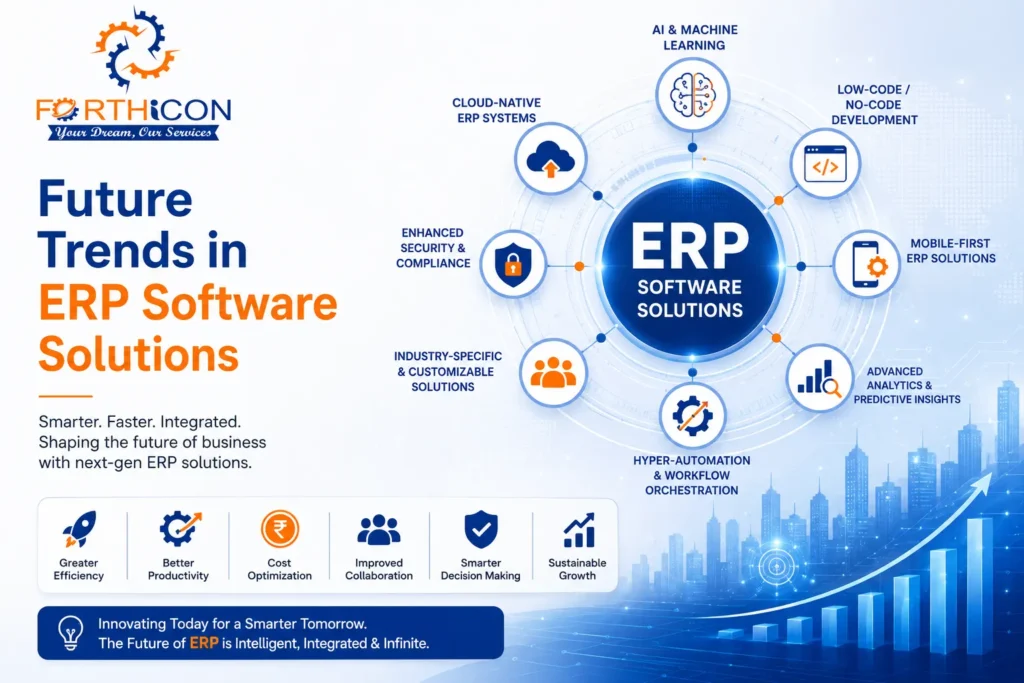
ERP technology continues evolving rapidly with digital innovation and automation trends.
AI-Powered ERP
Artificial intelligence will improve automation, analytics, and business forecasting capabilities.
Mobile ERP Applications
Mobile accessibility will enhance remote business management and workforce productivity.
IoT Integration
ERP systems will connect with smart devices and industrial equipment for real-time monitoring.
Blockchain Technology
Blockchain will improve security, transparency, and supply chain management.
Industry-Specific ERP
Customized ERP platforms tailored to specific industries will continue growing.
Businesses adopting modern ERP technologies will gain competitive advantages in operational efficiency and digital transformation.
ERP Software Solutions and Digital Transformation
Digital transformation has become a priority for businesses seeking innovation and operational growth.
ERP Software Solutions support digital transformation by:
- Automating business processes
- Improving data visibility
- Enhancing collaboration
- Supporting cloud infrastructure
- Integrating advanced technologies
Organizations using ERP systems can adapt faster to market changes and customer expectations.
ERP platforms help businesses modernize operations while improving efficiency and customer experiences.
How to Choose the Best ERP Software Solutions
Businesses should evaluate several factors before selecting ERP Software Solutions.
Scalability
Choose ERP platforms that support future business growth.
Industry Requirements
Select software tailored to industry-specific operational needs.
User Experience
Simple and intuitive interfaces improve employee adoption.
Security Features
Strong cybersecurity and data protection are essential.
Vendor Support
Reliable technical support improves implementation success.
Choosing the right ERP system improves operational efficiency and long-term business performance.
Conclusion
ERP Software Solutions have become essential tools for businesses seeking automation, efficiency, scalability, and digital transformation. Modern organizations must manage multiple departments, processes, and customer interactions efficiently to remain competitive in today’s fast-changing marketplace.
ERP systems provide centralized platforms that streamline operations, improve collaboration, automate workflows, and deliver real-time business insights. From finance and inventory management to customer relationships and supply chain operations, ERP Software Solutions improve every aspect of organizational performance.
As businesses continue embracing digital transformation, cloud computing, artificial intelligence, and automation technologies, ERP platforms will remain central to operational success and strategic growth.
Organizations investing in advanced ERP Software Solutions can improve productivity, reduce operational costs, enhance decision-making, and build scalable business infrastructures for long-term success.
Frequently Asked Questions About ERP Software Solutions
1.What are DevOps Services and how do they help businesses?
DevOps Services are professional solutions that combine software development and IT operations to improve collaboration, automation, deployment speed, and application performance. Traditional software development often creates communication gaps between development and operations teams, leading to slower releases, deployment failures, and operational inefficiencies. DevOps solves these problems by creating a unified workflow focused on continuous integration, continuous delivery, monitoring, and automation.
Businesses use DevOps Services to accelerate software delivery, reduce infrastructure costs, and improve operational reliability. These services help automate repetitive tasks such as testing, deployment, server management, and configuration updates. Automation reduces human errors and increases efficiency.
Modern DevOps practices also improve collaboration among developers, testers, operations engineers, and security teams. This integrated environment allows businesses to release software updates more frequently while maintaining high-quality performance and security standards.
DevOps Services are widely used in industries such as banking, healthcare, e-commerce, manufacturing, and technology because businesses need scalable and agile systems to compete in today’s digital environment.
2. Why are DevOps Services important for modern software development?
DevOps Services are important because modern businesses require faster software releases, improved scalability, and reliable digital systems. Traditional software development processes are often slow and disconnected, making it difficult to respond quickly to customer demands and market changes.
DevOps improves software development by introducing automation, continuous testing, cloud integration, and collaborative workflows. Businesses can deliver applications and updates more quickly without sacrificing quality or security.
Modern customers expect seamless digital experiences and frequent product improvements. DevOps allows organizations to release updates continuously, fix issues rapidly, and improve customer satisfaction.
DevOps also reduces downtime and operational risks by using monitoring systems, automated testing, and infrastructure management tools. Businesses benefit from improved productivity, better collaboration, reduced deployment failures, and stronger system reliability.
As companies continue adopting digital transformation strategies, DevOps Services have become essential for maintaining competitiveness and operational agility.
3. What are the main benefits of using DevOps Services?
DevOps Services provide multiple benefits that improve software development, operational efficiency, and business growth. One of the biggest advantages is faster software delivery. Automated deployment and continuous integration help businesses release applications more quickly and efficiently.
Another major benefit is improved collaboration between development and operations teams. Shared workflows and communication tools reduce misunderstandings and improve project coordination.
DevOps also improves software quality through automated testing and continuous monitoring. Businesses can identify bugs earlier and resolve issues before they affect customers.
Scalability is another important benefit. Cloud-based DevOps infrastructure allows businesses to scale resources according to demand without major operational disruptions.
Additional benefits include:
- Reduced infrastructure costs
- Faster recovery from failures
- Improved security integration
- Better customer experiences
- Higher operational efficiency
- Enhanced business agility
Organizations using DevOps Services often achieve better performance, reduced downtime, and stronger competitive advantages.
4. How does automation improve DevOps Services?
Automation is one of the most important components of DevOps Services because it improves speed, consistency, and operational efficiency. Manual processes are often slow, error-prone, and difficult to scale. Automation reduces repetitive tasks and allows teams to focus on innovation and problem-solving.
In DevOps, automation is used for:
- Software testing
- Application deployment
- Infrastructure provisioning
- Configuration management
- Monitoring and reporting
Automated testing helps developers identify bugs quickly before software reaches production environments. Automated deployment pipelines ensure consistent and reliable application releases.
Infrastructure automation allows businesses to configure servers, cloud environments, and databases using scripts instead of manual setup. This improves consistency and reduces configuration errors.
Automation also improves scalability because businesses can deploy new resources rapidly based on customer demand. Modern DevOps Services rely heavily on automation to achieve continuous integration and continuous delivery objectives.
5. What tools are commonly used in DevOps Services?
Professional DevOps Services use a variety of tools for automation, monitoring, collaboration, and deployment management. These tools help businesses improve software development workflows and operational performance.
Popular DevOps tools include Jenkins for continuous integration and automated testing. GitLab CI/CD is widely used for version control and deployment automation. Docker helps businesses package applications into portable containers for consistent deployment across environments.
Kubernetes is commonly used for container orchestration and scalable infrastructure management. Ansible, Puppet, and Chef are used for configuration management and infrastructure automation.
Monitoring tools like Prometheus and Grafana help businesses track application performance and infrastructure health in real-time.
Cloud platforms such as AWS, Microsoft Azure, and Google Cloud Platform also play important roles in DevOps implementation because they provide scalable and flexible infrastructure solutions.
The right combination of DevOps tools depends on business requirements, infrastructure complexity, and software development goals.
6. How do DevOps Services improve software security?
Modern DevOps Services integrate security directly into development and deployment workflows through a process called DevSecOps. Traditional security methods often treat security as a separate stage after development, which can create delays and vulnerabilities.
DevSecOps introduces automated security testing, vulnerability scanning, and compliance monitoring throughout the development lifecycle. This allows businesses to identify security issues earlier and reduce risks before deployment.
Security automation tools continuously scan applications, infrastructure, and code repositories for vulnerabilities. Businesses can respond quickly to threats and maintain stronger protection against cyberattacks.
DevOps also improves security by using:
- Access control systems
- Infrastructure monitoring
- Automated patch management
- Secure cloud configurations
- Data encryption practices
Continuous monitoring helps businesses detect unusual activities and system vulnerabilities in real-time. DevOps Services help organizations maintain compliance with industry regulations while improving software reliability and customer trust.
7. Which industries benefit the most from DevOps Services?
Almost every industry benefits from DevOps Services because digital transformation and software automation have become essential for modern business operations. However, some industries depend more heavily on DevOps due to their operational complexity and customer expectations.
Banking and financial institutions use DevOps for secure transaction systems, cloud infrastructure management, and faster software deployment. Healthcare organizations rely on DevOps for patient management systems, application reliability, and secure data processing.
E-commerce businesses benefit from DevOps by improving website scalability, reducing downtime during high traffic, and accelerating feature releases. Technology companies use DevOps extensively for agile software development and operational automation.
Manufacturing industries use DevOps for IoT infrastructure management, automation systems, and operational monitoring. Educational institutions also use DevOps for online learning platforms and cloud-based systems.
DevOps Services provide scalability, automation, and operational flexibility across multiple sectors.
8. What challenges do businesses face during DevOps implementation?
Implementing DevOps Services can provide major benefits, but businesses may also face several challenges during adoption. One common challenge is cultural resistance. Teams accustomed to traditional workflows may hesitate to adopt collaborative and automated processes.
Skill gaps are another challenge because DevOps requires knowledge of cloud platforms, automation tools, containerization, and continuous deployment systems. Businesses may need employee training or external expertise.
Infrastructure complexity can also create implementation difficulties, especially for organizations with legacy systems and large-scale applications.
Security concerns may arise if businesses prioritize speed without integrating proper security controls. This is why DevSecOps practices are important for balancing automation and protection.
Other challenges include:
- Tool integration complexity
- Process standardization
- Continuous monitoring requirements
- Initial implementation costs
Professional DevOps Services providers help businesses overcome these challenges through strategic planning, automation frameworks, employee training, and scalable infrastructure solutions.
9. How does cloud computing support DevOps Services?
Cloud computing and DevOps Services work together to improve scalability, flexibility, and operational efficiency. Cloud platforms provide on-demand infrastructure resources that support automated deployment and continuous integration workflows.
Businesses using cloud-based DevOps can deploy applications faster because cloud environments eliminate the need for manual server provisioning. Cloud infrastructure also improves scalability because businesses can increase or reduce resources based on demand.
Cloud computing supports:
- Remote accessibility
- Infrastructure automation
- Faster disaster recovery
- Cost optimization
- Global application deployment
Major cloud platforms like AWS, Azure, and Google Cloud offer tools specifically designed for DevOps workflows. These platforms support container management, serverless computing, monitoring systems, and CI/CD pipelines.
Cloud integration has become a core component of modern DevOps Services because it improves agility and reduces infrastructure management complexity.
10. How can businesses choose the best DevOps Services provider?
Choosing the right DevOps Services provider is important for successful implementation and long-term operational efficiency. Businesses should first evaluate the provider’s technical expertise in automation, cloud computing, CI/CD pipelines, containerization, and infrastructure management.
Industry experience is also important because different industries have unique compliance, security, and operational requirements. Businesses should review case studies, client testimonials, and project portfolios before making decisions.
The best DevOps Services providers offer scalable solutions, transparent communication, and customized implementation strategies based on business goals.
Businesses should also evaluate:
- Security standards
- Cloud platform expertise
- Monitoring capabilities
- Support and maintenance services
- Pricing structure
- Automation frameworks
Reliable DevOps partners help organizations improve software delivery, operational performance, scalability, and digital transformation outcomes.